I am astonished how many people now use speakerphone as their default interaction. On subway, go train, in grocery stores, on the streets, sometimes even in the office, they blast their conversations with zero care.
And so yes, I've definitely seen and experienced people watching inane tiktoks on speaker in subway or bus or airplane. It's the epitome of complete lack of empathy or self awareness to me, but I guess that's the way culture is going.
I'm curious what people think of people who use their speakerphone in public, but have the volume set low enough and themselves speak low enough that the conversation is no louder than an in person conversation would be.
Still annoying?
If so, is the problem usually the loudness of the speakerphone, or the loudness of the person who is there? I've noticed some people talk louder when on speakerphone than when on regular phone (and some people talk louder on regular phone than when talking to someone in person).
Back before mobile phones there was a tendency for people to talk louder on the phone at first, but after being reminded a few times that just because the other person is far away doesn't mean you have to shout most people learned to talk at normal volume.
I wonder if loud talkers don't get that feedback now? With old phone handsets there was pretty much only one position for them, so the mic was about the same distance from the mouth for all speakers. Talk to loud and it would be annoying on the receiving end.
But with modern phones there are a variety of positions people hold them in, which can lead to quite different mic positions. My understanding is that they do a lot more automatic gain control and other processing to try to keep the level the same despite all those different positions. Perhaps this means that the person on the other end doesn't know you are talking loud and so unless someone on your end tells you to keep it down you might never realize you are a loud phone talker.
Naturally it is extremely rude. If two people have a conversation in public both pay attention to the surroundings and feedback to change their volume tone and topics. If you put someone on speaker without introducing everyone present then they should hang up on you.
> If you put someone on speaker without introducing everyone present then they should hang up on you.
This is silly. Just tell the person you are talking to that they are on speaker.
Assuming the party on the phone has been informed and the volume is not excessive, having a conversation on speaker is equivalent to having a physical conversation in person.
Silly is not explaining why you can't put your phone to your ear like a polite person who follows etiquette. Polite people naturally won't really just hang up, ones that know etiquette will pretend its more convenient for you to call them back when you can and others will just note you are rude.
Silly is not explaining why you can’t just pass a handwritten note like a polite person who follows etiquette. Polite people naturally won’t really just start speaking out loud; ones that know etiquette will pretend it’s more convenient for you to read their note when you can, and others will just note you are rude.
There are times you need speaker-phone mode. My parents almost always turn on speaker-phone when they call me because they both want to be part of the conversation. I don't think they will ever take a plane or a bus trip in their lives so their speaker-phone isn't going to hurt anyone.
I need speakerphone when I'm home alone and attempting to be on a phone call while doing other things. Some of those calls are even about instructing me to look for something, so it necessitates me to be moving about. Speakerphone is an incredibly useful utility.
Don't take functionality away because of a few bad actors. That'd be like getting rid of drones because a few people are assholes.
Put rules in place to correct the bad behavior. Kicking them off planes seems fair.
Speaker phone is probably necessary nowadays since many people only have a smartphone.
With the old phones you could reasonably tilt your head and raise your shoulder to hold the handset in place so you could do something that required two hands while talking/listening, like looking up something in a book or taking notes.
Smartphones are smaller than the old handsets and much flatter. I can pinch mine between my shoulder and head but I've got to raise my should pretty high and do some other contortions to get my head tilted enough making it much more awkward to do anything with my hands. Also that phone is small enough that it is pretty well covered in that position by the side of my face and my shoulder, so I'm not sure the mic could pick up much.
Sometimes you need both hands for something else while on the phone.
Landline telephones mostly had handsets that looked like the top photo here [1]. When held with a hand they were positioned as shown in the second photo there.
Because of its thickness and length you only had to tilt your head and/or raise you should a little to hold it hands free with the speaker end right at the ear and the mic end still near the mouth.
If you were taking a call while standing for example and needed to write something down in a notebook that was no problem.
Sure. At home. And yes, I'm old enough to have walked around with a phone tucked in my neck.
But if you're in public, and using a smartphone, headphones are always an option. There s absolutely no reason why anyone needs to use speakerphone in public if they're just one person.
I've seen it everywhere except airplanes. I don't recall ever seeing it on planes. How often have you seen that? Do passengers or flight attendants do anything? How does the person respond?
Totally... unlike watching a movie, games keep them addicted. I have experienced situations where even toddlers played for 5 hours straight... I couldn't even muster the courage to ask them to lower their volume :-)
I love that everybody can enjoy watches differently :-).
There are people thay get a rolex. And good on them and they certainly send a message O:-)
There are people who like obscure Soviet watches, or hyper expensive ridiculously over complicated modern marvels, or just a few solid units from citizen and Seiko, etc etc.
I have a nice citizen blue angels navihawk with a tremendously useful ;) circular slide rule - but have much more enjoyed finding cool weird little Chinese semi-brand-name watches. Most of them will have a Seiko movement anyway, but without the brand / prestige surcharge. They're really the only jewelry / vanity thing I do - I have ten copies of same t-shirt because it's comfortable and fits me well, but I also have a watches for every occasion to match when I want to "dress up", and dozen of them cost me as much as that single citizen.
An half-air/half-oil filled watch that looks like a smartwatch, but is fully mechanical. No bling, somewhat understated, but still quite visually interesting with a modernist design.
And all kinds of interesting technical quirks like using a magnetic coupling to transfer motion from the air filled half to the oil filled half, tiny bellows that open and close to allow the oil room to expand, the little temp gauge etc.
It's very expensive, but not cartoonishly expensive. And the expense isn't tied to speculation or hundred year old pedigree like some other watches, instead it feels like you're paying for people who really enjoyed skirting along the edges of their craft in a time-intensive way the same way a hacker does
(I don't think the pick has stayed the same over time though: early days would have been some Casio calculator watch, then the Apple Watch/Pixel Watch, and now this)
They are both cartoonishly expensive. This kind of watch culture to me is even more unpalatable than country club culture. At least those people are getting quite a lot of service for what they’re paying.
I think if there's ever a day I prefer country club culture to the result of an industrial designer deciding to spend a decade coming up with all the engineering hacks to make something that cool work, I'm just going to walk out into the blizzard.
It's just a subjective perception of what makes something "cartoonishly expensive".
These types of watches are interesting, clearly making things hard for the sake of being hard. 60 years ago the quest for accuracy got pretty extreme but there was theoretically a practical goal. After quartz movement, that pretence disappeared. I'm in the mindset that up to several hundred bucks, you're paying for something in a watch - accuracy, options, durability, style, whatever it may be. At some point afterwards, and certainly at 50k, you're paying price for sake of paying the price. I don't see the problem that watch is trying to solve, I see it as what can we do for 50k. And that's cool and all, some of them are interesting, but for me, definitely in the cartoonishly expensive category :-)
One of the top stories on HN yesterday was about a company that paid 4-5 average people's wages per person for a team that sat on their butts 8 hours a day and wrote meeting scheduling software for a decade. This was done so they could then sell, not even the software, but... the right to their institutional knowledge for an additional few thousand years worth of average wages.
And of course they're permanently deleting the fruits of that decade's worth of work with 1 week's notice.
And this is the 2nd time the team's leaders have run this play, with the same buyer paying each time: seemingly they can just leave again and keep doing this ad nauseum. (Clockwise)
If you put the value we assign to software engineering in terms of other things it really doesn't make sense either. At least what these people did is something mechanically interesting, unique, and enduring vs the average CRUD app.
I see where you're coming from and I'm glad you've had a successful career, but $52,000 for a watch is absolutely cartoonish money lol. It is definitely a cool piece though, no question.
Think payroll. I used to think payroll is relatively simple. Then I spent some time on government of Canada Phoenix pay system (go ahead... Google and weep). And it's... Insane. System has been live for a decade and still regularly gets hit with some weird scenario from some department that nobody foresaw, it wasn't captured in requirements, but upon review by business analysts is a valid scenario. Bob was a CS5 in department of defense and speaks French so gets bilingual bonus and his boss was away for half a day so Bob gets acting cs5 pay and is in public alliance union so these are the dues, and it is second Tuesday of a month and blue moon, but then Bob got moved to department of agriculture and then 3 months later realized that his previous manager at defense didn't put in his promotion on time so now you have to figure out his retro pay for when he was in defense even though everything on his file now has agriculture labour agreement and codes and rates etc etc etc. And this made up example is a fraction of the complex examples.
Clear and comprehensive Requirements are always the tricky bit, at least in business software. Twilight zone covered it perfectly and presciently decades before AI, with genies taking your requests literally and giving you unpredictable and usually negative outcomes.
I am genuinely curious if you are trolling, or putting that forward as a genuine argument?
Trivially, it's the difference between medium, and message/content.
On one axis, whether message is spoken, written via pen or typewriter or word processor, sent electronically, faxed,mailed, etc - it is fundamentally a communication from one human being to another, even if medium / mechanics differ.
The other axis is actual content - genuine human interaction, intent, message and connection, vs a result of a prompt.
I have a potentially silly question, and obviously naive - but why so many drawn guns? Fun music videos aside, what was the background here? Were they coming in on a Massive gang fortress? Or are all the stereotypes of American police forces true and they just come guns a-blazing all the time? I mean, that wasn't even police officers with hand guns, they have army-like guys with massive automatic rifles, and they seem to keep them drawn and hair triggered throughout the search? :O
(on aside, I do enjoy watching British crime procedural shows as contrast, where seemingly nobody has guns and they have to call in a special unit if they actually need somebody with a handgun)
That should be immediately disqualifying for an law enforcement officer. Saying that on the record should end their career immediately. Alas, we don't live in a just world and they will likely be continuously promoted.
I mean the key point there I think is the one where they point out that Brits simply wouldn’t accept police regularly shooting people. Policing for the people by the people.*
* and pretend Northern Ireland doesn’t exist, or course
PSNI had one single firearm discharge in the two year period covering October 2023 - September 2025.
Plus 948 uses of irritant spray, 496 uses of their baton, and 38 taser discharges in the same period. And 23,489 uses of "unarmed physical tactics".
That's for a population of around 2 million. By comparison, SFPD had 10 "officer involved shootings" in the past year for a population of 800k, a rate fifty times higher than that in NI.
Yeah, it was very different back then. And not just the police - we had the army on the streets with weapons drawn, routinely aiming at passersby.
The political situation in the late 1960s provided plenty of kindling, but it seems clear that most of the sparks that actually caused the conflagration came from the barrel of guns held by soldiers and the police. They were directly responsible both for the death of the civil rights movement and the collapse of the government, and without the heavy-handed response it's likely that the settlement of the late 90s would've happened 25 years earlier.
It's actually a great example of why the militarisation of policing should be resisted at all cost.
The one thing I'll say in defense of American cops is that they are police a population that's vastly more likely to have their own guns, too.
Of course it's not like American cops have recognized the danger that poses and politically aligned themselves with reducing or restricting access to guns, so they lose a lot of credit there, but they are genuinely facing a better armed and therefore more dangerous population.
To be fair, guns aren't exactly unknown in NI, either!
There are 153k people who have legal firearms (so about 10% of the adult population, vs about three times that in the US). That's largely farmers with shotgun licenses (NI is pretty rural by European standards) plus licensed "weapons for personal protection" for people exposed to threats for whatever reason as a legacy of the Troubles.
And then there are some unknown number with illegally-held guns - the main armed groups put their weapons "beyond use" as part of the decommissioning process in the 2000s, but inevitably some will have been missed, and then there are the dissident groups who still hold significant amounts of weaponry.
Hard to put an exact figure on it, but if you guesstimate it at a weapons ownership rate at about half that of the US you probably wouldn't be too far from the truth.
So even after accounting for the differential in gun ownership, SFPD are still shooting people at ~25x the rate of the PSNI.
Is it legal to carry firearms concealed in Northern Ireland? It's not the presence of guns in a guns safe that makes policing more dangerous, it's the fact the a sizeable chunk of the American public is actively carrying firearms.
Yes, at least for personal protection weapons. And, obviously, the unlicensed users (ie. members of dissident gangs) won't care whether it's legal or not.
PPW holders will be people who have had specific, verifiable threats made against their lives - so will often be people with links to violence, terrorism, or criminality. And, obviously, the unlicensed users are criminals by definition.
So, on balance, the average weapons owner in NI is probably more dangerous than the equivalent in the US. I do agree that it's hard to make anything more than a very general comparison between the two very different situations, however.
Google tells me 2,700 in Northern Ireland have authorization to carry firearms privately.
By comparison in my county in Washington state, there are 114,000 active concealed firearm permit holders out of a population of 2.3 million. And this is a liberal, fairly urbanized region.
We're talking ~50x the rate of people carrying firearms legally. Of course data on criminals carrying weapons is not so transparent, but it's suffice to say that American police are much more regularly encountering people with firearms.
Couches aren’t known to have guns and the cops in Afromans house search the couch as if it’s about to bite them.
It’s a very American mixture of fear and bravado in a feedback loop which means every piece of evidence of cowardice has to be compensated for with even more overt aggression.
Hence cops in full body armor with guns drawn behaving like black and tans in Palestine.
If Canada is like New Zealand, which also has a similarly high rate of gun ownership - it's largely different types of guns - that is, guns for hunting, not for killing people - very hard to conceal a rifle or shotgun compared to a pistol.
I fail to understand why you cited ChatGPT in the first comment instead of just linking the sources in the first place. That was obviously the critique of your comment, and it seems bad-faith to claim it was because they "just don't like the numbers".
Wikipedia is easily viewed by anyone, and their sources are right there for further verification.
“Source: ChatGPT” frequently doesn’t include the link to the original chat, so is hard to verify that is the actual output, and we all have experience with ChatGPT wholesale making up facts when it is led towards the conclusion, or just inventing facts and sources.
I personally treat ChatGPT “facts” like “facts” from Reddit or Meta. There might be a grain of truth in it, but treating it like an actual source is a fool’s game.
Sure, but SFPD covers only the County of San Francisco which had a population of 827,526 in 2024.
It's certainly not a perfect comparison by any means - but that's more to do with the very different urban/rural splits, forms and structures of inequality, histories of segregation and political violence etc.
If you can suggest another American police department which would make for a better comparison, I'd be interested in seeing the stats... but I strongly suspect that they'd show a very similar contrast.
In Britain, there is independent civilian investigation when cops kill a person. It creates pressure to not kill, because you wont be judged by buddies.
Well, the IOPC (Independent Office for Police Conduct) has mandatory referrals, not only when police apparently shot somebody, or they die in police custody, or in a traffic accident with a police vehicle, but also cases where the police were recently involved. e.g. Sharon calls police because she says her husband punched her, when officers attend Sharon now says he didn't mean to and seems reluctant to leave or for her husband to be arrested, attending officers decide to leave it as it is, an hour later Sharon is dead and her husband is her presumed killer - that's a police involved death and so that gets referred to the IOPC even though nobody thinks a cop killed anybody.
However, the IOPC is not mandated to conduct investigations. So it is possible (though less likely for a shooting) that the IOPC will just kick it back to local police. It is also possible (and more likely) that they will oversee but use local police to do the actual work, just because that's much cheaper and their budget is limited.
If you need some context, you can look up the history of policing in Northern Ireland on Wikipedia, where British police were happily shooting other British people for many years.
So are we all just oblivious to the fact that in the US, civilians practically have access to military gear? How can you police that type of population with sticks and stones?
I can see the argument how you would treat a suspect with a gun differently than you would if they have a knife.
However, American cops also use guns against suspects with knives or other weapons that they also use in places like Scotland. Why couldn’t American police use these techniques when the suspect doesn’t have a gun?
I know the standard response is, “well, they COULD have a gun!”, but I don’t think that is a good enough reason to always go straight to extreme response. If a suspect is brandishing a knife, he probably doesn’t also have a gun.
Historically speaking, there were a few shoot-outs in the 80s and 90s. The Hollywood shooting and I think one historically bad incident with cocaine traffickers in Miami - bad days for the police showing up with .38 revolvers and a shotgun or two fighting against a dedicated enemy with AK style weapons and body armor.
The sadly predictable response of the police in America is to overmatch the “enemy.” Presume they have a weapon for crimes of certain classes, obvious violence crimes like kidnapping and also drug crimes, which poor Afroman was accused of both.
Personally, having been SWAT’d as a young man, it’s not that I think they shouldn’t have access to armaments. It’s that their rules of engagement are obscenely lopsided to the point that they just bring them always, all the time, and will not use common sense judgement.
This could have been a knock-and-talk from Officer Friendly and if things didn’t go well - send in a higher level of officer. Starting at bootleg Navy SEAL raids for every accusation is a blight in modern law enforcement.
> Historically speaking, there were a few shoot-outs in the 80s and 90s. The Hollywood shooting and I think one historically bad incident with cocaine traffickers in Miami - bad days for the police showing up with .38 revolvers and a shotgun or two fighting against a dedicated enemy with AK style weapons and body armor.
An important note for this is that this situation only happened because of Americas "war on drugs" strategy. The US government created those armed trafficker groups the same way they created the rum-runner mobsters of prohibiting.
The insanely armed domestic "enemy" generally exists because of the combination of high profit motivation with government threat. The more punishing the government is of the enemy group, the greater protective lengths they're going to resort to.
Personally I’ve had encounters with LE and have not had a gun drawn yet, so it’s obviously not the default. But I disagree, I think brandishing a knife is already extreme behavior, I don’t think it’s logical to think “because he has a weapon he probably doesn’t have another!”. And why would someone threatening people with a knife deserve benefit of the doubt?
> Personally I’ve had encounters with LE and have not had a gun drawn yet, so it’s obviously not the default.
What does the default have to do with it? We are already not in the default situation. Interacting with police at all is not the default! If you mean to say something like "it's not likely" or "they're not doing it in unreasonable cases" then your anecdote is not relevant.
> And why would someone threatening people with a knife deserve benefit of the doubt?
Several reasons, which would be obvious if you tried to think of them. Most knife-wielding maniacs are, well, maniacs, and aren't fully in control of their actions. Innocent bystanders are regularly killed by police discharging guns accidentally or inappropriately (in fact, even police are frequently killed this way). People are routinely misidentified by police as carrying weapons when they aren't. Police often give misleading or unclear instructions while trying to de-escalate, and with a gun drawn, failure to comply can and does result in the suspect being shot.
Bear in mind that what you are excusing is essentially a (substantially increased likelihood of) extrajudicial execution. It should be a last resort. It's not enough to say "well he's clearly a bad guy, why give him the benefit of the doubt?".
Why is it not zero? This strikes me as the exact sort of calculus they used way back when they stopped chasing fleeing suspects in vehicles: the danger to the public is too high to justify the use of force. If you can't hit your suspect without hitting other civilians, then don't fucking fire! And no I don't particularly care if the LEO's life might be in danger either, that's literally the job they signed up for: to put themselves in danger to enforce the law. It's ridiculous that cops just get complete power of life and death every time they feel a spot of stress, and have to be handled with kid gloves by the general public less they be murdered in the streets.
I will never be zero because perfection is impossible. It's like saying there should be zero car fatalities. We should work to get them down (enforcement against drunk driving, maybe checkpoints, stronger driving tests), but asking for zero accidents just isn't reality.
"Helsinki hasn’t registered a single traffic-related fatality in the past year, municipal officials revealed this week."
"The limits were enforced with 70 new speed cameras and a policing strategy based on the national “Vision Zero” policy, with the goal of achieving zero traffic injuries or deaths. Data collected by Liikenneturva, Finland’s traffic safety entity, shows Helsinki’s traffic fatalities have been declining ever since."
That's not analogous at all. Everyone drives, and so everyone is a possible source of a car crash. Police are not (in theory) just whoever wanders into the goddamn precinct. They're (in theory) trained professionals, educated in what they do, and therefore entrusted with both the force of law, and the deadly force they wear on their belts.
And no we probably can't make it ZERO, but we could surely get it under 1,300!?
1300 is not the rate of innocent bystanders being killed. It's the rate of people killed by police period. Maybe if we didn't have police being killed by criminals in the USA then they wouldn't need to go in armed and scared for their lives.
By definition, every person the police interact with is innocent, because at such time as they are talking to a cop, even being detained by one, they have not been convicted of a crime.
No, it's the concept of "innocent until proven guilty" and even if you'd like to craft a scenario next where we're going to talk about Officer Friendly stopping a rape-in-progress, yes, that person is almost certainly guilty, AND the punishment for that crime is usually not death, AND the cornerstone of our justice system says that the officer in question, no matter how pure of heart he might be, cannot exact a death sentence on a clearly guilty person because that is not how justice works.
A cop killing ANYONE, be they a bystander, or a suspect, or an assailant, should be RARE. It should be notable.
Let's aim for a max of once every year, then, over the entire USA. And once that's achieved, let's aim for once every few years. Once a decade should be good enough, you probably won't get better than that.
The EU has a much bigger population than the USA, in a smaller space, and I'd bet they're already around this number.
Well... the sicilian mafia comes to mind... the french can be quite violent too... Western Europe is not so bad either, with guns.
I guess you mean "normal" non-criminal people in the EU are not allowed to have AR-15 assault rifles in their homes, that they can use if they have mental health issues.
I personally believe that is one of the reasons the USA has so much gun violence. Get rid of the guns in people's homes and things will change for the better.
Personally as a teenager I’ve been met with a group of cops all pointing guns at me when I was just walking around at night with no weapons whatsoever. They got a call from a paranoid homeowner nearby.
They’re trained to shoot first and ask questions later.
Actually same happened to me - small group of friends maybe ~14 years old walking around late at night through our middle-class very safe neighborhood.
Two cops in a car rolled up and jumped out of the car with guns drawn and screamed at us to put our hands up because we “looked suspicious”.
They then asked us what we were doing, we said “walking home”, and they put their guns away and said “be safe out there, we didn’t realize you were kids”.
Absolutely no idea why it warranted guns pointed at us
They should not have guns out at all. Also, expectation on cops are super weirdly low.
Untrained random civilians encountering cops are supposed to have perfect sefl control. Supposedly trained professionals can be irresponsible, escalate for no reasom, risk others and shoot if they merely feel afraid - regardles of actual danger.
I got pulled over in Cleveland and had a cop point a gun at me and threaten to shoot - I was apparently wearing the wrong color on the wrong side of town with out-of-state plates and reached for my ID instead of waiting for the cop to tell me to get it. In later stops I've been admonished many times for not preemptively getting out my ID, but I really can't help thinking about almost getting my brains blown out for grabbing my ID too quickly.
Hands on the steering wheel for your and the officers safety until they ask you to do something. It really is not that difficult you can always just ask. Legally speaking a traffic stop means you are detained = follow orders.
They don't know you or what you could be capable off.
While this is certainly pragmatic advice, we should not normalize it for "what ought" to be. It should not be an individual's job to act perfectly (while being assaulted!) to compensate for police officers' (supposed professionals!) inability to remain in control of their emotions and properly judge what is going on. A police officer who is unable to remain in control in such situations should not be doing traffic stops (or really any interaction with the public) in the first place.
(Also there are some mistakes in your framing. For a regular motorist who isn't planning on attacking the police officer, putting your hands on the steering wheel does nothing to effect the officer's safety. We're talking about a point before they've given you any orders beyond signalling you to pull over, so there is nothing to follow. Furthermore they're also generally pointing a bright spot light directly at you, destroying your awareness and ruining your judgement, so it's reasonable to expect that orders are going to be followed sluggishly and imperfectly)
>For a regular motorist who isn't planning on attacking the police officer, putting your hands on the steering wheel does nothing to effect the officer's safety.
It very much does. Cops are humans if they see you know how to behave instead of making there job harder they will notice and appreciate that.
>Furthermore they're also generally pointing a bright spot light directly at you, destroying your awareness and ruining your judgement, so it's reasonable to expect that orders are going to be followed sluggishly and imperfectly)
Only if it's too dark to see, so once again help them to help yourself and turn on the light inside the car. If these simple instructions are too hard to follow you shouldn't be driving in the first place.
> making there job harder they will notice and appreciate that
Their comfort is not safety. Your original claim was that this had something to do with safety.
> these simple instructions
What "instructions" ? You have no authority to issue instructions that others must [0] follow. And if the cop hasn't gotten to the vehicle yet, then they haven't credibly given instructions (orders). So there are no relevant "instructions" here.
The reality is that the police officer is the party aggressing to create a confrontational situation. Therefore they are responsible for managing that situation. This includes not capriciously harming individuals who are acting reasonably but perhaps inconveniently. As I said, if they cannot handle their job of being public servants, then they have no business being in a position of authority over the public in the first place.
[0] "must" being implied by your general position of "[then] you shouldn't be driving in the first place" and the fact that similar "instructions" are often trotted out as a justification after the police kill somebody.
If you do that daily, sure it is easy. But a lot of human behaviour is automatic, based on what we are accustomed to do daily. (During covid there were many videos, where person on the screen says “… also avoid touching your face …”, while touching his/her face)
I had a gun drawn on me and was told “I’m going to blow your f** brains out” because I was a stupid teenager toilet papering a house when I was young. That’s when fight or flight kicks in and logic goes out the window. Needless to say I didn’t fight.
Pulling a percentage out of my ass that can't be terribly inaccurate, 99% of police encounters with guns drawn the police are under 21 ft away, at which distance a knife is as dangerous as a gun.
If someone is less than 21 ft from you and they are going to be using a knifes against you, then you should still draw a gun just as often as if they had a gun. So at <21 ft you think guns should be drawn less because they have knives you should also be thinking guns drawn the ~exact amount less no matter which of the 2 weapon they had.
I don't dispute that. But in most those 'other countries' literally anyone could be hiding a knife as easily as someone in US could be hiding a gun. So it appears in the vast majority of the cases where people are already right next to each other where both a knife or gun could kill someone, whether it is a knife or a gun is almost a moot point. It's only at a distance that you can treat a knife as a less lethal threat. Therefore the problem lies with the police, by vast majority.
A knife is not equivalent to a gun. One is a kitchen appliance that can be used as a rather ineffective weapon, the other is a tool literally designed for eliminating life as efficiently as possible
Disarming someone who poses a threat with a knife (especially via the use of modern equipment) is absolutely possible and can be performed in most cases with training, even with just one officer. Meanwhile, disarming someone with a gun is a much more complex task, often requiring a coordinated effort from multiple officers
>a knife (especially via the use of modern equipment) is absolutely possible and can be performed in most cases with training
I want to see you attempt that in real life when someone is within 21 feet. If you watched enough training videos and the literal flood of body camera videos that show even tasers are more often than not infective you would not speak so conveniently about a split second life or death situation.
> I want to see you attempt that in real life when someone is within 21 feet
Sadly I did not film it, but you could have been! I have attended multiple classes during which I had to disarm people with knives and other weird objects. It is absolutely possible with the right circumstances and training, but it's a completely different story when it comes to guns - the element of luck is much more meaningful, as a instructor who was shot quite a few times in their career has pointed out
> You can but you absolutely should not try just because you can in training
For incapable civilians like me - absolutely. But I expect more from police officers than from myself when it comes to non-lethal disarming capabilities
>But I expect more from police officers than from myself when it comes to non-lethal disarming capabilities
It's asinine to expect someone to put there life in danger for little to no benefit just because they are trained for it and there is a chance it might go well instead of certain death.
If someone comes at someone with a knife (which is deadly force), they should expect to be met with equal or more force, this isn't some game with retries. Others don't have to go along your stupid games just because you drag them into them. Play stupid games win stupid prices.
> It's asinine to expect someone to put there life in danger for little to no benefit just because they are trained for it and there is a chance it might go well instead of certain death.
Whether it's asinine or not depends on context. Where I live, it is expected for police officers to protect you with their lives from a lethal threat if necessary, both legally and socially, and failure to commit to that means that you shouldn't be a cop
For the US, I think that the Uvalde shooting revealed a lot about what people actually expect from cops in life threatening situations, never mind what they are legally obligated to do
I'm glad you're making this point. It's something that only people trained in combat would know, and it's very non-intuitive. But it has to do with reaction times, how quickly the person wielding the gun can pull the trigger, and how quickly the person wielding the knife can move. That 21 feet can close blindingly fast.
> under 21 ft away, at which distance a knife is as dangerous as a gun.
No, it is not as dangerous.
To use gun from 7 meters away, you have throw it, which takes way more movement hand movement and time. While you should not rely on it, it is very feasible to just move out of the way of the thrown knife.
Other possibility getting closer to you. Running will take 2 seconds. (Not a lot, but definitely not as dangerous as a handgun)
The statistic isn't related to thrown weapons. It's how quickly you can close the space between you and your adversary, as well as how much bearing drift you can create as you do so.
Then you shouldn't be a police officer. We can't have a society where police shoot first and ask questions later just because they want to make sure there is zero risk to them.
> Personally I’ve had encounters with LE and have not had a gun drawn yet, so it’s obviously not the default.
How police respond to you is very dependent on a lot of factors, including your age, race, what you are wearing, where you are, and what time it is. I don’t think you should use your own personal experience as a universal template.
> And why would someone threatening people with a knife deserve benefit of the doubt?
Because, as a society, we should do everything we can to prevent harm to everyone, even people who are acting erratically. There could be all sorts of reasons for the behavior. Anyone can have a psychotic episode, and that shouldn’t immediately earn a death sentence. Of course, I understand that even an innocent person having a psychotic episode can be very dangerous, and I don’t think they should be allowed to hurt others, and it may be necessary to use force, and potentially deadly force, to protect other people.
However, I think that is very different than saying “we shouldn’t worry about the perpetrators well being at all”, or that it is preferable to kill the person rather than take ANY risk that they could hurt someone. The answer lies somewhere in between.
I had a rifle pointed at me about a week after I got my first car, because I accidentally drove on the wrong side of the median.
Guns are definitely pulled way more often by the police than they should be. but to your point I am okay with cops shooting anyone brandishing a knife or any other deadly weapon.
As a fun example I had a coworker who collected handguns. I once asked him how many he had and he asked for clarification, should he include unregistered?
Most of the other places I'm aware of with such penetration of arms but no police basically rely on monetary bonds through family ties and intertribal appeals rather than trying to capture and imprison them. If the family won't accept the bonds and the criminal refuses to pay then they become an outlaw of sorts and have no recognition in society. A bit brutal, but then again so is mass imprisonment and a heavily armed police state. I make no claim whether it is better or worse.
Not even the most dangerous job in the US. Forest workers, commercial fishermen, pilots etc are more dangerous. If we're talking about gun violence, your corner market cashier is more likely to get shot, Has anyone thanked a 7 eleven worker for their sacrifice thas you can get a slurpee at 2am?
I don't think you can use this datapoint for this purpose. Cops are employing the paranoid strategies already, so there's no way to discern between 'these strategies are needless' and 'these strategies are effective'.
You could probably do a comparison between jurisdictions where police homicides are common and jurisdictions where they aren't common. Assuming that there are cultural factors anyway.
Like sure, areas with higher rates of criminal violence will probably have more police homicides, but it's likely enough that you can pair things up based on rates of criminal violence.
Curious how much this varies among police. Some jobs are by their nature always dangerous.
But there are a lot of cops in the USA, and plenty I'm sure have nice, cozy jobs, and then there are some who spend thee majority of their career policing areas that more closely resemble warzones or 3rd world nations but this isn't the majority by any means.
Depends on how you look at the numbers. But construction, logging, garbage collection and truck driving tend to be the most deadly depending on the specific metric (absolute, per capita, by industry, etc).
Expanding that, the deadliest part of being a police officer is almost certainly the driving component. No gun will save you from smashing your SUV into a pole. And the aftermarket modifications made to the vehicles aren't crash tested. A police cruiser is full of potential projectiles.
There's a reason you separate military and the police. One fights the enemies of the state, the other serves and protects the people. When the military becomes both, then the enemies of the state tend to become the people. - William Adama
indeed, and this is unironically cited by the "shall not be infringed" crowd as a reason that they should be allowed to bring guns anywhere and everywhere, potentially turning any movie theater disagreement or minor road annoyance (or traffic stop, to bring this back to the police) into a violent life ending incident. to quote jwz out of context, "now you have two problems".
I thought this was interesting, so I checked your sources
> Insane take truly. First, CCW carriers are statistically the least likely to be involved in any kind of "violent life ending incident".
Sure, you could argue this, with the exception of suicide, found guns (usually by kids in the home), and stolen guns. It's not just the person certified, it's everyone around them who can obtain access to the gun they now own
>The number of non self-defense homicides caused by them is approximately 0 per year.
Only because there's no public data on this particular statistic. A nonprofit produced a database based on news headlines and limited state data, though, and found 1700 suicides and 600 convicted murders by CCW carriers between 2007 and 2025: https://vpc.org/concealed-carry-killers/
A better way to phrase it would be that the number of homicides are far less than the violence that a lack of CCW would enable, though that on its own is statistically shaky.
> Second, to suggest that people should allow themselves to be victims to violent crime because it's safer for the whole is some sort of collectivist trotskyite nonsense we will never agree on. Under no circumstance should an innocent person forfeit life or property for a violent criminal.
You're right, we (the USA) probably won't ever agree on it, due to the intense financial incentives behind firearms manufacturing and ownership and the subsequent lobbying and influence over public influence that those companies fund, but every other country apart from the US is a sweeping counterexample to this. We lose 45,000 people per year to guns (~60% by suicide). It's the #1 cause of death for children since 2020. https://www.cdc.gov/firearm-violence/data-research/facts-sta...https://www.gunviolencearchive.org/
It's reductive to suggest that the only thing having more guns around does is "prevent victimization" when the guns themselves enable violence to so many nearby parties, including to the owner themselves.
> Its astonishing to me people can look at FBI statistics, total gun deaths trending down for the last 30 years, and then suggest people who are statistically the most safe with guns shouldn't be able to carry them.
The figure you're quoting appears to be the graph from page 1 of https://bjs.ojp.gov/document/tpfv9323.pdf, which is nonfatal victimization, which hasn't trended down--it's hovered between 1 and 2 per 1000 since 2003, and appears to be more of a reflection of improved medical skill than anything about guns.
Anyway, you were quoting gun deaths--that's page 13. That chart has stayed roughly the same since 1999: 4-5 per 100k persons (except for the spike during covid)
>The qualifications for CCW are harder than police qualifications in most states. But you wouldn't know this because Everytown, MSNBC, CNN, and others have spent the last 12 or so years lying through statistics so that the government has the monopoly on violence.
No permit required for CCW in 27 states. You also have states like Utah that will mail you a permit that's valid in 30 different states and doesn't require proof of live-fire training.
But yes, in CA, for example, it's a 16 hour course, background check, fingerprints, clean record, (sometimes) psych evals, and even then there are restrictions.
This isn't an indicator that CCW is difficult to obtain, though, since this is a reasonable barrier--it's an indicator that police qualifications are laughable. (While we're on that topic, by the way, law enforcement officers (both active and inactive) are allowed to concealed carry in all 50 states)
Unfortunately, the police in Adama’s world are different from our own:
> the other serves and protects the people
The only time this was actually true was at the advent of organized policing in the United States - there were two purposes for cops. In the north, they were meant to ensure the protection of property, particularly commercial.
In the south, it was the same except that usually meant slaves, so in the worst kind of technically correct sense, they did at one point protect people…kind of. Well, kept them “safe” from freedom and such.
A famous case of this is https://en.wikipedia.org/wiki/Killing_of_Philando_Castile where the man identitified he had a concealed carry, the cop told him not reach for it, he started to say he wasn't, he was getting his license the officer asked for, with the officer cutting him off repeatedly and the officer shot him because he 'feared for his life'.
All they have to prove is that they fear for their life. It does not have to make sense, does not have to be 'justified', etc.
"All they have to prove is that they fear for their life. It does not have to make sense, does not have to be 'justified', etc."
That's not really true. The standard is a reasonable fear for your life. That's reasonable standard is evaluated in court by how a reasonable person would have reacted. Yes, they do give some deference to the individual who was actually there (police or civilian). The real problems happen because the DA and the courts tend to have bias when it comes to subjecting members of the system to the same process that others face.
Police officers in court cases don't have to meet that standard until it established that they do not have qualified immunity. In vastly more than 9 out of 10 cases, they do, and thus that standard is completely irrelevant.
To some degree this is how they’re trained, and imo the people doing the training also need some form of repercussions - if you haven’t before, check out some information on the courses that are (were?) taught to precincts across the country: Killology. Yes, that’s the literal name.
A black friend of mine did exactly this, asked for a permission to get a pen from his pocket. The cop laughed “sure” and the moment he put his hand inside his pocket they jumped him and arrested him.
> The panel held that at the time of the incident, there was no clearly established law holding that officers violate the Fourth or Fourteenth Amendment when they steal property seized pursuant to a warrant. For that reason, the City Officers were entitled to qualified immunity.
And handed down in only one circuit, so the other 80% of cops in the country can say "well, in my circuit there was no established case law that said stealing the property was a constitutional violation."
That's not exactly consistent with the given scenario. Use of force issues tend to have much better case law at both the federal and state levels than property related issues.
> Corbitt v. Vickers, 929 F.3d 1304 (11th Cir. 2019): Qualified immunity granted for officer who, hunting
a fugitive, ended up at the wrong house and forced six children, including two children under the age of
three, to lie on the ground at gunpoint. The officer tried to shoot the family dog, but missed and shot a
10-year-old child that was lying face down, 18 inches away from the officer. The court held that there
was no prior case where an officer accidentally shot a child laying on the ground while the officer was
aiming at a dog.
> Young v. Borders, 850 F.3d 1274 (11th Cir. 2017): Qualified immunity granted to officers who, without
a warrant, started banging on an innocent man’s door without announcing themselves in the middle of
the night. When the man opened the door holding his lawfully-owned handgun, officers opened fire,
killing. One dissenting judge wrote that if these actions are permitted, “then the Second and Fourth
Amendments are having a very bad day in this circuit.”
> Estate of Smart v. City of Wichita, 951 F.3d 1161 (10th Cir. 2020): Qualified immunity granted for
officer who heard gunshots and fired into a crowd of hundreds of people in downtown Wichita, shooting
bystanders and killing an unarmed man who was trying to flee the area. The court held that the shooting
was unconstitutional but there was no clearly established law that police officers could not “open fire on
a fleeing person they (perhaps unreasonably) believed was armed in what they believed to be an active
shooter situation.”
(And a bunch of others.)
And a matching case has to be very specific:
> Baxter v. Bracey, 751 F. App’x 869 (6th Cir. 2018): Qualified immunity granted for officers who sent a
police dog to attack a man who had already surrendered and was sitting on the ground with his hands in
the air. The court held that a prior case holding it unconstitutional to send a police dog after a person
who surrendered by laying on the ground was not sufficiently similar to this case, involving a person
who surrendered by sitting on the ground with his hands up.
The prior opinion in this case, found at Jessop v. City of Fresno , 918 F.3d 1031 (9th Cir. 2019), is hereby withdrawn. A superseding opinion will be filed concurrently with this order. Plaintiffs-Appellants’ petition for rehearing en banc remains pending.
I picked the second one to start. So I don't think that's a great source.
What was the outcome of the lawsuits against the agencies? You don't have to win a suit against an individual. Most of the big payouts have to come from the cities.
I would probably say that both the city and the cop should, independently, be liable. Given the position of authority the city provides, it is ultimately responsible to hire and properly train people who will use that authority well, while the individual is also responsible for their own actions.
If the cop is following procedure, the city and others who set the procedure should be liable. If the cop is breaking procedure, then they should be liable. If there is no clear procedure, then they should both be liable.
Sadly, yes. They're also the populace that voted for that leadership. There are many leaders of major cities that continually push policies that are highly probably to result in legal action due to their conflict with existing law and case law. I don't like it, but its true.
Some more recommendations. Keep your registration and insurance in an easily reachable place like in the passenger side visor/mirror. Keep your hands on the top of the steering wheel where the officer can see them at all times. Keep your car clean.
The goals are to make the officer comfortable and minimize the time.
A childhood friend's dad was a cop for 25 years; retired in the mid-90s. He never shot his gun, and only unholstered once in his entire cop career. My friend followed his dad, also became a cop in the exact same district; he's getting ready to retire. He's unholstered his gun countless times. He says he's shot at numerous people in his career, and even killed one dude. I once asked him what the difference was between his career and his dad's. He said crime was actually worse when his dad was a cop, a lot worse. But the big difference was the public's attitude and his training. He said the public had accepted the "tough on crime" narrative; that wasn't the case in his dad's days. But also, the training was straight-up military. He said that if he didn't use the military-style tactics, he would be sunned by his peers and even reprimanded. He said the training repeated one narrative, over and over: "It's us versus them."
He told me a story about a noise complaint. He said him and his partner banged on the front door of the house, but there was no response. He said they called in the status, but were told to wait. About 10 minutes later multiple SWAT vehicles arrived. He said one of the vehicles literally drove into the side of the house, making a huge hole in the house. About a dozen SWAT officers ran into the house, multiple shots were fired, the tear gas started a fire. The house was absolutely destroyed. ... No one was home; the house was empty. A kid left the TV on really loud when he left for school. A neighbor called it in, hoping the cops could just go into the house and turn off the TV. Worse, there was no punishment to anyone involved; the cops were doing as they were trained.
Your friends a liar or has fallen for the propaganda if he tells you crime has gotten worse. Other than a brief blip during Covid it’s been trending steadily down for decades.
Are you sure about that? Police brutality has been reported as a huge issue in the US since at least the 60s. If anything, from the outside it looks like it's got better since Iraq.
Not only that but if they claim they were afraid for their life, that excuse is used to justify any action, which works short of admitting wrongdoing on video and in post incident interviews.
They go around barking orders at people who haven’t done anything wrong because they look “suspicious,” escalate what could otherwise be calm encounters by showing up to everything armed to the gills, make it clear they can’t wait to use force against persons and property, demonstrate a consistent us-vs-them mentality that looks the other way for clear cases of corruption, commit brazen armed robberies under euphemisms like “civil asset forfeiture,” bypass policymakers wherever possible and lie to them when they can’t, and then wonder why some people don’t like them very much.
No, treating people with hostility and escalating the situation only makes it more likely that someone will snap and attack a cop.
People generally do not shoot at cops, because whether or not they hit the target doing so is pretty much signing their own death sentence. All cops have to do to protect themselves is to not provoke people to fight-or-flight reactions.
The Snopes article is useful. For those who don’t want to read it, here is what Grossman says about that quotation:
> That clip took my entire, full day presentation, and took it completely out of context.
-They left out the part where I say that this is a normal biological, hormonal backlash from fight-or-flight (sympathetic nervous system arousal) to feed-and-breed (parasympathetic nervous system arousal) that can happen to anyone in a traumatic event.
-They left out the part where I say that there is nothing wrong if it doesn’t happen, and absolutely nothing wrong if it does happen.
-They left out the part where I say it happens to fire, EMS and even victims of violent crime.
-They left out where I say that it scares the hell out of people.
-They left out where I talk about it (and remember it is common in survivors of violent crime), as kind of a beautiful affirmation of life in the face of death; a grasping for closeness and intimate reassurance in the face of tragedy.
I'm not sure that's at all a defense. That context in no way absolves him of bragging about how he's gets the best sex in his life EVERY TIME HE KILLS SOMEONE.
The quoted text describes separate comments from different police officers. It's also reported by a third party, is a paraphrase rather than a quote, and isn't bragging.
There are a million ways to express the fact of the hormonal backlash without including a quote that makes it sound like killing will improve your sex life.
In context, its correct, that's not up for dispute. The question is "does it add anything to the context?" and more importantly "could a student misconstrue its inclusion as something else?"
You'd think that, being so educated on the hormonal backlash from experiencing trauma, that cops and the greater judicial system would be more forgiving of e.g. emergent hypersexuality in rape victims after experiencing a rape that Grossman calls out there. But you would be wrong, because even if Grossman wants his students to understand that concept for their own health, he wildly misunderstands the culture he helped create where the police view themselves as a thin blue line holding back the manifold forces of Chaos Undivided.
I don’t see why any of those should be exonerating?
Also, I feel like “nothing wrong if it does happen” regarding shooting someone, is the wrong perspective. If shooting someone is necessary, then it is necessary, but that doesn’t mean nothing went wrong. Anytime someone gets shot is a time something has gone wrong.
Yes, something has gone wrong: someone threatened to kill me and my family, and apparently the only way to stop them from doing so was to kill them. That may be the best option available, but it is still a tragedy.
I really have to wonder what part of that he thinks makes it OK to call it a perk of the job that you get to have awesome sex after murdering somebody for work.
Damn, hoss, didn't think I'd wake up and have to read someone normalizing police violence.
Like, they could just not, you know, go around creating the conditions for their own trauma.... that's a much more legit strategy. That's why folks aren't having this discussion about, say, "fire, EMS and even victims of violent crime".
I know that violence creates traumatic responses, I've been getting a lot out of therapy after being illegally pepper sprayed by DHS last year. Real fuckin' hard for me to feel super sad that those officers probably had big feelings about that violence themselves when they could just, like, not go around assaulting folks.
This will be a controversial opinion but I think some escalation by police is warranted.
The reality is there are aggressive people in society that have a tendency to escalate things. If police are trained to only de-escalate, it removes a powerful check on aggressive escalation.
The second order effect is an increase in events like people being pushed onto train tracks, glass bottles being thrown if you glance the wrong direction, etc.
I think optimally you have a police force that is trained in de-escalation but also escalates things slightly more than the average citizen and thereby provides a service to society as a buffer.
I had a look around and there is very little actual ecidence for detrimental effects. Most things seems to be exaggerations by politicians who want to be tough on crime.
I'm amazed at the number of people who are answering "this is just the way that it is in America".
I don't live in Adams County, but they are our direct neighbors here in rural southwest Ohio. We like Afroman over here. :)
I think the answer to your question is the warrant that they were serving involved kidnapping and an alleged torture dungeon along with drug trafficking charges. Yes, it may sound ridiculous on the surface, but an informant apparently testified to this and a judge approved it, so that's the warrant they were serving.
If one reads the warrant and considers the possibility that the testimony of the witness might have been true, then their show of force seems much less unreasonable.
Disconnecting his cameras? Stealing his money? That's absolutely not reasonable in any case. Afroman has a lot of support in our rural Ohio community, and we're all cheering for him. :)
I want to point out that no, the contents of the warrant are in no way “the reason” for this type of raid. It is factually untrue to use that detail to suggest in any way that this is not business as usual in the US.
I cannot stress enough how factually untrue the comment I’m responding to is - it is more of a prayer than a description of the reality of policing in the United States. At best what GP meant to say is that to the best of their knowledge this usually doesn’t happen in the sparsely populated handful of square miles that they’re familiar with in the time that they have lived there and mistakenly given the impression that it is categorically uncommon in the US.
It is business as usual for the entirety of the country, though it’s I guess fun for the locals (?) to see some “torture dungeon” flavor thrown in there by a ‘witness’ that the public will definitely never hear from.
Finding examples of this is trivial. It happens all the time and if Afroman were not famous this would not have risen to the level of national news. It’s even somewhat common for raids like these to happen where they get the address wrong and raid the wrong house.
> I cannot stress enough how factually untrue the comment I’m responding to is
Which fact did I report incorrectly?
I was not answering the question in generalities. I was answering the question that asked for specifics about this case ("why so many drawn guns? Fun music videos aside, what was the background here?"). The answer: serving a warrant for kidnapping and drug trafficking.
You may disagree with my :opinion: (that armed response during the serving of a warrant for kidnapping is reasonable, or that the cops should not have disconnected his cameras), but you can't just claim that I'm lying about the facts of this case and then not bring receipts.
In any game, if one side has 10x more accountability for misbehavior than the other, the low consequence side will keep testing boundaries until they are stopped.
AFAIK we have no idea if an informant testified to it, or even if there was an informant. Cops claimed that someone had told them about it, and the judge signed the warrant.
Swatting is the action or practice of making a hoax call in an attempt to bring about the dispatch of a large number of armed police officers to a particular address"
Either there was an informant, and the false claim was made to a police officer, or there was not informant, and the cop made a false claim to the judge. Either way, the intent was to get cops to show up and screw with Afroman, and that goal was achieved.
I agree with you. It might not be "swatting" in the crank call sense, but it definitely feels like malicious lying (on the part of _someone_) to harass or cause injury through police action. So yeah, definitely feels like swatting to me too.
It's the laws that we have. Basically, if someone breaches your home, you're under no obligation to back down and if you respond with lethal force you have a lot of the benefit of the doubt, fear is implied in that situation. The police are treating it as if they were breaking in to one of their own homes, because if you or I did that, we'd get shot and killed. The only difference it that they have a legal document that allows it in that case, you have to serve that document though.
I had a coworker that lived on a street like "N 13th Avenue" and I guess there was some sort of crackhouse at "S 13th Avenue" one night the police served a no-know warrant, he was pissed and demanded to know what was going on, they shot his dog and killed his dog, he was shot in the hip and had permanent damage from it, his wife was marched out in cuffs half naked in-front of the neighborhood. When the dust settled the police realized they went to the wrong address. The police reached some sort of settlement with them, it never seemed remotely fair. (Think $700k in the mid-1990s) He was in his 50s when I worked with him, this happened in his late 30s or early 40s. He looked like he was 80 though, walked with a cane. He ultimately passed away at a fairly young age.
> That's how the police in America operate now; even for the most common interactions w/the public.
You cannot generalize police forces across the entire country that way. I've never had such an interaction with a police officer, presumably because the police department in my city is run better than that.
Its more likely because affluent people live in that area who can afford to drop $100k on a lawyer and sue the department. If you are in an area where people are poor and can't drop that kind of money on a lawyer and get the case pushed to state or federal courts the cops know they won't get in trouble for being pieces of shit and see citizens as an easy source of funding to exploit.
Roger Stone had a history of making violent threats and long association with an armed paramilitary group. There was also the tape recording of him appearing to plan violence against two Democratic elected officials.
- the warrant was for distribution of narcotics and kiddnapping.
If I were to guess what a list of most dangerous warrants to execute, those two would be up there.
If you note in the video, he jokingly plays around the drugs part. I am not sure where the kidnapping part comes from, but Afroman is not necessarily a household name amongst middle-aged white police officers, so I imagine they just saw "drugs and kidnapping" and went for it.
The kidnapping claim was there was a sex dungeon in the house. The house does not have a basement.
And all of this was obviously pretextual, unless you believe drugs and women were hidden between cds or in whatever pieces of the kitchen they destroyed.
Situational training is a joke (based in part on tactics developed in Israel/Occupied Palestine, i.e., for a literal military occupation), load-outs aren't designed around need but as a hand-out to our arms manufacturing industry (laundered through the military), and the cops involved in these sorts of raids are literally chosen to not be intellectually curious enough to question it.
I used to operate a firearms training system. To this day, I wish I'd stolen the videos that they use so that I can prove how ridiculously unprofessional and biased they are.
It's a country with a lot of guns. Police do regularly get shot at when raiding.
And police departments get sent videos of every officer death from around the country and regularly watch them for "training purposes". So it makes sense that they are in a constant state of paranoia.
I wonder what the ratio of police deaths during no knock raids vs peacefully served search warrants.
I certainly believe that bursting through someone’s door with guns drawn is a high risk activity. It seems like maybe no one needed to do that in this case, though.
> police deaths during no knock raids vs peacefully served search warrants
Would have to be a randomized trial because right now obviously police only peacefully serve warrants in situations that are already very unlikely to be violent.
I think the traffic stop paranoia stems from a couple high profile incidents like
(1) Brannan in Georgia
(2) Darian Jarrott executed after the feds/HSI setup a drug sting but use NMSP trooper as a sacrificial lamb and then mosie their way on over after for the aftermath.
I've seen police in online forums reference these a lot when any talks come up of toning down their immediate instinct to draw their guns.
Basically in the US the feds will use local/state police as a sacrifice and not tell them that they're part of a sting of armed violent criminals so they're basically getting set up by HSI etc on purpose for surprises.
It's worth pointing out that, while being a cop is a somewhat dangerous profession, it doesn't even crack the top 10. It's much more dangerous to be a tree trimmer, non-airline pilot, logger, roofer, etc. than it is to be a cop.
What's more, a significant portion of that danger comes from the fact that they're driving around a lot and spend a lot of time by the side of the road and that means they end up the victim of crashes while on the job. The biggest risk when conducting a traffic stop isn't the risk that the people you're stopping might decide to kill you, it's that some dumbass thinks his texting is more important than looking at the road, drifts onto the shoulder, and plows into you.
I’m not sure there’s a general trend of federal officers using state/local officers sacrificially, but no doubt these cases are hammered into officers’ minds over and over.
Policing isn't in the top ten most dangerous jobs. It's usually listed around the 15-25th most dangerous job in the US. Many Americans including myself are regularly in more danger.
It's also interesting to note that while violent crime and homicide in the United States have been declining for many years interpersonal violence has overtaken accidents as the leading cause of police on the job deaths.
It seems unlikely the cause of this is more violence among Americans. Since the overall rate is going down. It seems like changes in policing and attitudes and tactics have resulted in more officer deaths from interpersonal violence. Perhaps more de-escalation would save more police officers lives.
That gives a homicide rate for cops of about 7.5 per 100,000. That's a bit less than twice the US national average, and about on par with the overall murder rate in the Carolinas or Mississippi. Seems pretty good for a profession that would logically bring a substantially increased exposure to murderers.
B isn't necessarily irrational. Many other types of death are at your own actions. Things like drinking alcohol, eating whatever you feel like, not exercising, doing drug, even driving, etc provide some self-identified "benefit" to the individual that they choose to partake. It's rationale that someone is more afraid of dying from an activity they recieve no benefit from than an activity they do.
This is such a common argument that’s basically a fallacy. Many of those dangerous jobs are dangerous because of human error. So it’s funny that you think 60% of deaths being on purpose is normal, what other job in the dangerous top 10 has 60% intentional deaths? Like seriously?
It's a common argument because police and their supporters regularly claim they need to roll up in tactical gear and treat every encounter with civilians like it's a life-and-death struggle because they have one of the most dangerous jobs, yet the truth is they have about an order of magnitude fewer workplace fatalities than roofers and loggers.
This is despite the fact that police regularly escalate their encounters, making them more dangerous for everyone, police included.
Maybe loggers need to start doing their jobs with miniguns like that scene in Predator.
Tens of thousands of no-knock raids every year in the us is crazy stuff. In the early 80s the number was ~1500/year. More than an order of magnitude increase in no knock raids while violent crime has fallen.
> It's a country with a lot of guns. Police do regularly get shot at when raiding.
Call me naive, but I think this could be solved by stricter gun laws. Yes, bad guys might have guns, but that's the case everywhere around the world.
But being afraid that everybody could have a gun and use it against you while doing your work must clearly change something in your behaviour as a police officer... Why not calm down the whole situation by reducing the number of guns then...
But not all States' gun laws are equally strict? So if the state with the stricted gun laws is acting in a constitutional manner then other states could also implement those laws but choose not to.
So a lot of this stuff is truly self inflicted and the result of poor policy choices -- not because of governments reluctantly but dutifully obeying the 2nd amendment.
> You can hardly make stricter gun laws; we have a right to them in this country. It's hard to limit the guns without infringing on the right of the people.
What an odd take. Gun rights weren't dictated by a burning bush. A group of 39 guys decided for everyone else that that right should exist a quarter of a millenium ago. A completely undemocratic system. Every citizen should have a say and if they will it, anything in the constitution can be amended or struck off.
I agree, but I also doubt you could get anywhere near the population needed to vote for strict gun control to start with. And if it was passed anyways I don't think enough people would accept it and give up their guns even if they had to hide or fight to keep them.
I personally don't trust the US government enough to willingly vote to give them a monopoly on violence even if I otherwise don't shoot guns very often.
This is all such a strange take. What do you think would happen, what's the expectation?
Everybody goes out and starts shooting down their local police force? The military?
I just don't get how people think this would work and if the government would be intimidated by that. I think they'd just shoot first and ask questions later and that's it.
I would say the same thing about the opposite. What do you think people are going to do, take time out of their way to go turn in thousands of dollars worth of guns and ammo for nothing in return? Do you think cops are going to go door-to-door seizing guns and that nobody is going to ever fight back despite being fed the fear of the government barging in and taking citizen's guns by force for their entire life?
I don't believe gun control is effective unless nearly the entire population is accepting it willfully, and if people wanted to do it willfully it would be easy to gain a large majority of votes for that cause. But even the democratic party in some of the densest cities struggle to gain a simple majority from voters on the issue.
I also don't think the government has the power to take peoples guns by force even if they wanted, it would collapse the US if even a tiny portion of people fought back and defeat the entire purpose of trying. Would the US military lose battles against citizens? No, there wouldn't even be very many. But they still wouldn't win the war when some random hillbilly takes a few pot shots at a sub station from 2 miles out and takes down the power for potentially millions of people and all the work and value they produce. Factories don't work without power, essential munitions don't get produced if they can't secure material inputs from across the nation or the world, and if financial institutions takes a dive in response to destruction and chaos there goes US trade power. And you can bet your ass that all the countries the US has been taking a dump on for nearly the last century are going to take advantage of a weakened US.
Unless you change the culture it will be just like the drug war. Firearms familiarity and possession are a cultural rite of passage for ~most males in the USA and there is no way to regulate that in a way that meaningfully stops it short of perhaps large-scale death penalty.
Pretty much everyone in Europe that wants a gun can have one within a couple weeks, the reason they don't only has a little to do with the law.
To get a gun in Norway i need 6 months in a shooting sports club. And then can only take the gun with me for shooting exercise. Strictly prohibited to have a round chambered when not standing on the shooting lane. And then only after an order from the guy running the training.
Sure, but I could print a reliable firearm with ECM'd barrel and make ammunition within a couple weeks if I went to Norway and so could most of your citizens, just following FGC-9 and "but what about ammo" instruction guides. The law says 6 months but in practice that's not the limiting factor. And then with no problem chamber a round and walk around with it in a backpack. The same applies in most of EU; of course in someplace like France or Poland you can straight up buy a black powder revolver over the counter which although heavy works quite well for most self defense cases with a firearm.
The fact is if any particular Norwegian decides today they want a gun, criminal record or not, and they have very modest means by Norwegian standards they will have it within a few weeks, no problem at all. Of course in USA criminal have been found many times with these self-made guns, now quite reliable and accurate, but a great deal of culture here is people will bear arms no matter the prison sentence hanging over their head or what the law says, and that is the cultural issue you will run into trying to curb gun possession in America. The fact Norwegians don't I think has more to do is that they don't view gun's as integrally to their natural rights and cultural imperative as much as Americans do, the physical potentiality is there for them to bear arms roughly widely as Americans do even without a change to law.
Most people, including myself, have no interest in jumping through such hoops to exercise a constitutionally protected right. We also value the ability to carry (mostly) anywhere we see fit for the purpose of defending ourselves in a worst case scenario.
Yes, the American cultural preference for guns is well established. The GP's point was that in most of the world guns are more restricted and people are doing just fine.
Again, a bit naive, but that actually sounds okay to me. You'll learn to use the gun responsibly and in a controlled manner. What else would you want to do with it and why?
Sorry for not making it clear in the first post. I just meant to say it's a little harder to get in some countries. The "Europe" is quite diverse.
Still, 6 months or not, from what I've heard, people have their gun permit applications rejected very rarely.
Compared to Poland - it's much easier. Also just hearsay, but I've heard that it can be hard to get a permit and it's often rejected without any apparent reason.
But that was about pistols. Hunting rifles seem to be much easier to get in both Poland and Norway, though you still need to be a part of a hunting "club". Not sure what it's called, but it also takes some time and effort, just the rejection rate is lower.
What I meant is that I think German police, for example, are probably less worried that a traffic stop is likely to get them killed or have them escalate a situation to the use of lethal force.
I think this might be different in the US because guns are just much more common there.
I think that's true but it's not guns alone it's broadly cultural in nature. Different places are different. Even in the US there are vast differences between regions.
Yep, you definitely can't compare the USA to Germany. The rate of non-gun violence alone is a good starting point, then the slew of other stuff. Guns, mental health and tendencies towards violence in both rural and urban low income areas. Icing on top is the deeply polarized attitudes towards police. The list goes on and on...
That's like observing that we could probably solve the issue of people saying mean things on the internet by requiring ID to access it. You have to consider any expected negative consequences as well as if you'd be violating any rights.
Youre aware that the rest of the planet have stricter gun laws and the American problems are fairly unique?
This is even after controlling for things that exacerbate crime like high economic inequality.
For instance, Brazil [1] (a much poorer and more unequal country than the USA) has lower murder rate than a lot of cities now than the USA. The murder rate of Rio seems to be about on the level of Houston (17/100k), or about a third of Detroit (47).
But Rio clearly has __a lot more crime__ than Houston. It's palpable when you're in either city. Even with the Favelas and heavily armed gangs, the murder rate is comparatively low because *normal people dont have guns at nearly the same rate*.
And it shouldn't take a leap of faith to figure out that higher gun ownership leads to more deaths. Guns are the one tool we have intentionally made to cause death.
1. I'm aware that Brazil has a higher murder rate, but comparing cities is a better pick. The northeast of Brazil is in another league than anywhere in the USA in economic conditions; it's not comparable. The only city I can think of with USA levels of economic development would be Florianopolis (murder rate 7/100k) or maybe Balneario Camboriu, or some parts of Sao Paulo like Vila Olimpia.
Murder is a byproduct of crime. Crime is, largely, downstream of economic conditions with some obvious caveats.
New Hampshire has the 2nd lowest crime rate of the USA states. You could make the same argument for, say, Switzerland (high gun ownership but no crime/murder). But no one would be surprised if you had high gun ownership in Monaco.
Similarly for the ethnic argument you're trying to make: Majority black neighbourhoods in the USA tend to be poor. They also tend to be near more affluent places. Unlike poor white neighbourhoods, which are on average more rural in the USA.
Being poor, and being next to rich people, and being excluded from legal increases of becoming rich, will increase crime.
This should be obvious. Brazil has famously Favelas right next to wealthy areas and has a persistent crime problem for example.
---
In short, it's really incredible how far some Americans will go to deny the obvious truth: *gun prevalence increases deadly crime*.
Sure, some cultural factors will increase crime/violence on the margin. But the reason y'all have a bunch of shootings is that you have a bunch of guns to do shootings with. That simple.
I don't think it's good to hold a misunderstand of the statistics against someone when (as in this case) they're so easy to read in a certain way.
> the reason y'all have a bunch of shootings is that you have a bunch of guns to do shootings with
Yet by your own admission poverty and inequality appear to account for the bulk of the effect.
Actually I think you'll find that plenty of Americans will acknowledge the link you point out. Just not in a politically charged exchange where the other party appears to have an ideological axe to grind. Where they'll likely disagree is the extent or significance of it. In many cases they will object that rights should never be curtailed for the purpose of lowering petty crime (I tend to agree).
I think it's also worth mentioning the statistic that legal gun owners (which is a wildly low bar in the US) have a lower rate of violent offense than the police.
Sure poverty explains crime, and murder is the ultimate crime.
That said, my point was that a place like Rio, where you feel alertness at a physiological level by the constant lack of security, still has a murder rate around Houston, a vastly richer and safer city.
And Brazil really is a good comparison in my opinion: the economic inequality is actually worse than in the USA, and they both have the slave holding history leading to concentrated poverty areas with high ethnic segregation
I don't personally think that the upsides of the US gun laws are worth anything near the downsides being paid.
Regarding the police, American police is notoriously prone to violence compared to other developed countries.
Ah it seems you finally understand the point. Blaming the skin pigment is as silly as blaming the gun.
Murder rates in US have very little to do with gun law, and they have very little to do with skin color, even though they're heavily correlated to the latter and weakly correlated to the former.
Of course within the USA the state levels laws will do little. There's free movement between states!
Compare the USA to Canada, where you can't bring a gun easily. You'll see Canadian murder rates being very low. Even controlling for similar factors at the city or neighborhood level.
Of course I'm blaming the gun: it's pretty hard to kill someone with other weapons. Stabbings are often survived, even.
If you just want to pick an American neighbor and make a crude comparison based on that, I could just as easily point out Mexico, which has stricter gun laws than the USA and Canada and fewer guns per capita than both USA and Canada. And yet a higher murder rate than both. And I cannot 'easily' (disputable, but lets accept on face these semantics for the purpose of controlled national border) take a gun to or from Mexico.
I assert again it is not the gun laws even if you want to do a national level view. Even a national analysis of gun laws in the three major countries of North America do not yield the conclusion you assert.
You are cherry picking to try and find causality while damning a comment where I merely pointed out a correlation between black people and murder rates. This is hypocrisy.
When you started to look at underlying causes at crime, you were so very close to getting there, but for some reason disengaged from that and went back to our flawed basis that would suggest it's the black pigment or it's the guns causing it.
Which shows how ridiculous it is to assign that as the cause, doesn't it? It's almost as if pointing to a lot of guns or black people in one spot doesn't show that's why murders are happening, only allows you to tie statistical correlation.
We've also seen it go wrong plenty of times. They can do them and we can do us I figure; I'm quite happy with my gun rights thanks.
There are highly developed countries that tightly regulate speech and network access relative to most of the west. Does that mean adopting an ID requirement to post on Twitter coupled with anti hate speech laws would be an obviously good thing?
It was an arbitrary example. Try to see past the politically charged topic to the actual analogy that I'm attempting to make.
The point of my original reply wasn't about the position being expressed but rather the stated reasoning. If your logic amounts to "Y could solve X therefore we should be doing Y" notice that when applied to other things that line of reasoning doesn't seem to hold up very well.
If you want to have a discussion about child mortality versus tail risks such as elections being suspended or the government murdering protesters a la Iran that's fine but please realize that wasn't the point of my earlier reply.
Most importantly, Australia removed "self-defence" as a reason to own firearms. You have to be a farmer, hunter, or belong to a shooting club.
While the number of guns increased, the number of gun owners dropped. And the new regulations enacted this year drop the number of guns one can own even more.
There was a near-total ban on "military style" guns. See how the terrorists at the massacre last year were limited by the type of guns they had access to, only managing to kill 15 despite having all the time in the world. An Ar-15 or similar weapon could have been used to slaughter that 15 in under 15 seconds.
In the sense that there are more private registered guns than ever before in Australia, sure.
> Most importantly, Australia removed "self-defence" as a reason to own firearms.
More importantly, it unified gun laws - before the Port Arthur shooting, Queensland, Tasmania, the Northern Territory, probably the Australian Capital Territory were all unregulated.
Unregulated states with no border control effectively made the entire Federation of States unregulated.
Regulated states, at least the ones that I lived in prior to Port Arthur, didn't have "self defence" as a reason for owning gun - it was always about hunting, feral control, specific security (regularly carrying money) etc.
The last I checked, the emphasis was more on where you intended to use / carry a gun; shooting club (common), carry for security in street (rare), rural (property owner or have letter of authority to shoot from a property owner).
> There was a near-total ban on "military style" guns.
Sure .. they serve no real purpose, the only activity that requires high fire rates and larger magazines is pig shooting, maybe camel control, and rat shooting.
Rats can be shot with professional BB guns .. a better choice when shooting in sheds, silos, etc - no spark or risk of punching holes in tin walls.
If you're pig shooting in bulk, that's a contract shooting licence.
> they serve no real purpose, the only activity that requires high fire rates and larger magazines ...
Did the Australian ban of "military style" rifles include a blanket clause that covers all semi-automatic fire? Or is it an almost entirely aesthetic category as it tends to be whenever such measures are proposed in the US?
When it comes to automatic fire there's a rather famous US case where someone was ultimately convicted for possessing a shoelace (IIRC) attached to some fastening hardware. As to larger magazines, those probably don't even meet the bar for an introductory level highschool shop project.
From what I understand most semi-auto guns are banned in Australia, but of course they never had a ton of those to start with. But there are still plenty of pump action, lever action, bolt action, etc guns which aren't meaningfully less capable. Shooting twice as fast doesn't mean you can kill twice as fast because you can't aim twice as fast. Like the majority of guns Afgan insurgents had were 60 year old bolt-actions which were quite obviously still capable enough to be deadly even to the top military in the world.
Extrapolating from experience in the USofA to other countries in the world is generally not a good move.
The actual numbers, from the time, suggest maybe 10-15% of guns in Australia were "self loading"
( 20% of guns purchased back, not all were semi-automatic, a good many were old unwanted guns that now faced a registration fee if kept )
From a US academic type study that looked at the Australian (and other) gun buyback scheme post Port Arthur.
  Between 1996 and 1997,643,726 prohibited firearms were handed in.

  Prices were set to reflect "fair value" (market value). Individuals with permits could also turn in firearms that they had failed to register.

  Total public expenditures were about $A320 million ($U.S. 230 million33), approximately $A500 ($U.S. 359) per gun. The buyback program was financed by an additional 0.2 percent levy on national health insurance.

  Estimates of the total stock of guns were few and drew on limited survey data.

  Estimates ranged as high as 11 million, but the high figures had no known provenance. Gun Control Australia cited a figure of about 4.25 million, building on the only academic estimate, then roughly twenty years old.

  The most targeted population survey of gun ownership was conducted by Newspoll; the resulting estimate was approximately 2.5 million firearms in 1997, after the gun buyback.

  If that is approximately correct, it suggests that there were about 3.2 million firearms in 1996 and that the buyback led to the removal of approximately 20 percent of the total stock.

  In U.S. terms that would be equivalent to the removal of 40 million firearms
> We’ve seen other highly developed countries operate just fine without arming their citizenry to the teeth.
Good for them. As an American, I'm quite happy with our Second Amendment rights, I'm not looking to roll that back in the slightest. And if anything, with the recent rise of the fascist authoritarian regime that we've seen, I'd think that maybe a whole lot of "anti gun" people here would be well on their way to becoming "formerly anti gun" people.
All my life I've heard that an armed populace is to protect us from authoritarian government. Now that we have creeping authoritarians running the country, where are all of those "second amendment solution" people? What trigger are they waiting for, exactly?
Recall that this authoritarian won the popular vote ~18 months ago.
The protection is against a minority authoritarian government. If half the populace supports the guy in charge then taking up arms is effectively a declaration of civil war. That's a case of the cure being worse than the affliction.
Fast forward a year or so, suppose popularity has hit single or low double digits, imagine a blatant attempt at subverting the election process, that's where an armed populace comes in.
Look, I could pick up a rifle tomorrow, and march on DC by myself with the intention of toppling the fascist regime. And what would result? I'd be quickly arrested or killed and nothing would change. So what's the point?
But if I was part of a group of 1,000,000 like-minded people, then I might still be arrested or killed, but at least there's a much higher likelihood that some actual change would take place.
Now, as a lifelong believer in the "an armed populace is to protect us from authoritarian government" mindset myself, I have to say, I am extremely disappointed in a lot of people right now. People that I grew up with, that I've always trusted, respected, and maybe even admired. Because while fascism metastasizes and spreads through our country nearly completely unchecked, they all seem unwilling to even speak up against what's going on. And I can't defend their choices, but I can say that I still believe that there is a tipping point, some event, or sequence of events, that would kick things into into gear if needed[1].
[1]: I say "if needed" because it's not 100% clear to me that the only possible way out of this mess is an armed uprising. We might still be able to "vote our way out of this" and the optimistic take is that many Americans are sitting on their hands as long as they hold a shred of hope that that is still possible.
The more pessimistic take is that a majority of the "second amendment to protect us from authoritarianism" crowd are hypocritical ass-clowns, who are actually OK with authoritarianism as long as "their guy" is the one in power. :-(
But you won't get that critical mass without a spark.
People need to see action and see it work without repercussions to the actor.
People will take notice when someone like Thiel, Bannon, or Miller are taken down with a drone and the drone operator escapes arrest.
They'll think to themselves "Wait a minute, if someone can take out a billionaire I can take out that cop who raped my cousin and got a paid vacation as punishment for it."
What comes after that is anybody's guess but I predict an impending moment where individual citizens realize that they're not as helpless as they have been lead to believe and that technology can help them eliminate long-standing criminals operating in positions of power with immunity in theiry local communities.
As an individual person, having right to bear guns doesn't seem to have any impact or saving powers against the authoritarian regime. What scenarios relating to authoritarian regimes (be specific) do you find having a gun at home would help with?
> As an individual person, having right to bear guns doesn't seem to have any impact or saving powers against the authoritarian regime.
See my reply above. But loosely speaking, you are correct when looking at things from a purely individual point of view. No one of us is going to topple an authoritarian regime by ourselves. But I don't think that was ever the point. It's an assemblage of large numbers of like-minded armed individuals who can effect change.
And just to be clear... I'm a peaceful person at heart (but not a pacifist). I don't want blood-shed, and I don't want to see an armed uprising or a civil war on many levels. But I'd at least like to see many of my fellow #2A advocates being more vocal and visible about stating our displeasure with the current environment, and our willingness in principle to take action if/when it becomes clear that it is necessary. That, ideally, in and of itself reduces the need for actual violence, by acting as a strong deterrent.
Aside from the obvious (being ready and able to form an armed resistance) there's the deterrent. When you know that your populace has certain options available to them that will inform your actions.
You are naive for assuming that the government aren't the bad guys with guns. Just ask the 30,000 Iranian protesters that were slaughtered if you don't believe me.
That’s total officers shot, not specifically for raids.
A NYT investigation indicated there were “at least 13” officer deaths tied to forced entry raids from 2010-2016, so around 2/year. It’s unclear how many other fatalities happen in no knock raids. Given that there are only 50-60 total fatalities/year it’s surprising there isn’t comprehensive data for this.
1. Unions - Police unions wield considerable financial and political power. They hold local governments hostage demanding higher worker protections for officers and larger pensions and benefits.
- To offset these higher costs, departments have been mandated to become "revenue sources" by collecting more tickets, arresting more peoples, etc. --> The affected peoples are usually the ones of least advantage, illegal immigrants, low income, and others who are unlikely to be able to afford a defense.
- Higher union protections proctect bad cops, who in many cases are simply repremanded or move to another town, different department. In many cases after committing capital crimes.
2. Recruiting - Previously police were recrutied from local communities and for their amicability, ability to defuse situations/work within the community as a member. Now increasingly military background, weapon training, or other prerequisites are sought; whereby the purpose of these trainings is to kill other people not diffuse situations.
3. Media Influences - U.S. media is extremely culpable of painting all police officers as killers and mobsters. This is a very small minority.
4. Law Enforcement Support Office - The D.O.D. began a program of distributing military hardware to police departments across the U.S. nearly for free. Causing absolutely ludicrous scenes of tiny police departments having armoured vehicles and drones.
The stereotype is probably if anything less horrible than the reality. There was a notable situation where police were called because 12 year old Tamir Rice was walking whilst black with a bb gun. The officer exited the passenger side of the cop car so fast it was still moving when he jumped out. He immediately fired and executed the little kid. Despite the horror of the situation this is what would be colloquially termed a "good shoot" and officers faced no legal consequences.
Despite officer being 25th on the list of most dangerous professions falling below construction helper and farmer officers are trained as if they are going to war and equipped with many of the same toys. They are taught to prioritize preserving their lives over those they are supposed to protect.
Yes. Kind of. Anything involving home invasion I’ve usually seen them go in like an occupying force. Including the time i called them because a small group was going around the neighborhood trying to break into houses. They show up with bullet proof vests and assault rifles at the ready and pull everyone out of their houses.
Not a silly question. If you go back to the 2000s, you'll see the growing militarization of local police. This is partially an economic prop-up where the military can now sell police departments materials/arms/etc. and police departments can buy them. Thus the military needs more. Nice little situation they found.
At the same time as these departments getting more funding, it feels like most departments have decided its better to use taxpayer funds to settle court cases rather than train and be more selective.
Let me outline how broken policing is an institution in the US:
1. Cops are generally stupid and untrained. You just had to watch them testify in the Afroman trial and you might think "geez these guys aren't the brightest bulbs". No, theyre not. But they are also the most average cops;
2. Cops are corrupt. They steal things all the time. "We miscounted the money". Yeah, right. You got got caught stealing;
3. Cops lie all the time. They'll lie on the stand. This happens so often there's a term for it: testilying [1];
4. Cops never go after other cops. In fact, you're generally punished or even killed for going after other cops. It's career suicide;
5. If, somehow, you get charged with a crime, you as a cop have rights the rest of us can only dream about. You're not allowed to interview the suspect for 24 hours. Their union rep must be there and so on. Enough time to get their story straight. Why don't we all have those same rights?
6. Cops aren't trained to de-escalate. They're only trained to escalate, lethally. Cops kill over 1000 people a year [2]. A pretty famous example is the murder of Sonya Massey [3]. Sonya was lethally shot for being near a pot of boiling water. This case was also quite rare because somebody went to jail;
7. Some departments go so far to essentially be gangs. One of the most famous examples is the LA Sheriff's Department [4];
8. Should a prosecutor actually go after a cop, it's typically career suicide. Prosecutors live and die by conviction stats. It's how they get promoted and seek judgeships and higher office. Why? Because for there other cases, their cop witnesses will start missing court dates or even changing their testimony so your cases get dismissed or found not guilty.
A lot of TV is what's called "copaganda". It typically paints police as competent, not corrupt, honorable and not at all the job most likely to commit domestic violence [5].
One exception to this is The Wire, which is a portrayal of institutional failure at virtually every level of American society. For bonus points, We Built This City [6].
It's a much deeper topic why it is this way but unsurprisingly the answer can be overly reduced to "racism" eg the origins of American law enforcement are in slave-catching.
Not many people watch them, but there are countless videos of police stops where it's not the police drawing a gun, but the driver of the car pulled over. Often it's not just pulled- it's aimed and fired. Some cops die, thankfully many get hit in the arm and it's non fatal.
It happens so much in the United States that you honestly can't blame the vast majority of at least being ready. That's not saying there aren't cops that are TOO ready and unclip the holster just walking up to the car.
It’s disturbing. I sometimes wonder what would happen if I were pulled over and my window and door is closed. If I reach for the door handle will the cop think I’m reaching for gun? Do wait for him to scream at me through the window? How do I keep from things escalating? Is there a place in the US where the cops aren’t totally insane? SF? Santa Barbara? Maybe Marin County?
This place is out of control. It's not sane to think that every police encounter is going to be violent. And yes, there are different areas than California. Do you have a chance to be treated poorly or rudely by a police officer? Of course. Is that going to be all the time? Of course not.
Cops are trained as warriors now, and accultures to citizens being the enemy. Simply is now. Plus they statted getting all that cool military gear after the Cold War stockpiles were surplused over to them.
i would follow that up with: Why do americans have so many cameras in their homes? not just afroman, but i see so many videos form surveilance cameras in living rooms etc, isn't that considered creepy?
Considering this was a no-knock warrant, one of the probably causes being kidnapping (shady & possibly corrupt warrant in itself) where they broke down the doors, I'd say they expected some sort of gang activity or something.
Positive reinforcement from Hollywood movies and TV shows.
Maybe 50 years ago Dirty Harry was an exaggeration but now you have several generations of wannabe cops, cops and their bosses who grew up watching those stereotypes.
In Europe there's a maybe 0.1% chance that any random adult is carrying a firearm. And the vast majority of those are going to be rifles for hunting. In the US, it's more like a 3% chance. And firearms in the US tend to have higher capacity and higher rates of fire. Hence the default militaristic response from law enforcement. Or at least that's one of several reasons.
Talk about shooting, how about shooting wearing a mask with no identifiable badge on then driving away in an unmarked car, and perhaps shooting more people who try to video you shooting people. Comparatively speaking there's nothing rotten in Denmark
By accepting that valuing the life of a cop over a criminal is a good reason for American cops to behave the way they do, what you end up encouraging instead is cops valuing their own lives over those of citizens to a shocking extent.
If you break in with little to no notice or with a lack of manpower or if the occupant has nothing to lose, sure. This is why no knock raids are incredibly dangerous for all involved and generally a terrible practice.
With the number of officers they often have in most cases it would make more sense to start off slowly and unarmed, making an earnest attempt to communicate with the target. People won't usually choose to fight a suicidal battle. Even if they're extremely upset and disagreeable almost everyone will go along with it if calmly presented with a warrant and given some time to think things through.
and I would argue no knock is unconstitutional, the whole point of a warrant is to prove you’re allowed to search me and the law was written in a time where everything was on paper, we’re suppose to be secure in our papers short of a warrant, if you can’t show a warrant how do I know I’m not being robbed and need to defend myself? it’s totally bonkers
If you're there to arrest people, that seems reasonable. But if the goal is to collect evidence, you can't give them time to destroy it.
I do have the presumption that when professionals do things that seem weird, they probably have reasons that I as an amateur don't immediately understand.
I've also read enough Radley Balko to know cops often get away with doing awful and stupid things...
The department would actually prefer that to a scenario where someone is left alive to sue them for raiding 86 1st St when the unreliable informant said 96.
USA cannot go back to normal. The internal damage / changeover is massive - everybody disagreing with current administration policies has either been removed or departed - whether in health or defense (I'm sorry, War) or science or education or other departments.
Oh, there's a name for it! I've sometimes been struggling to verbalize in the past the logical issue I perceived with the "immigrants steal are jobs" absolutists, and this is a useful reference.
Can you tell me more? I'm curious about motivations.
* I use easy cheats for single player games - for example, infinite jumps in cyberpunk 2077 are just huge amounts of fun :)
* I have zero desire for cheating in multilayer games. Not some high morality righteous horse, just, what's the point? I have fun even when I lose, and having something else play for you takes away from visceral fun that I get.
* I could understand, even if not agree, people who cheat for profit. That's the basis of all crime everywhere.
* I do not understand people who cheat in multilayer games not-for-profit. It feel you need to have both a) some sort of anti social / non social tendency, and b) dopamine rushes along pathways I don't.
I'd be genuinely curious to hear about your acquaintances who cheat in multilayer for no profit and why they do it :-)
Some are just addicted, they really love the game, but playing without cheats doesn't make them feel anything so they pick the easiest solution: continue to cheat... forever.
Some are just delusional, they do not want to deal with the reality that they're not good at the game without cheats.
Some are just trolling and want to spinbot piss people off, make people angry. It's what makes them happy.
Some don't have a choice, they started their competitive career with cheats.
Some justify it that "I made the cheat, I deserve to use it"
If you want more I got a whole book of reasons. I am in a unique situation since I happen to be friends from back when I was cheating a lot my self, in that time I established relationships with a lot of developers and personally for me it was curiosity that got me not only into cheating, but the whole process and development. I ended up just making roblox games though.
Not the op but for me - Different headphones for different purposes.
For convenience and casual on the go listening, or to not annoy anybody, I'll use earbuds or light headphones.
If I really want to enjoy music I'll take the big ol' cans (circimaural open-back), lie back, and enjoy the music fully. Etc.
(And I'm extremely not an audiophile! But big roomy headphones are super comfy and sound super nice to me :).
If I'm on zoom calls all day I want something lightweight but with a boom microphone (massive Grrrr! To everybody joining meetings with airpods).
etc. I'm an extreme example but I have a few different boom-mic headsets in my home office for work, gaming headphones, running around headphones, and listening to music headphones. All of that at a teeny fraction of price people used to spend on basic entry level home hifi setup.
Background noise is the key part though - without a directional boom microphone, people rely on dsp/ai to deal with wind, dogs, kids, TV in other room, loud keyboards, rustling paper, etc, and it never works perfect / always has trade offs.
For people who join online meeting once in a blue moon, ehh, whatever. For people who are on online meetings hours a day, good headset with a boom mic seems like the price of entry - but I understand I'm in the minority on that one :-).


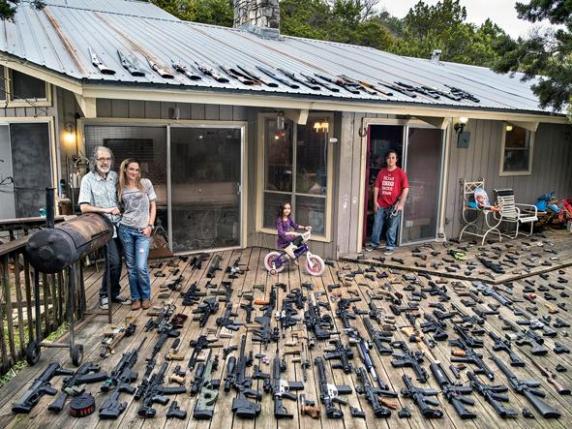
And so yes, I've definitely seen and experienced people watching inane tiktoks on speaker in subway or bus or airplane. It's the epitome of complete lack of empathy or self awareness to me, but I guess that's the way culture is going.
reply