Automobile final assembly lines produce about one car per minute. About 2400 per week for one shift. Some are slightly slower or faster, but not by a lot.
It's common to run two production shifts, but not three; one shift is needed for line maintenance. 1,000 per week indicates the production line is running, but having problems. This is much better than the few hundred per week from December, which meant hand assembly.
One line should top out at 2 shifts, about 5000 vehicles per day, or about 100,000 per year. Then add a second production line.
If you really want to find out what's going on in Tesla's plant, find a United Auto Workers organizer in a bar in Fremont and buy him a few beers.
I'm an industrial engineer who also plays factorio. It does a really good job of teaching some of the core parts of running a factory.
* what happens when there are supply chain hiccups?
* how much inventory do I want? Converting too much iron to steel will waste resources. What is the right mix?
* where is my bottleneck? Making anything else faster doesn't matter for overall production.
* every process has different time, space, and energy requirements. Running off of entirely electricity or fossil fuels both have pros and cons.
I've thought a bit about how it could be used to teach students in the classroom. It would be nice to have UI counters on the machines and setup a small factory. The concept of quality would also be a cool extension.
It's also just fun to look at the resources required to build a product from raw source. In real life the concept still applies - 10 lbs of ore will be a fraction of that once refined and a small fraction of that once formed and milled into a desk widget.
Factorio is probably the most satisfying game I've ever played. Amazingly challenging but has a wonderful feeling of accomplishment when building things. Don't mind the graphics, it's a lot of fun :)
I'm really not grokking your math. You said 1 car/minute/line, which on an 8 hour, 5 day shift would yield 2400 cars per week, and then 4800 from two shifts.
Then you said 5000/day, and I think you meant week, which lines up with the previous numbers, but then: how is that 100,000/year? ~5000*~50 is ~250,000/year. Do plants only run for 20 weeks/year?
Also, why only run a plant 5 days/week? It seems (admittedly, entirely naively of any industry knowledge here, like union rules) like each line should be capable of close to 350k/year at 1/minute for 16 hours a day.
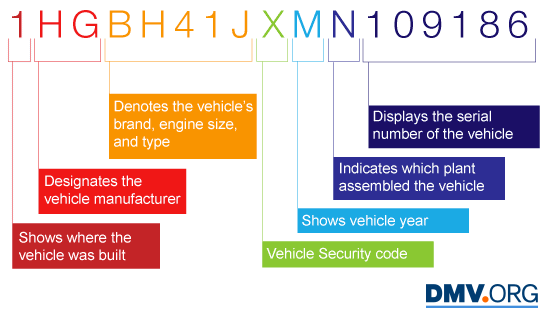
What do you do if Tesla is using a Linear Congruential Generator[1] to generate their serial numbers? Then the highest number found gives no information, even probabilistically. I don't know what the laws are on VINs though, so maybe it's forced to be sequential.
The graphs show a clearly exponential grow rate. No idea how long it will keep growing and when it'll start to plateau, but it does not seem to be going to suddenly, exactly this month stop growing. If they keep it like this apparent 10-20% increased production/week in 12 months they will be producing 3000-9000 cars/week.
So yeah, IF (big if) they can keep it growing at the same exponential rate it'd take around 65-34 weeks [0][1] to deliver 500k cars from now with 10% and 20% growth rates respectively:
They need to hit their immediate goal of 2,500/week by end of Q1 - see the last chart on that page. They didn't move this goal in the Q4 earnings call, which was surprising - but if this tracker is accurate the production curve seems to be on track.
They are also planning to bring in a fully automated assembly line being shipped from Europe, in March. Assuming nothing goes wrong there it is supposed to accelerate production even more.
Yeah, hopefully they didn't make that assumption... Can't imagine debugging a whole assembly line (even a virtual one in a game like factorio is hell at the beginning)
Except this one was already build and tested in Germany iirc. It should be debugged and taken apart into modular pieces and sent to Tesla. I assume installing these modules should be easier than debugging an assembly line in factorio ;)
Don't underestimate the innate human ability to fuck up what appears to be a simple job :). There will be delays and deviation
from a best case schedule.
I was excited by your comment, so I looked up the 2018 Leaf's range: 151mi in the US vs 310mi for the Model 3.
Is there a different model in Leaf the UK? The article you link to says "235 miles (NEDC)/177 miles (WLTP combined)" for the Leaf. Or is the way EV's are rated for range in the UK just different than is the US?
That's the same car, with three different range ratings based on different standards. The EPA one is the only one that bears and relation to real world performance.
I think those are for the same car, just using different standards for measuring range. Depends on which is most accurate. If the US measure for Tesla 3 is 300+ then it's probably apples to apples. But it would be interesting to see the same standard measurements for the model 3.
My Leaf has an EPA rated range of around 80 miles... And there's no way it would ever do that unless I drove under 50mph the entire way. At 80mph I get half the range!
We own two electric cars: A Tesla P90D and a Chevy Bolt. The Bolt is an American Car, if that matters to you (it does for me) and has an EPA range of 238. (Consumer Reports got 250 in their tests).
We also have a car with an ICE -- a Chevy Volt. It gets 55 miles on all-electric, and has a gas engine too. Handy for when I have to do the occasional long drive and don't want to worry about superchargers, etc.
The Bolt isn't as glamorous as the Tesla S, but it's certainly nicer than the LEAF golf-cart.
I don't think there is much (or any) zero sum competition dynamics is EVs for now. More sold means more consumer familiarity, better price curves on components, better supporting infrastructure.
Meanwhile, there is not real market share to quarrel over. There isn't a fixed number of EVs that will sell in 2019. It'll depend on price, consumer familiarity, supporting infrastructure...
btw... I think Musk has said things to this effect, at least back in TSLS's earlier days. I don't think they're worried about competing too much
not being in a zero sum environment doesn't mean that people aren't going to look at the price. When big manufacturers can scale up output I don't see how Tesla is going to justify their price.
And that isn't even taking into account that Tesla is burning through crazy amounts of cash already.
Sure. If you're expecting a total Tesla failure on price performance... then they'll fail. In terms of the EV models out in 2018, I don't think this is what is happening here. Tesla are having trouble keeping up with demand. They've also been playing a big risk strategy all along, so they still may explode or run out of money.
..I'm just skeptical that the last line of this article:
If Tesla can’t figure out how to make more cars soon, it could open a lane for rivals from Detroit and overseas to...
I don't agree. There is a big market here, it's basically the market for cars. There's no way Tesla could have ever held that whole market, I don't think they expect to and we shouldn't want them to. Within the market for cars, Tesla could be selling many times more cars than they are optimistically promising to make currently.
I think competition is, in this case, way down the list of problems. The problem is as they've been saying all along, they need to build more cars faster.
I just don't understand why car designers think it's OK to make ugly electric cars.
The craziest example is the i8 vs the i3. The i8 is lovely but the i3 is beyond ugliness. It's the same designers trying to build for the same line of cars. A regular BMW 3-series is no uglier than a 5 or 7-series.
Tesla built a beautiful car in my eyes. They took the look of an Aston Martin from what I see.
Then in a similar fashion as converting the style of a 7-series into a 3-series, they've managed to shrink and simplify the design whilst keeping the look. It's ridiculous that other car companies can't do this with electric cars.
I know it's pure vanity, but the Tesla is worth more simply because you don't have to wear dark glasses and a hat to drive it.
It's the same reason that I believe the Prius sold so well over other hybrids. A Hybrid Civic or Hybrid Fusion just looked like regular cars. Nobody looked at the tiny badges so nobody knew they existed.
You see a Prius, it's ugly, but you know what it is right away, an economical hybrid. People who didn't know asked WTF is, and the car kinda sold itself. I think Toyota knew that the people lining up to buy them would not care about how good the car looked. They just knew that the Prius was the weird car they saw over and over that was a Hybrid.
I mean, most people don't even know the 1st gen Prius existed. They look like a regular car. They still got great economy, but IIRC the car didn't sell nearly as well as the newer, more ugly Prius.
Model 3 says 220 miles base model and Leaf says 151, I don’t find their range to be that similar. 70 miles is a lot of distance. Granted the model 3 is more expensive but I would much rather have that extra range.
There is no Nissan specific charging network. The rest of the industry besides Tesla have long since settled on standards for charging and the presence of regular charging stations is improving but slowly.
A large part of why is that up til this generation of EVs (Chevy Bolt and new Nissan Leaf and others that are coming), they have really not made sense to drive far. You would have had to stop too often. They were in town or short (sub 30 miles) commute cars.
And having owned the previous generation Leaf for the last 3 years I can tell you 99% of our charging is done in our garage. Once in a while we park somewhere that has charging or my wife will luck into getting a charge spot in a parking garage. But we don’t take it on drives where we need a charging station to complete the journey. We have a gas car for those longer drives right now. But that will change with this new generation that have 40KWh+ batteries.
There is an extensive charging network here in Kansas City area; > 2000 plugs. Though as of 1/18 many have started charging $0.20/kWh, which is double the rate at home. I’ll still use them though. Places like grocery stores are still free.
I still wouldn’t leave my car just plugged in somewhere while I walk away for extensive amounts of time. Call me paranoid, but in urban Europe people will steal and vandalise the shit out of anything that looks slightly unprotected.
Help me understand that - leaving your car plugged in while shopping is no different than leaving your gas car not-plugged-in while shopping, in terms of leaving your property around.
The cord is part of the fixed charged, and not my problem ... just like the hose on a gas pump.
Thank you for the response--I can see why I was downvoted, but it might have been a bit of a mystery without understanding how the charging networks work.
I really dislike this focus on charging networks. Long distance trips with current generation electrics is not comparable to current petrol powered cars. If anything we should use the roll out of electrics to take back land to service cars which includes "charging stations" other than those already used for parking cars.
with regards to my trip comment, the contorted thought processes people go through to justify one hour stops for full recharges plus what can be ten to fifteen minute side trips to charging stations should clue many in on how not ready it is. (and yes it is an hour if not more even for Tesla to fully charge and range dives in winter)
>the contorted thought processes people go through to justify one hour stops for full recharges
But everybody knows you need to stop a full hour to pee for every two hours of driving else you might die. Think about all the delicious restaurant meals and fun you haven't had because you never needed to wait for your ICE car to recharge in the middle of nowhere.
Most people I know stop 15 minutes every two hours and maybe stop for a meal every 4 hours. An hour every two hours is too much. It extends the travel time by 50%.
My old rule for long drives was to drive for 3 CDs (i.e. albums), fuel up for 10 minutes, and repeat until done. On a highway, that's 200+ miles per 10-minute stop. EVs are already great for commuting and errands, but they have a long way to go before being even close to competitive for long-distance driving.
Do they? How long does it take them? At 3 hours per 200 miles, 12 hours is 800 miles. Maybe you don't live in the western US, but it's a big place. If every gas station had a super-charger, range anxiety would be almost a non-issue, and travel time would be a noticeable but not intolerable problem, but we're a long ways from that.
EDIT, because HN sucks...
70 MPH * 3 hours = 210 miles. You might want to talk to some normal humans who don't frequent superchargers.
I happen to live in the western US. I run into tons of other Tesla owners at superchargers, not surprisingly.
The usual drill is to drive around 120 miles and then stop for 10-15 minutes to supercharge. So yes, that is a bit more stopping that I used to do.
Tesla has a trip planner at tesla.com/supercharger
For Palo Alto to SpaceX's factory, it recommends stopping for 50 minutes in Kettleman, which means you're charging for 13% of the trip time.
{Sorry about the comment about 3 hours to go 200 miles, I misread what you said as taking what Shivyeta said about stopping for an hour to charge at face value. Oh, and why do you think that insulting me is an appropriate response?}
> Oh, and why do you think that insulting me is an appropriate response?
Yeah, that was probably snarkier than necessary. But we increasingly live in our own little bubbles, and "folks hanging around the supercharger" is definitely a small one.
You can use all non-tesla fast-charging stations, charging to 80% in 20 minutes. Do note that tesla supercharger stations also have "normal" fast-charging stations. Tesla is the only company remaining to deploy vendor-specific chargers.
Have you seen Tesla's charging connector? It's way superior to the bulky standardized connectors. And as said by others, there really is no other game in town right now for long distance travel in an EV.
I don't think it's entirely fair to expect Tesla to _wait_ for the rest of the car industry to agree on a standard that suits everyone. When the Model S was developed, no other car company except Nissan had any notable interest in electric cars, and no other company had plans to make cars even _close_ to Tesla's in terms of battery capacity.
Assuming that a charger network was necessary for success, which I would argue it was, waiting for the others to catch up could have killed the company.
Note that there have still been no large-scale deployments of charging standards with more than 50-60kW of power, which is half what Tesla is currently deploying to most of its charging stations in North America.
Superchargers are usually built outside of cities along the long-distance routes. So they might not be as obvious as other chargers. Here is a map of all active superchargers: https://supercharge.info/
They claimed to approaching 1,000 cars a week around the end of the year. I put the numbers from Bloomberg on my blog on Thursday to track the accuracy:
Anybody else worried/cautious about giving a company even more data about one's location, driving habits, etc. (also, without that company sharing that data with the user whose data it is) - also, knowing that the company is truly in control of the vehicle?
I'm all for renewable energy and electric vehicles, but it could be done without selling the user.
"""If you no longer wish us to collect Telematics Log Data or any other data from your Tesla vehicle, please contact us as indicated in the “How to Contact Us” section below. Please note that, if you opt out from the collection of Telematics Log Data or any other data from your Tesla vehicle (with the exception of the Data Sharing setting detailed above), we will not be able to notify you of issues applicable to your vehicle in real time, and this may result in your vehicle suffering from reduced functionality, serious damage, or inoperability, and it may also disable many features of your vehicle including periodic software and firmware updates, remote services, and interactivity with mobile applications and in-car features such as location search, Internet radio, voice commands, and web browser functionality."""
Really curious about what the production bottlenecks are for the Model 3. Is it batteries? Would be thankful to anyone able to point me to further info on this =)
Im in industry automatization- and its usually that the production is a linear problem- in a tree of linear problems.
Meaning any station in the production may show problems after the start.
These come in 3 categorys- full stop (machine breaks/quality so bad production cant continue), solvable (machine can produce at reduced rate) - and hidden (quality problem shows down the line).
Hidden are the meanest problems, because you have to traverse back up the tree to the producer of the problem- solve the problem, which may result in new problems - migrating back down the production line.
Try to not see it as a binary problem of release- not release, but more of a very complex longterm graph traversing problem.
By any chance to you have any good links or books on this kind of thing? So much of continuous deployment winds up sounding remarkably like things industrial automation already has language and studies for.
Tesla is still producing cars completely manually.
This is why Musk bought the automation company Grohmann. But after he demanded they work 100h weeks (instead of their previous 35h weeks), and said unions would be unnecessary, almost the entire company quit and left.
That's the current bottleneck, automation of assembly.
Grohmann is a German company. Having employees work more than 40 or 50 hours a week on a regular basis is hard to defend legally. Employee protection is pretty strict about that. Heck, even working more than 10 hours straight is borderline illegal and puts the boss (not the employee) in very hot water.
So I can hardly believe that 100h per week were actually demanded.
Not just work, but unpaid overtime, as Musk demands from most employees.
This story of the 80-100h demands was actually in German news at the time, plus of course the complaints of making Grohmann dependent on a single car company.
Sorry, no. Tesla ist not producing 4000 cars per week (S+X+3) completely manually. Not unless they have 500.000 employees like Foxcon. And I would ask you to provide links for your claims. Following Tesla buying Grohmann, I saw no reports of 100h weeks asked (which would be illegal by labor laws), nor of large parts of the employees leaving.
Currently, a complete automated battery poduction line designed and built by the former Grohmann company, is being shipped to Nevada, after installation in March it is expected to double the battery output to 5000 per week.
Tesla executive Klaus Grohmann was ousted last month after a clash with Chief Executive Elon Musk over the strategy of Grohmann’s firm, which Tesla had acquired in November, a source familiar with the matter told Reuters.
The current bottlenecks are in the battery production at the Gigafactory, they screwed up and had too much faith in a contractor doing the battery pack assembly lines.
>
“To date, our primary production constraint has been in the battery module assembly line at Gigafactory 1, where cells are packaged into modules.”
“We had to rewrite all of the software, from scratch. We managed to write 20 to 30 man-years of software in 4 weeks.”
This is for once a great article about Tesla that is neither too critical, nor too rosy. They actually do some intelligent estimations instead of just going with whatever anonymous "analysts" or "experts" in the financial markets say.
It's a real issue for Tesla if they don't figure out how to build 500,000 cars per year within the next 2-3 years because then they open up a flank for the traditional car manufacturers who probably need 3-4 years before they can market EVs that can compare in specs with model 3, most notably on range.
At around 200 miles/320 km, an EV has a range that makes it suitable as a second car for the masses (as opposed to the passionate enthusiasts that might buy in already at 100 miles or less). 200 miles is enough for driving around the city. Currently, the Tesla models, Chevrolet Bolt, Renault Zoe, the new Nissan Leafs, and Opel Ampera, have such ranges. This is the range segment that the traditional car manufacturers are likely to open their first real bids for competitive EVs in from this year and through the next 3-4 years. Tesla can live with that since the segment is insufficient for the masses. Average Joe will not buy an electric car with a 200 mile range. Ever.
At around 300 miles/480 km, an EV could be a real primary car if you live in regions with sufficient charging stations. Currently, only the larger Teslas and Model 3 are there. This is where Average Joe starts to buy. But the larger Teslas are too expensive for Average Joe. As for model 3, it can hardly be called a car for the masses until it is produced for the masses. And therein lies the problem. If Tesla doesn't nail this range segment for higher end of the medium priced cars produced at scale in the next 2-3 years, some of the traditional car manufacturers may catch up. Don't forget that even if Tesla reaches 350,000 cars in 2019, which is still a big if, they still leave most of the chips at the table. They will have to go way beyond 1M cars yearly to really close the upper medium price range for the traditional manufacturers. Even 500,000 cars would leave most of the market for a handful of it's competitors. And it would require one or two more Giga Factories to reach a million, which they haven't started to build yet. As for the lower priced cars, Tesla is not there yet, and the traditional car manufacturers may well get there before Tesla if they get to experiment for 4-5 years with the medium priced cars without loosing too much money. So Tesla really needs to hurry.
Around 400 miles/640 km, range is no longer an issue for almost any buyer. The few exceptions are buyers in rural areas or buyers that need to commute very far to and from work every day in cold weather or in mountain regions. A 100 mile commute to work in subzero temperatures, and/or in mountain regions would mean that you would have to be very sure that your car is fully charged every day, which would be too much of a hassle. But apart from such edge cases, most people could skip charging for a full working week and still use a car with 400 miles range for commutes. And on road trips, they could drive as far as is comfortable anyways, and if once every few years they needed to drive further than 400 miles, they would likely have passed several charging stations on the way. Currently, no cars are there, but Tesla will likely be first in this segment with the larger models S and X, quite possibly within 1-2 years. Those cars are not for the masses. It's not unreasonable to believe though, that model 3 will have such range in 3-4 years.
At 500 miles/800 km, the range issue is solved for 99 percent of potential buyers in the modern world. Tesla claims its new Roadster will have such range. It is still to be seen whether that is true, but anyways, that car is not for the masses. But maybe in 7-10 years, this will be standard in the smaller Teslas...
I believe a 100 mile range is enough for a city car or secondary car. I have an older Leaf and it’s fine for that. We’ll get a plug in hybrid soon to replace the primary car (minivan).
Even at 300 mikes range, my wife would not drive an EV, due to range anxiety. She won’t even drive my Leaf (she calls it a golf cart). This range anxiety is all psychological, and it’s the main thing hindering EV adoption.
Many cars don't even get 300 miles, although it's true you can "recharge" them much quicker. One thing I'm not sure about: how long lasting are typical EV batteries? Because I can see not wanting to buy a car that will have half its range a few years down the road.
Firstly, I'm not sure you're right in your reckonings about what sort of consumers want what sort of range. And especially if you look at Europe or Japan where things are less spread out than the US.
If Tesla doesn't nail this [300 mile] range segment for higher end of the medium priced cars produced at scale in the next 2-3 years, some of the traditional car manufacturers may catch up.
I'm not sure about that. No one else is coming close to making batteries as cheap as Tesla's. The Chevrolet Bolt has 200 mile range but each one Chevvy sells is an $8000 loss because they have made it artificially cheap. Unless the other car manufacturers get started with their own huge battery factories, they are going to stay years behind.
Also: the Renault Zoe and Nissan Leaf are rated at 150 miles (EPA), not 200 miles as you suggest. Teslas and the Chevrolet Bolt are the only 200+ mile cars by the EPA standard.
Making an affordable 200+ mile EV is very difficult. That's why Tesla are building the biggest factory in the world.
>Even 500,000 cars would leave most of the market for a handful of it's competitors.
Better batteries and more competitors producing cars with different characteristics will vastly increase the market size. That means the incumbents could grab most of the market, but Tesla could still sell lots of cars and be profitable.
Why not just put a camera or other sensing system outside their one plant? (People already do this using satellite photos of walmart parking lots, etc. to get advance information about holiday sales.)


It's common to run two production shifts, but not three; one shift is needed for line maintenance. 1,000 per week indicates the production line is running, but having problems. This is much better than the few hundred per week from December, which meant hand assembly.
One line should top out at 2 shifts, about 5000 vehicles per day, or about 100,000 per year. Then add a second production line.
If you really want to find out what's going on in Tesla's plant, find a United Auto Workers organizer in a bar in Fremont and buy him a few beers.