I was lucky enough to be on one of our pest free island when the only resident rat was caught. The effort and expertise of the rangers was truely amazing. They knew the rats favourite foods (a particular brand of peanut butter) and habits (avoided traps, went through monitoring stations). They tracked it over several days with cameras and monitoring stations.
They customised a monitoring station and killed the rat with a trap in the middle of it. The crack killer team spend their time tracking down and killing hard-to-get pests in truely remote locations like Little Barrier Island.
https://i.stuff.co.nz/environment/100925042/eraticated-roden...
My favorite book by the late Douglas Adams is "Last Chance to See," a nonfiction project where he travelled around the world for a year looking for various endangered species. The chapter about a fat sort of parrot called the kakapo talks about the challenges of keeping rats out — boats are not even allowed to dock on the New Zealand island where the last remaining kakapo live.
(I once emailed Adams asking when a paperback edition of this book would be made available; he replied three years later, saying that it was finally in print behind "the ugliest cover I've ever seen in my life." The contemporary cover is not quite so bad.)
Kākāpō live on three islands these days, all having been made pest free. Though where they were rediscovered in the 60s is absolutely not pest-free, though is sparsely populated being at the extreme southern tip.
As a kid I used to go to the zoo and I remember the exhibit showing the population dropping to 59 birds, and feeling a deep dread about potentially losing them. It gives me hope that we've managed to bring them back to over 120 birds, I just wish other cultures had the luxury to be able to invest so much into protecting them that NZ is able to.
I would like to add that, having read them all, I also believe that this is the funniest of all his books. I laughed way more often and much louder than at any point of THHGTTG. That reminds me that I have to reread the section where he describes German tourists in his group (I'm German)...
Seriously, if you are thinking about giving a book as a gift to someone and can't think of which one to choose, this one is as safe as it gets.
One possibility to stop a global eradication of rats is to isolate a population of unaffected individuals in advance, so that when the global eradication is over, they can be reintroduced.
TFA obviously doesn't have enough information to evaluate this, but it seems unlikely that a fertility-destroying mutation would sweep the globe. This version of whatever gene they're modifying would be out-competed by literally every other allele. If anything, one doubts it would sustain long enough to affect the whole of New Zealand. They'd have to constantly replenish the stocks of CRISPR rats, much like many fisheries do.
IIRC the idea is that the "fertility-destroying" mutation really only stops female rats from being born. Male rats with the mutation mate with healthy female rats, the healthy female rats produce only male offspring, those male offspring mate with healthy females, and so on.
usually when groups try something like this it's a bit of a windmill tilt or a tragedy, then nature finds a way. the resiliency of biologic life is something like entropy
... an Arizona company came up with an interesting approach to rodent control: poison their reproductive organs. They got approval to sell their formula in 2016.
I wonder if the drug would work on felines, combined with the technology/approach here https://www.youtube.com/watch?v=AnpJBI_502U you may have an ethical way of dealing with what's a huge problem in Australia. I've been keeping an eye on this technology for a while now.
Esvelt's work also shows up in a proposal to modify mice on Nantucket Island to
reduce the incidence of Lyme disease, which affects 40% of the human islanders.
The gene drive technology looks like a classic "great power, great
responsibility" tech, with possibilities both for global benefits and
global disaster. We already have political struggles over managing
long lived nuclear isotopes, but genetic manipulation of wide-spread
endemic species seems like a space in which unforeseen problems have
the possibility of becoming immortal, modulo additional genetic tinkering.
We look back at how people in the Victorian era carried plant and
animal species around this planet, willy-nilly, and shake our heads.
Will future generations thank us, or revile us for how we use this tech?
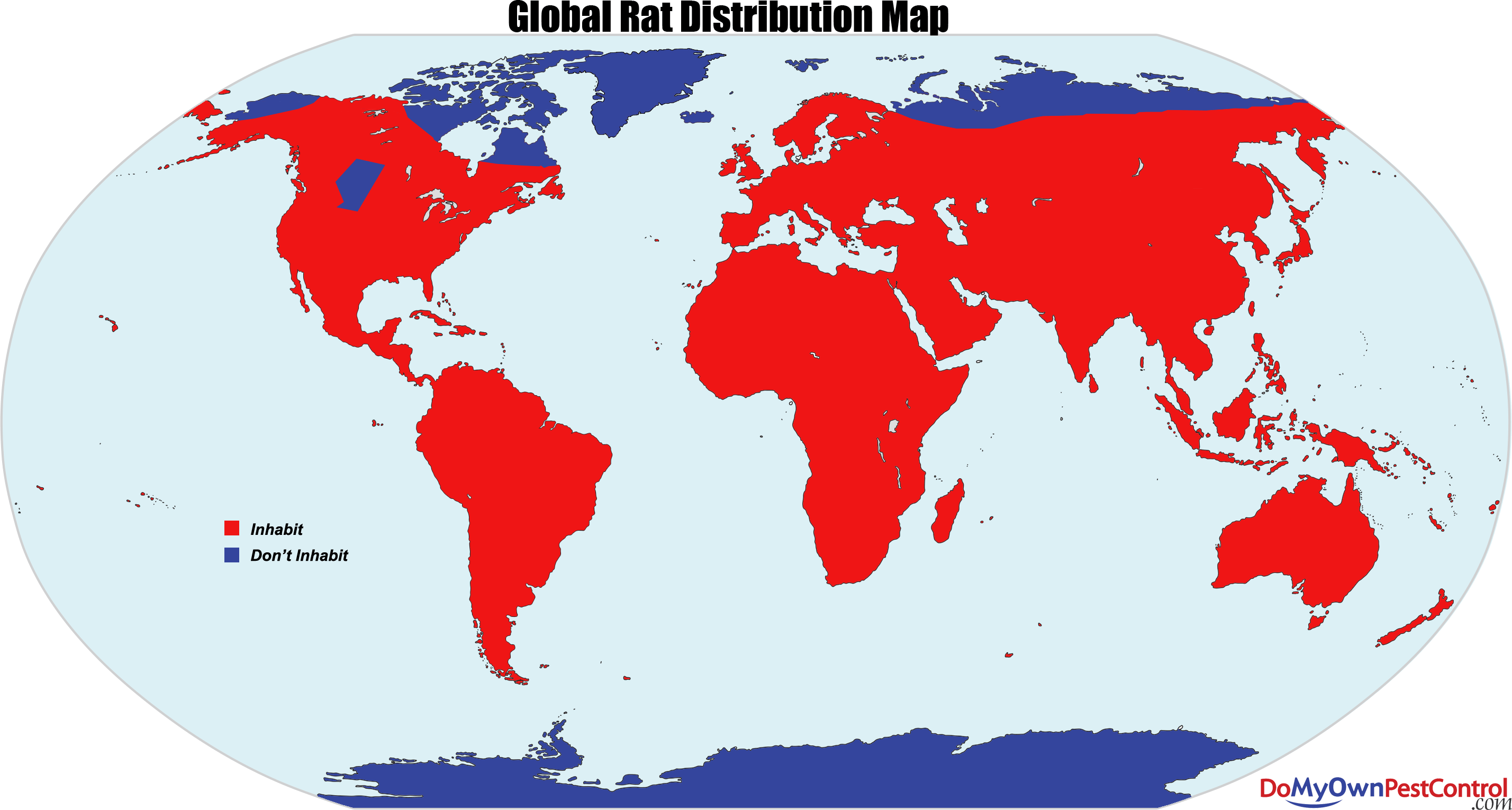
Okay, so I know rats have significance in some cultures - for example, to some Maori tribes, kiore, the Polynesian rat found in limited locations in NZ (due to being outcompeted by Norwegian and black rats) are considered taonga "treasure" - but honestly, what would the ecological harm be if rats went extinct?
Do they fill a vital ecological niche? In New Zealand, they certainly don't, they have supplanted a niche already occupied by our weta - an insect that evolved to fill the niche normally occupied by rodents. (And to show how far it goes, our native owls were the main predators of weta before mammals were introduced, much as how owls worldwide are predators of mice and rats)
Attract them in with an artificial flavor that rats just so happen to like. Lead them into a trap and cremate the remains on site. You would still need to stock bait and fuel but should this way you wouldn't have to go there constantly to reset everything. Or introduce silicon based predators..
I've looked into this and what worked for Alberta wouldn't work for NZ. Rats in Alberta can only survive around human habitation as it gets too cold in the winter for them to survive.
New Zealand is warm enough that rats can live in the forest year round.
And as a result it’s all about killing them. While poison works, there are some places you can’t use it and it’s preferable not to if avoidable.
While vastly harder there are some excellent traps available. The standard has been the DOC 200, which avoids killing the good guys but gets the bad guys in a relatively humane manner (at the end of the day, you’re killing it).
Take the pricing with a big pinch of salt - the A24 is more like $200, and the DOC 200/Victor costs about $100 for Joe average as the cited price excludes the box. Don’t go making your own box without thinking carefully, as the dimensions need to be correct unless you want to kill your neighbours cat.
Killing your neighbour's cat would also help preserving out native birdlife. Wouldn't be great for preserving your relationship with your neighbour though.
* Possums (the Australian brushtailed possum) - large drops of 1080 combined with intensive trapping. Control is either by the Department of Conservation (DOC) or by Animal Health Boards (AHBs) as possums can spread tuberculosis to cattle.
* Deer (red, fallow, sika, rusa, whitetail, and wapiti/elk) - largely managed by recreational hunting and/or "wild animal recovery operations" (WARO) - where commercial hunters shoot them from helicopters, retrieve and process the carcasses and then ship the meat to countries like Germany that love a bit of wild venison
* Chamois - managed primarily by recreational hunting, with the occasional WARO to supply the market for "gamsbart" in Austria
* Tahr - managed by recreational hunting, especially trophy hunting (one of NZ's premier trophy species), but also culled by DOC when numbers get too high for their environment
* Wild pigs - mainly recreational hunting, some control by AHBs to prevent TB.
* Wild goats - recreational hunting and culling by contractors working for DOC
* Wallabies - Unsure of any official eradication plans, but often hunted recreationally
* Wild horses - Only really exist in the Kaimanawa ranges. Population managed by DOC. When overpopulated, they round up horses and resettle them with interested owners. If not enough horses can be resettled, they cull.
* Wild cattle - Mainly controlled by recreational hunting. Apparently wild beef is lean and tasty as hell. Very limited range, but I'd love to try it sometime.
* Rabbits - Recreational hunting, professional cullers, poison drops, biological controls (calicivirus etc.), and oh, that time that settlers released ferrets, stoats, and weasels into NZ to control the rabbits. The stoats and weasels decided that rabbits were way harder to catch than our native birds, but ferrets and feral cats still eat a lot of rabbit.
Not sure if I'm missing any other imported herbivores that could be considered a pest.
DOC controls them in two ways - firstly by controlling rodent numbers, secondly by directly controlling mustelids.
The rodents - a spike in mice/rat populations causes a spike in mustelid populations. Then when they run out of rodents to eat in the forest, they go for the birds. And our native trees (the Nothofagus beech trees) often "mast" - that is, all the trees drop their seed all at once, which is a major food source for rodents. So a mast year will always lead to a massive spike in mice and rats, which then leads to a massive spike in stoats and weasels.
As for mustelid control - it's primarily done via trapping (although there can be significant mustelid bykill from large poisoning operations targeting rodents or possums). DOC has a standard trap that works well when baited with an egg - but trapping is very manpower intensive and DOC is not very well funded.
According to New Zealand's Ministry of Health, the project is going as planned. This fact surprised me though:
> Tobacco use is the leading cause of preventable death and disease in New Zealand, accounting for around 4,300 to 4,700 deaths per year. When the deaths caused from exposure to second-hand smoke are included, this estimate increases to around 5,000 deaths per year.
Vaping is very popular here, so that may supplant it. You can often see teenagers using it, and even in low income neighborhoods, it's rare to see cigarette smokers outside in the daytime.
As a smoker about to quit for health but primarily financial reasons - pretty damn well.
I earn six figures, but really can't justify nearly $100 for 50g of tobacco to myself these days. When I started smoking 20 years ago, it cost me $30 for 50g. The Helen Clark government introduced a policy that the excise tax on tobacco would increase by 20% each year, and everytime it does, more and more people seek (government funded) help to quit.


They customised a monitoring station and killed the rat with a trap in the middle of it. The crack killer team spend their time tracking down and killing hard-to-get pests in truely remote locations like Little Barrier Island. https://i.stuff.co.nz/environment/100925042/eraticated-roden...