Are you perhaps discounting the societal influences pushing your kids towards their respective interests?
If they view any amount of advertising or interact with other children who do, for example, they could already have ideas about what is "appropriate" for them to like.
I also think there is a crazy push to say that no, boys/girls definitely don't like certain things naturally, it MUST be social conditioning, and if you even dare to suggest that there is any natural difference to how children develop you must be sexist/patriatrchist/etc etc.
All I want to say is that there seems to be a stupid amount of aggression towards even the mere idea that statistically girls/boys might like something other than boys/girls do even if social conditioning were completely removed(which is a nonsensical idea in the first place, a child is a member of the society from the second they are born, they are not goldfish).
I totally agree that insisting it MUST be social conditioning is close-minded and silly. We should be open minded about various possibilities in nature vs nurture.
But on the other hand, lots of people have a tendency to think and say that certain things are "obviously true" based on what they are used to seeing in society, like that boys like cars and girls like dolls, and even start rationalizing it ("This is what is natural and right!") and even actively fight to maintain this "natural truth". They treat boys who like dolls and girls who like cars as deviants who need to be corrected.
And that's bullshit, even if there is a natural inclination towards trends for genders, that doesn't mean that's "natural law" and we ought to make sure to maintain and protect it.
> I totally agree that insisting it MUST be social conditioning is close-minded and silly.
Isn't it somewhat likely though? Kids are born with all of their genes and they can't do anything straight out of the womb. What has zero impact at that point is nurture though.
Nurture therefore seems to have a huge influence, this somewhat downgrades genes to only push what's already been established by culture.
Well, that's assuming that genes are all maximally expressed from the moment somebody is born, and that nothing can lie dormant, so if we don't see the behavior right away it must have been "added later" by culture.
I agree, but the reality is we don't know. Also there's evidence that cultural norms do substantially shape our opportunities (e.g. Denmark vs Saudi Arabia) and we should be mindful of this always. This cuts both ways too — men in Scandinavia are much more likely to be involved in child rearing through choice, and this is something men in other cultures miss out on.
Oh yes, I never meant to imply that nature vs nurture has some important moral implications. Ultimately it doesn't matter if something is the result of nature or nurture, we wouldn't let people murder if there was a "increased murder likelihood gene" because our genes does not decide what is correct.
The real fallacy has always been people who think that if something can be proven to be nurture rather than nature, that means it's "naturally right" and should thus be encouraged, and deviancy from that norm "corrected".
It's totally okay for boys to play with dolls even if it turns out nature makes boys favor toy cars over dolls on average.
Are you really saying that in our society there is a more stupid amount of aggression towards things being gender neutral that are actually gendered than the reverse?
This seems absurdly out of touch with reality.
To give just one example, but I hope you'd agree there are literally millions if you think about it for a second: There was a recent Hollywood movie and documentary about the true story of a man who was beaten into a coma and permanently brain damaged for wearing the wrong kind of clothes for his gender. And that doesn't seem particularly unusual to me (it's not really the focus of the movie).
I can't think of anything close to that in reverse?
> Are you really saying that in our society there is a more stupid amount of aggression towards things being gender neutral that are actually gendered than the reverse?
GP did not say anything about x > y. The post merely pointed out that some people like to link everything to social influence.
I dunno, they didn't explicitly say anything about it, but it seems about the same as someone getting really angry that someone thinks pi = 3 in a society that has for centuries legally enforced, on pain of death, that pi = 10.
Yes, pi is not 3 but are people really unaware of the social signals they give off by being so outraged at the mistake given the context?
To extend this analogy far beyond what is wise, I'm not really sure there are that many people who think that pi is 3, probably mostly 3.1 or 3.2, which makes fixation on extreme outliers who might believe it's 3 extra odd.
I don't know why you are being downvoted because I wanted to say much the same. There is a clear asymmetry in our current cultural practices, and the assumption is often that activities are 'naturally' gendered, even when there is evidence to the contrary.
My girl was 9months when sh started acrively pushing for bracelets, fancy hats, etc.
I took her to a bike shop, an she immediately went for the pink Helmet with stars.
We dressed her in neutral cloths (second hand), we dont have a TV. Her mother does not wear juwlery or makeup.
To us this appears innate.
I don't think your child is interested in jewellery and fancy hats for the same reason as a grown up. My children of both genders enjoy that stuff too, to the point where my none of my wife's jewellery is in one piece.
One thing I've noticed is that I can't look at them without a cultural confirmation bias. So I've completely lost faith that anyone can judge these things without a stringent experimental method.
Which shows nothing. The natural allure might be for girls [in general] to go with pink, and the use of pink for boys (is/was it something to do with hunting?) might have been pure social conditioning.
Aside: Are their examples of paintings showing boys in pink? The only historical "pink" I know of is "hunting pinks" which are bright-red.
I imagine we're only talking "aristocratic boys", as red dyes were expensive and most boys through history will have had natural coloured clothing, I imagine.
My eldest boy used to adore his pink handbag, fwiw. That's a very limited data point, however.
Edit: found https://en.m.wikipedia.org/wiki/List_of_historical_sources_f... it does strike me these are selections to prove the point, ie poor statistics. Also there might be errors (blue for a boy, and pink for a boy - sounds most likely to be an error). Also that a lot of the pink for a boy quotes are for babies; seems like what mother's choose for babies is different to what children/juveniles/adults will choose for themselves.
Nope. Historically, pink was considered a masculine color, because it's a shade of red. It was like this for centuries, until the 20th century in western nations.
Not quite sure what your nope refers to, but you release that's not a reason. All you've done is shift the question from "why is pink for boys" to "why is red for boys" and still haven't countered any of my observations, particularly that it might be "pink" was for boys because of social conditioning in the past.
I'm not sure what you're getting at. I'm just pointing out that this whole thing is entirely cultural, and that it's changed very, very recently (within the last century or so). There's no underlying biological reason for pink to appeal to little girls; it's just a cultural artifact. If little girls were dressed in lime green all the time from birth and the culture militantly pushed the idea that "lime green is only for girls!", then little girls would want lime green toys and clothes.
Pink was a color that was selected arbitrarily by some department store in order to sell more baby clothes. And the colors (blue/pink) were switched almost immediately by customers.
I wonder if there's some social constraints that babies naturally seem to rebel against (or at least be less interested in). Cooks used to be mostly women, now they're mostly men. Accountants used to be mostly men, now they're mostly women. https://www.weforum.org/agenda/2016/03/a-visual-history-of-g...
Programming is a good example here. It used to be women's work, mainly because it was relegated to women (men didn't want to do it, and it was seen as not that important). Now it's reversed; there's lots of money in it.
This is frequently repeated but rarely with supporting data. Programming work during the 70s and 80s, during which women's representation in programming reached its peak, was well paid. According to the BLS entry level salaries were $20k for the lowest level of "computer programmer" and $40k for the highest. Entry level "systems analyst" is listed with $28k salary [1]. The current BLS statistics for computer programmers does not break down by seniority, but lists an average annual income of $90k [2]. Adjusted for inflation, and the salaries are pretty similar. In Silicon Valley, entry level salaries above $100k are common but this is not replicated nation wide.
My daughter (almost 2) doesn't like dolls, fancy hats, jewelry, etc (and neither does her mother); she prefers vehicles ("toot toot") and puzzles. We dressed her neutral (though including some blue and pink at times, also other colours), and sometimes girly (for parties like anniversaries etc).
Oh, and she loves the police/ambulance/fire dept, but most of all, the garbage truck!
Yeah, my sister, who was born into a family of three significantly older brothers and plenty of boy toys, didn't start to express feminine traits until a bit older. But puberty is, of course, when the biggest differences emerge.
If this is the same research that always gets cited, then it more accurately shows that boy and girl monkeys played with the wheeled toys an equal amount, but the girls played with the doll toys more.
That still shows a gender imbalance, but I find it interesting that it always seems to be used to imply that girls don't like trucks, rather than boys don't like dolls as much.
(A similar rhetorical trick is used when talking about favorite colours. Apparently lots of people's kids just love pink and this tells them it's all genetic, yet if you survey women their favourite color is the same as men, blue. They just collectively prefer pink more than men relatively speaking)
The preference for dolls is likely related to the role of females in childcare. Males are more the explorers and hunters. Women never explored nor hunted very much.
Newborn babies exhibit differences, by sex and on average, regarding what captures their interests.
EDIT: I looked into this more and could only find studies on 9 months old, which is potentially old enough to argue for socialization, although the studies obviously tried to control for that.
It's probably hard to get much meaningful info out of kids in the under-6-month range because their senses, including eyesight, tend to be, to use the technical term, shit.
Fair point! But I have been fairly neutral (except unconsciously...). I have also observed marked differences as early as 15 months. And it matches the experience of a lot of parents.
What societal influences? If anything society is discouraging boys from being boys and telling girls it's cool to do boy things, yet boys still end up being the ones interested in technologies that were developed by men before them like engines, cars and computers.


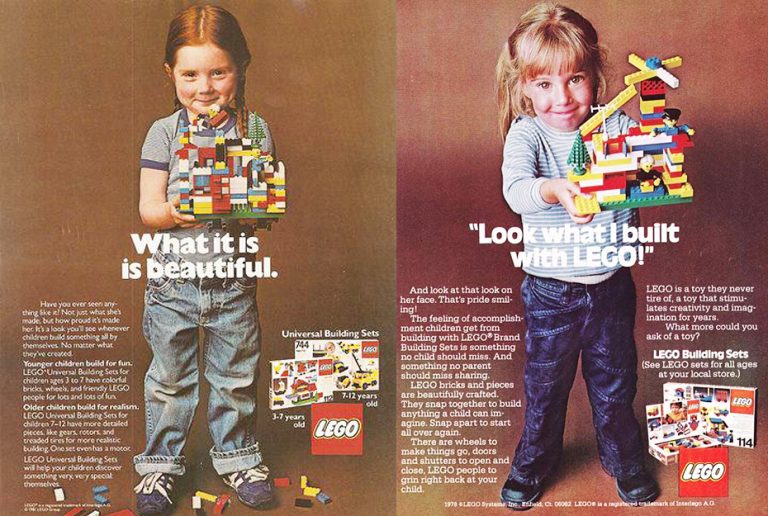
If they view any amount of advertising or interact with other children who do, for example, they could already have ideas about what is "appropriate" for them to like.