Having not used a smart phone for ~5 years now, I can say that it is totally a workable solution - however, there are, of course trade-offs, and several persistent annoyances. Rather than get into a list, I will present the one thing that I find the most frustrating:
Our society expects you to have and use a smart phone for nearly everything.
This might be less annoying if it meant only new functions or supplemented old things, but in my experience it's the opposite. It's often the most simple low-fi things we have been doing for ages, that have been overhauled to require a smartphone, app, and data plan. It's hard to be looked at as 'the person complicating things', when everybody else expects you to carry a luxury item (and an expensive monthly service bill), just to perform a basic task, like paying a bill, or reading a menu.
I'm not one to wander around expecting society to cater to my own needs, but I openly admit that I find this Twilight Zone-like first-world problem (What do you mean, you can't use our app?) the most infuriating.
With that said, you can still get by in most situations, but I don't see the above getting better on into the future, unless there is some cultural revolution about how view and use technology.
Calling a smartphone a "luxury item" if you live in America (or similar) is a bit disingenuous. Anything that has 85% market penetration is by definition not a luxury item.
In some countries this could be an accurate description, though. And I agree with the overall sentiment, I would like it to be easier to get through my day without using a smartphone.
Yeah, even as a smartphone owner, I find it annoying how some places just assume you're able (and willing!) to install some arbitrary app to do business with them, etc.
That being said, it really doesn't have to be all that expensive. Sure, if you buy the newest iPhone every year and get a high-end Verizon plan, that'll cost some dough. But you can get a used or low-end smartphone and a cheap plan - they're out there: https://www.tomsguide.com/us/best-cheap-cell-phone-plans,rev...
> Yeah, even as a smartphone owner, I find it annoying how some places just assume you're able (and willing!) to install some arbitrary app to do business with them, etc.
Especially when they're a broken mess.
This summer I visited LA, and at one restaurant they had a QR-code menu. They didn't require installing any app, it just sent you to some web page.
I had good service (outside, LTE, full bars) but it was impossible for me to see the menu. The thing would never load. Sometimes it would somewhat load, but when scrolling and trying to pick things (it was an ungodly mess of drop-down lists) it would disappear again.
> But you can get a used or low-end smartphone and a cheap plan
The above was on an iPhone 7, which I admit is "old" (but it is up-to-date software wise). So, I wonder what you mean by "cheap low-end phone", and how that would compare with mine. Especially since we have some low-end Android phones at work, which are "current models". And the scrolling in the settings app, for example, feels much less smooth than on my geriatric phone. They just lag all the time. My phone basically never does that, which is the reason I'm not particularly looking to get a new one.
This was the first time I couldn't have my phone do what I needed. The site worked well-enough on my friend's 11 pro.
It adheres to the definition. The problem with the phrasing is that nearly all people in America and many other countries are inundated with luxury items to the point where we view them as basic necessities. That doesn't make them necessities, they are still lifestyle choices that while more affordable than ever are still superfluous to our existence.
At least in Germany you get a Smartphone for way less than 100€ and a call + SMS + 4GB data flat for 5€.
If that is luxury what is going to the cinema for 20€ (movie and popcorn) for 2 hours?
I never bought a smartphone for myself, but I've seen 100 EUR smarthpones, and what you get is just a toy (unless you want to do your banking or login to e-mail on a Linux device with severely outdated kernel and no OS updates, which can't go for a few minutes without phoning home, wherever that is)
More expensive ones are not significantly better, either, unless you pick a brand known for keeping up with security updates.
Although I do not live there, I have a SIM card from Italy (Fastweb) which for 6€ lets me have 50GB Internet (of which 6GB could be roaming in the rest of Europe), 100 sms and unlimited calls.
Recently moved and didn't have internet service setup yet. I got an unlimited data bundle from them for £17 for 30 days. Felt like a pretty good deal, and it didn't get throttled at all. Latency was a slight issue with zoom calls though.
You don't get that consistently. You can go to check24.de and get their sim.de offer for 5gb data and sms/telephone flat, but that's a limited time deal. So technically yes, but in general you are more in the 8-10€ ballpark for this kind of offering.
No kidding. India has GDP per capita less than 2.500 USD and mobile phones are ubiquitous -- old, poor, kids, whatever. Plus service is dirt cheap. Reliance JioPhone is insanely cheap: https://www.jio.com/en-in/jiophone
Yes the idea a number of business have that everyone has a smart phone and can install an app ... or they have decent internet in the first place, I find maddening, not for the resulting situation but for the picture of what sad standards must exist, either the big wigs are deaf to the developers, or they've hired in technical people who are one trick ponies / low over skill set. I have a simple rule: If the business doesn't have a functioning web site, why should I trust some fly by night app, sorry, no can do. Turning off (or more quietly breaking them) non data phone access services won't work on me either.
After being given a few years ago an old, pre google raising its ugly head samsung, which I loved, I went on to purchase four more cheap phones on sale, the last two were merely to install apps that needed a much newer OS. My experience with the newer and cheaper phones were not the best. The last being damn right nasty with poor ability to properly clean up the phone's limited amount of storage, and permissions set that no app (I use) could write to the sd card. Sadly if that was the only small issue I might have considered it worthwhile to root the device. Reset ultimately freed up the internal storage space and it's now an excellent hotspot device and phone ... if I think to change the settings back to accept calls.
> luxury item (and an expensive monthly service bill)
Before applying any subsidies for low income people, you can get a perfectly usable smartphone for under $40 and unlimited data cell service (slow but usable for basic tasks) for $10/month. An iPhone, with service, can be had for a total of under $50/month.
Nice reply. I laughed. At the office, when I am asked "Do you really need it?" I sometimes answer: "I don't _need_ my left leg, but I really like it." Same for toilet paper in the stalls.
Cash and bank accounts are two systems in parallel. Cars and public transport (or bicycles, or walking) are systems in parallel. Good clothing and poor clothing are systems in parallel.
A physical driver license and a digital driver license are systems in parallel. Banking/services on a mobile phone and visiting a physical store are systems in parallel.
Interesting. It's easy to focus on public life catching up to technology, but we're also pretty good I'd say to stay backwards compatible. But who defines what should be minimally required anyway?
Pen and paper? Obviously. Smartphone? Internet? Phone?
I was kinda using 'luxury item' rhetorically more than specifically, but it seems to have derailed the main point. (Whoops. Live and learn.)
With that said, expecting anyone to shell out x dollars/month, so they can pay to park, or scan a QR code - rather than tapping a plastic card, or handing them a piece of paper - doesn't really feel like technological advancement.
For clarity, I believe there are many other things that Smartphones do, which definitively make life simpler. (I believe technology should make life easier, or better - or at least be useful.) And, I even think it makes sense to have certain utilities combined that don't really provide an advantage alone, such as: If you can pay with a phone and not need to carry another payment method, sure - why not just pay with a phone?
Again, the point I was trying to make originally was if you choose not to use a smartphone, you will run into situations where a stupidly simple process has been not supplemented (or improved), but totally replaced with 'you need a phone and data plan'.
< Disappointed Muhammad Sarim Akhtar Meme >
This is a real frustration point that anyone considering living without a smartphone will run into.
> It's hard to be looked at as 'the person complicating things'
Recently I caved and bought a smartphone, but I remember a time before that when some friends and I went to a bar.
Someone paid the bill and asked everyone to Venmo him their share. Lacking any immediate way to do that, I reached into my wallet and handed him some cash.
He looked a bit perplexed. "Oh, don't worry about it."
As the younger generations stop rolling their eyes at 'old people' and become 'old people' themselves, I think the problem will be corrected. Requiring smart phone apps is discriminatory, unsuitable for for many people due to an array of disabilities. Some of which, like worsening eyesight, will happen to all of us given time.
Supporting these people are one reason why we won't get beyond SMS based two factor authentication for the foreseeable future.
I went to the dentist recently and they required me to open a link in a text message they sent me to digitally 'sign' their paperwork. Without a smartphone I would have no way to do it. Yes, our society today expects you to have a smartphone.
I have a smartphone and this annoys me to no end. No I don't want to zoom through your menu in some PDF format which doesn't render nicely on my phone.
I have left restaurants because of this, and told them why.
Let's say you have kids and you want to use any of the family settings (e.g. Screen Time) Apple, Google, etc provide for an iPad or Chromebook: All app based.
I happen to use an old iPad just as an admin panel for these cases, but the almost complete lack of any desktop or web interface is stupidly depressing.
I had researched dumb phones recently only to learn that the two most important functions of a smartphone (for me) is the GPS and having a decent camera, and these things are either crippled or missing entirely from dumb phones. It's simply easier to dumb down your existing smartphone, especially if you have an Android phone.
In my case, I have a 2017 Pixel 2 XL running LineageOS, with a text only home screen launcher (OLauncher). I only have SMS, phone/contacts, camera, open street maps, KOReader, Music, Podcasts, Notes, and Calculator. That's it. Everything else has been purged or disabled, including the web browser, via ADB.
I don't really use it all unless I'm driving. I wrote about my setup here: https://chuck.is/phone
I'm in a similar boat. GPS, Camera, but also Telegram and a basic browser for reference.
Dumbing down a smart phone doesn't fix the size and delicateness of the device either. I essentially want a tiny durable smartphone, ie size of an iPhone 3g.
My biggest thing is I hate how important this device is while also being unwieldy and easy to break. The only entertainment I use on my phone is twitter and even then I find it easy to stop scrolling.
I want the abilities of a smart phone, but something I can keep on me without worrying about it, like wearing a watch or how I can throw around my wallet.
I had thought that smartwatches didn't have cameras, but it looks like some do, at least. I can't imagine they're very good, since iPhones have a hard enough time fitting good cameras.
While true that an iPhone is still needed somewhere in the process, Apple now lets you set up an Apple Watch for family members that don't have an iPhone.
Literally tried to upgrade my Pixel 2 XL to Lineage and it failed repeatedly. Reddit says, no joke, it's the cable that's the problem. Sigh. Same computer didn't have issues flashing old Galaxy and Nexus phones.
Bought a dumb phone but found it lacking for your exact reasons -- no GPS, crappy camera, and texting using the number pad was tedious as all hell.
Gave up, got a Pixel 7, might think about flashing it.
> Reddit says, no joke, it's the cable that's the problem.
Not surprising. My experience across a few different Android devices over the years is just about all USB-related functionality is a flaky mess, and that includes things like ADB and installing new ROMs. How it's flaky varies from device to device which makes it extra fun.
Not knowing anything about Pixel 2's USB functionality, but I have encountered cases where new cables have solved the problem I was encountering. One time was when I've tried to transfer files from my phone to the desktop and the speeds were ludicrously slow, like ~2Mbps where normally it would be 80-100 Mbps. The cable was rather old at that point and I bit the bullet and bought a new one and at that point I've realised that cables can worn out eventually.
Can confirm with Android phones and vr headsets that ADB access can definitely be affected by choice of cable. Talk about face palm, but it is what it us
> Literally tried to upgrade my Pixel 2 XL to Lineage and it failed repeatedly. Reddit says, no joke, it's the cable that's the problem.
I recently started having issues with the data functionality of the port. I can't get ADB to run at all, it will only charge. The power button also doesn't work so I've had to set it to shut off the screen by holding down the "Recents" button.
> Bought a dumb phone but found it lacking for your exact reasons
I like the idea of dumb phones, but I don't want to have to buy separate things like a digital camera, GPS, mp3 player, etc. Seems like it's just adding more complexity.
That OLauncher home screen just made me take a deep breath, very very nice! Truly 'calm tech' [0]
My anxiety with ditching Android to LineageOS is the loss of all the software-defined image quality in the Camera app.
What has been your experience using your phone camera with Lineage? As in is it good enough to also capture some family moments or do you use it just as functional camera to take pictures of something you need to remember?
I had Signal installed for a while, but ultimately removed it because it's mostly friends sending stupid memes, breaking whatever I was concentrating on seemingly at random. I do have it running on my laptop.
I'm aware and I have. It's been helpful, but I tend to get into the habit of checking and messaging friends at random when I feel I feel slightly bored. Secondly, they'll often send me links and Youtube videos that I can't open. I'll likely reinstall it again in specific situations, like when I'm traveling abroad. Thirdly, the battery life on my phone lasts a few days without Signal running in the background. I've had the setup I have for about two months and it's working for me, at least right now.
I'm going to grab one of the Jolla devices and give it a test drive next month. I think there's decent alternative out there where you can still maintain your privacy without having to step all the way down to a "dumb phone".
I've planned on running the Pixel 2 XL into the ground. I was originally running GrapheneOS but switched to LineageOS after support was dropped. I did look into CalyxOS but I believe support for the Pixel 2 was dropped around the same time that it was dropped by GrapheneOS - likely coinciding when Google stopped releasing security updates.
> It's simply easier to dumb down your existing smartphone, especially if you have an Android phone.
That claim is a bit nuanced, IMO. Before I finally chose to move to iPhones, I tried my best to remove distractions from my Android phone, and I failed. iOS is less customisable, but comes with a configuration/ecosystem baseline that's far easier to tolerate, and insofar as it is flexible, the changes are far less painful than bringing an Android to that level.
What did you find difficult in removing distractions on Android?
I got a Pixel 5 few years ago (seemingly the smallest form factor Android device), didn't install any apps, removed a bunch of stock apps I didn't need, and turned off notifications for everything beside incoming calls/messages. After that, I just trained myself to avoid using search/the browser unless necessary and to do something else when the itch arises to check the phone for something.
I'm sorry, but I don't understand your first sentence. You researched dumbphones and discovered they're not smartphones? I'm struggling to understand what you thought you were going to find.
I had spent time researching dumb phones and thinking about what my needs are with a mobile device (ie GPS and decent camera). What I learned was that a "dumbphone" isn't really an option. Maybe we're getting into semantics here, but can a dumbphone have both GPS and decent camera and still be considered a dumb?
I've intentionally never owned a smartphone. Dumb phones abandoned by my family have been serving me very well for years (strategy: use them until they stop working; get next one; repeat).
My daily work is in forestry, as a brush cutter -- occasionally, GPS would be necessary (unavoidable even). For 95% of the cases, though, I've found a workaround by postponing the map-related tasks (e.g. making sure I understand the borders of a particular forest subcompartment correctly) to the next day and hand-drawing the shape of the subcompartment from an online map to a piece of paper. With the drawing in hand, I can usually accurately confirm the borders by visual observation. Once more, this probably only works for simple blue collars, not for guys that need to do more on-site planning.
Other than that, I occasionally miss a tolerable camera (for digitizing expenditure checks) and QR code reading ability.
All in all, living with old dumb phone is fun. Zero cost if you break it or ruin it in the forest (mud!). I hate my current Nokia, though -- but can't ditch it because it still works, lol. I still miss my Nokia 3310 (the original one), which I used every day for 12(!) years in a row, starting in around 2001 as a high school student and finally letting it go in around 2013 when I was a young father. It was one hell of a phone.
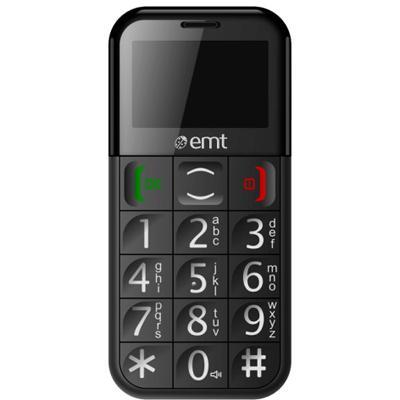
My current favorite oldscool dumb phones are the "senior phones" with huge buttons. This ZTE s202 was really enjoyable to use (belonged to my grandpa), and the no-bs design somehow feels really elegant: https://i.hinnavaatlus.ee/p/1200/99/43/S20220must__6ee8.jpg
Yeah sure, but I'd say that 95%+ of things posted and discussed here require some form of understanding you only get when working in IT yourself or doing it as a hobby. I don't want to sound condescending but I doubt that HN would be interesting for the average brush cutter or just for anyone not being familiar with IT, that's why I asked :D
> I'd say that 95%+ of things posted and discussed here require some form of understanding you only get when working in IT yourself or doing it as a hobby.
This is just incorrect IMO. I work in marketing, I'm tech-savvy for a normal person but by no means an IT enthusiast, and there are plenty of business, history, economics, science, culture, etc. links and discussions on HN.
I'm a corporate lawyer (and not one that works for tech clients) and I have long had an interest in programming and tech. I'm not the only such person in my field, either. Software development has never been more accessible or high profile so I think these days you get people from all fields who may have an interest in it.
Why do you assume that a brush cutter is not familiar with IT or technological topics? People's backstory can be more complicated than most people expect.
> Why do you assume that a brush cutter is not familiar with IT or technological topics?
It's definitely not usual and it made me curious. Most of the people I meet who talk and understand IT also work in IT, or at least did once in their life.
I've never met a blue-collar worker who seems to understand IT. That doesn't mean that I'm saying that blue-collar workers are dumb or can't ever understand IT, the venn diagram is just very slim in my experience.
Sorry for asking I guess, I'm a bit confused by the fact that now two people have questioned my question, I didn't mean to be rude.
> People's backstory can be more complicated than most people expect.
I think you might also be looking at tech with a slightly narrower view. Silicon Valley Web 3.0 startups are one section of tech, but you’ll also see stories about John Deere and the right to fix farm equipment, optimizing motors, flood control, and whatever else on HN. Tech and hacking is a pretty wide field and every economic sector has its own definition of what constitutes “tech”. For some it’s optimizing excel spreadsheets, for some it’s crypto trading, and for some it’s about building better branch cutters.
I live in a small european country with the same amount of people living here as in New York City. The city I live in has 60k people. Maybe that makes it a bit easier for y'all to understand.
I really don't get why now a couple of people have told me that I'm wrong. I'm talking about my own, real-life experience, not some kind of mental, non-existing argument.
I am not saying that IT can't be a diverse field and that only IT people can know about IT - I'm saying that in MY life, I have never met someone who knows IT who doesn't also actually work in IT or did at some point in their life. So I was curious why an IT person started to work as a brush cutter, or how they got into IT etc.
The point everyone is making is this is not an IT forum. It’s tech (which includes machinery) and business. You can avoid IT entirely and still work a tech job. I’d dare say the vast majority of tech jobs are in no way similar to IT.
My point is that the commenter mentioned that they're a brush-cutter, while they have comments on their profile talking about Free-/NetBSD, Perl etc.
This made me curious about this persons background. These details just created a very interesting image in my head - brush cutter by day, Free-/NetBSD hacker during the night. If they don't want to go into it, fine, just figured I might as well ask.
Brush cutter here -- not at all insulted by the question! I'm actually a trained journalist, but at one point I needed better work-life balance. Agreed to help out my (late) dad's classmate who is a forester. Brush cutting and tree planting seem to somehow fit my personality (excellent for loners who like physical effort in nasty weather, lol), so I stayed.
As for BSD, Perl, Tiny Core Linux, Plan 9, etc -- I suppose I have a long-time intellectual interest in various "fringe" IT topics, computers as a tool for thinking, and repurposing old computers and ultra-minimal OSes in a meaningful way. I'm a horrible coder, but I love programming languages, lol. (I would have probably made a decent linguist, syntax or spoken language researcher, but oh well.)
Obviously, HN is an excellent place for folks like me -- people who are (always?) slightly lost in life. Unable to make big bucks (this is fine!), but still intellectually curious. It really is a perfect online environment, and IMO a remarkably good embodiment of free speech and democracy. Thanks HN, and thanks dang, for the excellent moderation!
Focusing on the phone seems like missing the mark. The addictive thing is not the phone, but the internet. Even with a dumbphone you can easily waste as much time on your laptop's web-browser (and people did: FB and Youtube were already big before the iPhone was a thing).
Conversely, if you turn off data, there are not many possibilities to spend huge amounts of time on your phone. (And yes, there are still plenty of useful offline smartphone apps.)
Definitely a key insight: every attempt to be less addicted to your smartphone will fail if you do not fill up that void of newly available time with something more productive, healthy, etc.
The good news is that you don't need to set a very high bar for a better use of this free time. Read a book. Go on a small walk around the block. Take care of your garden, if you have one. Do simple chores. Do nothing at all. Almost anything is better than smartphone usage.
I only recently rediscovered that doing nothing is a perfectly fine activity and that it's okay to be bored.
That might sound obvious and borderline stupid, but it really feels like I had forgotten that for a while.
This insight made cutting down my smartphone time dramatically easier and much more successful. Because while I had strategies to replace bigger chunks of social media consumption with reading books, going for walks and other hobbies, you can't really read a book if you just have a short downtime (like waiting in a queue). So I pulled my phone out to bridge that little bit of downtime which eventually always crept back into more and more situations until my screen time ended up right back where it started.
Realizing that I can just 'do nothing' made a huge difference. I also read a paper that found that boredom plays a huge role in creative thinking, which made it easier for me to do nothing because it suddenly felt like that was a productive activity.
It's a little sad that 'taking care of myself' wasn't a good enough reason to accept boredom into my life and that I was only able to do it once I believed it would have an effect on my productivity, but it worked very well and I have yet to see a downside.
I am sleeping better, I am more emotionally balanced, I feel like my problem solving skills have improved and I'm slowly, but noticeably, increasing my attention span.
All in all I can highly recommend reducing mindless doomscrolling as well as accepting more boredom into your life.
When I finally got a smart phone 5 years after the iPhone came out, one of the first things I tried to do was train myself by not getting service on it for over 3 months. The idea was to make sure I had other kinds of content on it that weren't update-hits; mostly eBooks and saved long-form articles, plus some map apps for navigation. So data engagement was limited to WiFi islands and focused on practical business.
This was definitely only partially effective, probably because I already had bad habits from my laptop. OTOH, to this day I do have at least a rudimentary deeper reading/writing flow for my phone I can focus on without too much conscious effort, so it wasn't useless.
My conclusion is that most of us probably would benefit from either intentional choices or self-imposed restrictions... but most of us could also probably benefit more from a combination of both.
> My conclusion is that most of us probably would benefit from either intentional choices or self-imposed restrictions... but most of us could also probably benefit more from a combination of both.
This sentence is a good tldr for the book, Atomic Habits.
Slowing down internet to a crawl works for me too. Once I hit my data limit it runs at 128 kb/s which is perfect. I just wish it ran at that speed all the time.
I too have quested for a Dumber Phone. As an easily distracted engineer who values my time, I enjoy being on a dumb device, particularly one without Maps. Things hat I've tried:
  - Punkt MP02 (Pigeon): small black & white Android phone with a non-standard launcher. Doesn't support MMS on Google Fi, which is needed to participate with friends & family (USA), so it sits on a shelf.

  - Unihertz Atom: tiny Android phone, storage chip began dying within 3 months. Supports MMS, but my previous company's MDM locked it out due to a lack of recent security updates and their phone plan required a login to receive MMS!
I also looked into the Hisense e-Ink phones (Android), but they are hacky to use this it in the USA (lack of frequencies & Google Play). In eventually realized that I already had perfectly good hardware (Pixel 4) that I could turn into a dumb-phone without generating more e-waste. I began compiling my own locked-down distro, but in the end I just wrote a shell script to turn an Android phone into a dumb phone: https://github.com/tstromberg/quietude. For example:
  - For a truly "dumb" phone: `quietude.sh disable all`
  - Disable distractions but keep the app store: `quietude.sh disable distractions`
The key here is that apps are disabled in a way which can only be enabled again by plugging the phone in with a USB cable. This keeps me from mindlessly re-enabling apps when I am bored in line somewhere. I also get to keep PagerDuty, Plugshare, Lyft, Google Photos, and whatever other apps I find convenient to have available.
I've got a Punkt MP01. I love it. I charge it every two weeks. It's durable. And it works. There is a problem with it not working with group SMS. The MP02(current version) fixes this I think.
I've posted this here before, but I've figured out a way that makes an iPhone work as a semi-smart phone for me.
I delete all app that I waste time in, but keep one that are useful. (I won't blow two hours scrolling Lyft, and it's very helpful sometimes) I then set screentime permissions to block websites I don't want to use (like reddit), and prevent app downloads. I set a screentime password and give it to my partner.
This way I get all the "benefits" of a smartphone with none of the scrolling and time wasting. It's also very easy to switch it back to a full smartphone, get the password from my partner and turn off screentime. I'll do this when I travel internationally for work.
This reminds me of when my dad used to ask my mother to hide the peanut butter so he couldn't find it. He was still fat, so clearly that wasn't a perfect solution.
I don't use many apps outside a browser, e-mail, and text. Two things that help me are I leave my phone on silent all the time and I disable all notifications. I can't stand notifications. I don't need them. I'm not 911, no one is contacting me with a life threatening emergency, I'll get back to their call or text whenever.
I love having a smartphone because it's a cybernetic appliance. It's awesome. I just don't need it constantly occupying my attention. It's annoying how many apps, even system ones, that want to show notifications all the time. I wish iOS supported an affirmative toggle, let me disable all notifications by default and then let me turn them on one by one. Do not disturb by default and let me affirmatively enable "ok to disturb". I filed ERs to that effect when I was at Apple but I'm sure they went to the Future/NTBF black hole.
I ask because I've been trying to make this system work for me, but find that the app update flow (partner unlocks phone -> update apps -> partner locks phone) always breaks and I end up with an unrestricted phone.
The fact that you can't allow updates while also not allowing installation of new apps is a huge blocker here for me.
I did the same thing this New Years. Blocked email, safari, all non-important applications. Kept things like: message, fb messenger, fitbit, camera, etc.
If I really need to know the answer to something, I will ask Siri. And most things I just add to my to-do list for looking up the information later.
I've done this in the past too and it works. Right now though I have it set so that I know the passcode to unlock it all, but that small amount of pain to go and unlock it is enough to make me pause and think about whether I actually do need to check the news, etc. Very rarely is the answer yes, but when I do need an actual smart phone (confirm a ticket on some random website for example) it's nice to have the ability to do so. Just have to have the discipline to lock it back down!
Their point is that you can't, there's basically no way for it to be entertaining, so it's a safe app to keep available if you're prone to waste time scrolling.
The problem with trying to replace a smartphone with a dumbphone is that most people (young people at least) don't use calling and texting anymore unless forced to. I'd rather have something in between a laptop and a smartphone that is designed to be comfortable for carrying around in a small bag or pocket, but that also has a physical keyboard and is designed to be used productively for programming or writing for example.
As it stands, smartphones are the worst of both worlds though: the form factor of what is essentially a legacy communication device, but none of the human interfaces necessary to make it useful enough to really take advantage of all its computing power (and often also its software cripples the device unless you're running a custom android ROM). What people hate about smartphones isn't that they're constantly plugged in but that they have a device on them all the time that is basically designed to turn the user into the ideal consumer: a passive addict with no attention span. If it was more common to have access to portable hardware that is designed to empower users being creative and productive, maybe it'd be a different story.
But then again, I think most human beings probably want exactly what they're getting with smartphones and are miserable and alienated at the human condition itself of being so susceptible to seeking out low effort short term dopamine feedback loops.
>I'd rather have something in between a laptop and a smartphone that is designed to be comfortable for carrying around in a small bag or pocket, but that also has a physical keyboard and is designed to be used productively for programming or writing for example.
Something like what? A small laptop is little more than a display attached to a thin keyboard. I'm not sure how you'd get something much smaller while retaining a physical keyboard and still being reasonably useable for programming.
This happened by lucky accident: I bought a 10" Galaxy Tab, a case for it, and a bluetooth keyboard all at different times. All exactly the same size.
The case has a front cover that opens like a book and converts into a stand. There is a weak magnet embedded inside the case so that when you close it, it sticks.
It turns out the bluetooth keyboard will also stick to this magnet! So I just stick it on there when I go out, and carry them around like they're a single unit. When I want to type something I pull it off, convert the tablet case into a stand and have a very serviceable laptop-like experience. Now if only it was running a proper Linux distro instead of Android...
iPad Mini fits (barely) in my pants pocket when I'm wearing my baggy cargo pants. Also would go around nicely in a bag. There's a variety of keyboard cases for it. Including hinged ones with trackpads which turn it into a tiny laptop. Can get it with a cellular connection. Small enough to take with you everywhere but big enough to make it awkward to pull out constantly.
Only drawback for your use case is the programming part. Though you could also get a small Samsung or Lenovo 8" Android tablet which would give you much more flexibility. There's also the 8" laptops from a few niche companies, though they will probably be thicker than tablet + keyboard case and wouldn't have the same battery life or cellular options.
Smallest, easily available device I can think of in this form factor is a 7" Amazon Fire with the Zagg hinged keyboard case. It's slow, has so-so battery life, and you'd still need to get a cellular connection elsewhere. But it's about the size of a VHS tape and it's pocketable. I had one for a while because I wanted a cheap tiny laptop. Fire tablets are easy to turn into mostly generic Android machines so it would be useful.
You don't need a dumb phone, you just need decide who's in charge. I used to want a dumb phone, but there are a few things (mainly maps/navigation) that I find genuinely useful that dumb phones can't do.
So I decided that it's my phone and I'm the one who decides how to use it.
I have a reasonably new iPhone. I spend maybe 15 minutes a day on it (excluding navigation), total.
I have removed apps I don't use. I disabled Siri, FaceID, most notifications, and location is turned off unless I'm using maps. I have one page on my home screen and there are maybe a dozen apps on it (and that still includes a few I have never used so I could pare down further).
I'm glad you're able to resist temptation so well. For others it can be more of a problem. For some it is equivalent to an alcoholic carrying around a pint of vodka that also happens to make phone calls.
I've realized there's a single simple thing that makes these dumb phones useless:
closed source.
That's right, closed source services.
If we were able to write our own minimal Messenger, Whatsapp, Signal, Viber, etc. clients without fear of getting a cease and desist letter from a trillion dollar company we could easily sideload them into any phone with an internet connection.
Phones are meant to be used for communication, but communication is not SMSs or emails anymore, it's a bunch of proprietary services which dictate what platforms we can use to access them.
Exactly that. I’m also worried to see KaiOS phones featuring proeminent Google apps. I don’t want Google in a minimal phone.
That’s why I’ve really big hopes for Mudita: they open-sourced their whole OS (I didn’t checked the code but it seems to be fully on github).
My biggest problem with dumbphones is that, in Belgium, nearly all banks now require you to use their app. (my solution so far: keeping an old smartphone with broken screen in a drawer, only for banking purposes).
Also, I realized that my use is completely different while traveling: I’ve an app for belgian railway, I synchronize PDF tickets to my phone and I also need the companion app for my bike GPS. My solution so far: using the Hisense A5, with eink screen. No google, most apps don’t work but bike GPS works great. Problem is that Firefox and Protonmail also work great, which is not a minimal phone anymore.
> without fear of getting a cease and desist letter
Seems like the problem is the law and legal system being abused to prevent adversarial interoperability. The official clients being closed source doesn't change anything.
I bought a Mudita Pure. I don't use it. I just wanted to support the creation of a dumb phone that aligned with my principles. Unfortunately for me, having a smart phone is essentially a requirement for both my work and my family. I am unwilling to give up either of these and therefore the smartphone is present.
In general, I agree with many commenters here. Separate devices with dedicated purposes tend to do a better job, and smartphones are designed to be both useful and addictive. As a result, I view the smartphone as a very dangerous tool. It can be used to great effectiveness, and it can become a blight on society.
When I was a child, I dreamed of a computer roughly the size of beeper that had no screen. Instead, I thought people would have a headset similar to Apple's wired earbuds with a microphone and we'd compute via voice with an internet connection to fetch data. Sadly, we're here 30 years later and there's still no sign of such a future. Amazon tried, Apple is trying, Google is trying, and no one is winning in that space. Apparently, it's both hard and unwanted. Today, I think my idea was naive, because such a device would likely play a minute thirty of ads before giving you the result of your query, and I would end up tossing the thing out the window of a moving car.
the interface you mentioned reminds me of how people in the movie "Her" interact with their futuristic devices
they still use a smaller display they keep in their pocket for visual content, but it exists as an accessory to view things queued up by the voice interface
I love the idea and the approach, I wish there was a way I can use this on a real subway (in the movie there seemed to be a lot more distance between people/users)
I really wish that the world gravitated towards more hardware-related gadgety future.
I was quite fond of the Japanese vision of future, where there is an item/gadget/accessory for everything. That way, people could choose to which degree they want to interact with their technology.
But here we are, stuck in the IoT software-focused world.
One day I noticed I have some Thought Problems, and after thinking about it I realized that most of my daily interactions take place with the same two devices.
Doing work on the same computer you game on, deal with family drama, communicate with co-workers and family, etc. takes its toll-- there's never any new stimulus, just living in the same 10'x10' cube playing with the same two toys for years on end. When you have a particularly stressful interaction with either, you're still forced to continue using it. (No wonder the kids are miserable. We replaced toys with smartphones.)
Things improved when I broke away to console gaming, set up a dedicated work computer, and did personal stuff on another. DSLR for pictures instead of phone. Moved away from taking notes on the computer and do data/object modeling with physical objects (anything from index cards to Legos). Etc. The only thing I use my phone for these days is reading news on the toilet, which is apt because it's all the same shit to flush either way.
I would actually kill myself if I had to spend any more of my time interacting with the world through a singular device. It's not a life worth living.
Or even the Star Trek (TNG-era) future - people put things on PADDs which seem to generally be for individual purposes / projects. They're cheap / disposable (replicable?), and are treated more like physical paper notebooks than expensive smart tablets.
I've been using my Samsung smartwatch with LTE as a smartphone that's hard to abuse. Thursday through Sunday I only carry it and leave my "real" phone at home.
It's pretty nice because I still have Bluetooth calls in my car and navigation in a pinch. I can still stream music and ask Google to look things up for me.
Actual calls on the watch are fine, but I do keep a pair of bluetooth headphones on me so I don't have to take business calls on speakerphone.
If texting is your addiction, technically this doesn't solve it but it doesn't increase the friction so maybe it's less of a temptation. I don't text that much so it's not a big deal to me. Doomscrolling is my downfall and fortunately not really doable on a watch.
The Apple Watch Ultra battery is much better in those circumstances. I used to struggle to last a day now I charge every other day and still have 20% ish left.
Oh man, I have been wondering about this experience myself - though if it would all work with no smartphone at all (I have been rolling with the LightPhone II for a few years now).
It had seemed like stand-alone watches were nearly there, but not quite the last time I dug into it. But it works for you?
It depends on what you mean by stand-alone. It works for me as a stand-alone device for days at a time, but you still need a phone to set up the watch and my phone plan is like an addon to the phone so you need that to set up the account. I don't think you can set up a line for these watches in the US without the "host" phone.
Honestly I think using an Android phone with minimal apps, or having two profiles, one for work, one for play/weekends makes the most sense. And on iPhone using screen time to force your grip from app vices makes more sense than the self punishment of these phones.
That's expensive for a phone with basically zero features...
Why not just buy a nokia 3310 (the new one) for around 60eur, where you get a better, faster phone, with basically the same limitations as any other of the dumbphones, but it's cheaper and works faster and has a better screen? Also, the ergonomics are better, dual sim, sd card slot for music... and again, no apps, no emails, no notifications.. just a phone as it used to be (well.. with music and bluetooth).
This idea of "more features, better deal" is a common thing people bring up. However, one of the stronger "features" that draws me to the Light Phone is that they are an opinionated company that designs their product specifically to prevent the distraction/engagement-seeking style of apps that are so prevalent in smartphone ecosystems.
Whether or not that's a feature that resonates with you is, of course, another story!
For me I have the money, would like to vote with it by supporting a company aligned with my interests, and don't mind paying that premium. You might have different finances and prefer the $60 EUR option, and that's fine too.
If you check out Jose's channel (from the article), he reviews tons of these phones and there's likely a sweet spot in there for most people that are curious.
It's not a touchpad, it's physical keys, and texting on the phone from the video seems horrible too.... nokia+t9 is quite efficient and was never an issue back then.
I agree about the driving thing... maybe nokia n95 needs a new release too :)
It is interesting to see how different communication patterns are compating to your own bubble.
For me dumb phone is no use, as I don't use cellular voice for anything (I've talk with my friends and parents on daily basis, but it is always Telegram/Skype voice call, not cellular voice), and only usage of SMS for me is force-feeded 2FA for banks and other services which don't know better (unfortunately)...
Who will I call, we all are all around the Globe? Why I will text?.. Ok, week ago I had birthday party and there were a fair amount of guests, so some of my friends now in same location as me. Do they have local phone numbers? I bet, they have, because without it it is impossible to open bank account or rent a flat. Do I know these numbers? No. Because for what reason, we all communicate in messengers for years. These accounts are fixed identities for us, and phone numbers are for governments and banks.
I could simply turn off my smartphone with same effect as have dumb phone :-)
Oh, maybe, I need to call ambulance once a year...
Edit:
Idea of phone which is technically LTE Modem with all chat/voice protocols under the unified phone-like interface, plus ability to run some offline GPS, like Organic Maps or OsmAnd, looks good, but politically impossible due to close nature of most chat/voice apps.
This is my issue. I wish I had a dumber phone. Like, one that allowed only certain things by default - messaging apps, gps trackers, Spotify being the big ones. If there was one like that, I'd buy it almost immediately.
I long for a dumber phone, but I’ve been thinking about all the supplementary devices I’d need to buy to make up for it — basically a printer (+ ink) for tickets and a GPS device with car ride services and google maps built in for getting around.
I _feel_ as though I need those things, at any rate.
> I’ve been thinking about all the supplementary devices I’d need to buy to make up for it — basically a printer (+ ink) for tickets and a GPS device with car ride services and google maps built in for getting around.
I've got a printer at home. Sister in law printed a plane ticket on it the other day, just in case there'd be an issue with her phone. Instead of "GPS device + car ride services" I've got an old-fashioned thing: a car. The car happens to have its own GPS so I can get around.
I'm also in Brooklyn. Light Phone 2 has directions including MTA transit. For tickets, I do print them out.
Sometimes I'll draw a little map for fun and use that instead of the phone directions, for simple things. Once I draw the map I find that I actually memorize 90% of it anyways and often don't end up looking at it.
As for car ride services, I just stopped using them except for super essential times, at which point I can pull my iPhone out of a drawer.
The most helpful thing I've done was to set my iphone screen to grayscale by default [1]. Now if I look at my phone for any period of time and then look up the whole world appears to be so colorful (even in the dead of winter). The choice of how to spend my time becomes easier and I still have a smartphone in order to live comfortably in the urban world (open qr code menus, order car or scooter rides, present digital documentation or event tickets, etc.)
It's not some burdensome 'quest' though. Just get a Nokia 105[0] which uses the Series 30[1] operating system and has no Internet connectivity. It comes preloaded with a few basic games so you can kill time waiting for things or pacify yourself in awkward social situations.
I honestly don't understand the point of people avoiding smartphones on principle. I'm not sure if it's a contrarian way of thinking, a way to stand out or what. Why not just dumb down a smartphone?
I have a Pixel 5 because it's the smallest form factor Android smartphone available. I never installed any entertainment (games, social media, video streaming) apps on it. Those that came pre-installed (ie. YouTube), I uninstalled or disabled.
After this, I disabled notifications for everything besides calls and messages (SMS, Signal, email). I cleaned my emails so only genuine stuff ever pops up, and I make it a point to not check my phone, except for set times throughout the day, unless I'm being bombarded by messages or calls (as would happen in an emergency).
The phone that is left sits in my pocket 99% of the day, but still has the tools that I may need (Maps, Uber) should my forward planning be thwarted by unexpected occurrences (lost my pre-planned route to a new place, a cancelled bus/train). My daily smartphone use is maybe 10 minutes. Some people have commented that they didn't think I had one, because I'm barely holding it.
I don't understand the need to get rid of tools which could help in an emergency or unexpected circumstances. I anecdotally had a friend who uses a dumbphone because he wanted to simplify things, and he ended up pestering the people he was around to check their maps or to look something up. In the end he went back to a smartphone.
You can do this with any smartphone, cheap or expensive. I did it with a Pixel 5 just because I liked the form factor of something that can easily slip into my running bag, pockets etc. Plus, as a bonus, the low usage of the device should keep it going for a couple of years until my next dumb smartphone.
the problem is not smartphone but people without self control
you can use smartphone exactly same way as dumbphone and still have smart features available when needed
problem with dumbphones is mainly horrible camera, so you would need to carry camera if you wanna capture something, smartphone with self control solves this issue, nobody forces you to use anything but Phone and Messages apps and you will still have great camera and GPS, which are both lacking at dumbphones
if you use phone this way you should have pretty great battery life even with smartphone, you can choose some power efficient SoC combined with huge battery, for instance in Sony Xperia 10 IV, which is also relatively compact (narrow, but longer)
if you wanna save your time delete all social media apps and preferably also block these sites in browser, then also turn off notifications for everything but Phone and Messages, eventually Email if you need and your problem is solved
if you wanna go a bit more extreme you could use custom ROM without gapps, but honestly as someone using this config for almost decade I am hardly limited by apps because pretty much everything works even without gapps
Hmm. I don't automatically disagree, but the same argument is put forth for excessive food, drink, drugs intake and self-control is, by itself, not a real answer, but a diversion of sorts typically given by the item's manufacturer/seller. As in, it is both true, but also misleading -- especially so in the case of cellphones.
By their very design these days, smart phones are created with a singular goal of keeping the attention of the user. Incessant A/B testing, analytics and dark patterns use make them more addictive than an average willpower can handle. It can be done, but that individual is officially fighting off efforts of companies with budgets sometimes rivaling those of nation states.
I can agree that the problem is people, but I think we disagree on the exact nature of the problem.
> the same argument is put forth for excessive food, drink, drugs intake and self-control is, by itself, not a real answer, but a diversion of sorts typically given by the item's manufacturer/seller.
But it is a real answer. Solution to being fat is not some miracle pill or miracle diet, but lower the food/calories consumption and more exercise/movement (which is both again self control), simple as that. Seems like people nowadays are so childish they can't even admit how stupid and lazy they are and they prefer to blame someone else for their own misfortune caused by themselves. No one forced you to become fat by excessive eating. You can always become slim, if you start eating reasonable amounts of food and start exercising, but of course you can ignore this and try each year new miracle diet, same as people moving away from smartphones to dumbphones to fix their self control issues.
> smart phones are created with a singular goal of keeping the attention of the user. Incessant A/B testing, analytics and dark patterns use make them more addictive than an average willpower can handle.
I think you are confusing smartphones with apps/sites. Smartphones themselves and their manufacturers (maybe besides Apple since they produce complete package) are certainly not using any of those methods to make them more addictive. People are addicted to social media apps, not the phones, phones are just tools. It's like blaming silverware producers for being fat, because you eat sugary/unhealthy food.
If you wanna blame someone blame companies developing/producing apps/services, your blame on smartphone companies is misdirected. I don't think Xiaomi or Samsung (these two have pretty much all Android market in Europe) produce many addicting apps, while I am certain Facebook, Bytedance, Twitter and other companies produce addictive services/apps.
Um. It is an answer and it is even a convincing one, but it is not the answer.
<< Solution to being fat is not some miracle pill or miracle diet, but lower the food/calories consumption and more exercise/movement (which is both again self control), simple as that.
Yes in general. However, there are studies[1] suggesting that it is not exactly one size fit all in the sense that some bodies may defend their accumulated energy in the form of fat. In other words, there is a genetic component that can't be so easily dismissed with 'just eat less'.
<< Seems like people nowadays are so childish they can't even admit how stupid and lazy they are and they prefer to blame someone else for their own misfortune caused by themselves.
I am not sure I would phrase it quite so bluntly. You do recognize that it is something of a vicious cycle? An obese man is a lot more unlikely to start running around the block precisely, because of all that extra weight weighing him down. It is often a string of bad decisions, but it sounds overly dismissive.
<< You can always become slim,
I mean, in a sense we can always go on a starvation diet, but is more likely to result in a yoyo effect. Hardly a long term solution.
<< I think you are confusing smartphones with apps/sites.
Not really. I do mean both especially now that Google more tightly tries to run its ecosystem. Unless you are trying to convince that their flagship is not designed that you stare at it all the time. And if you look at Samsung ecosystem ( and its flagship ) the distinction you suggests slowly starts to lose its meaning.
<< People are addicted to social media apps, not the phones, phones are just tools.
You are right. At the end of the day, the tool itself is just that. However, if the tool in question liberally dispenses social equivalent of nudges, pushes, validation, belonging to a 'community' and effectively serves as heroine to attention starved addict, the tool is an addiction dispenser. It has to be recognized as such. Like.. I have no problem with drugs.. but I can't just will oxi addiction away. Social addiction is notably different, but you underappreciate its impact, because it is a mental addiction and not physical. I posit that the truly addictive things are more mental in nature.
Also true that phones are just tools; hardware is largely useless without software. Apple, Google, Samsung all provide various time wasters.
<< Smartphones themselves and their manufacturers (maybe besides Apple since they produce complete package) are certainly not using any of those methods to make them more addictive.
I am not sure Google, Samsung or Apple would agree ( openly that is ). To borrow your example, Apple only introduced limits on screentime after demands from various interested groups[2]. I don't even want to think what Google does.
<< If you wanna blame someone blame companies developing/producing apps/services, your blame on smartphone companies is misdirected.
It is a fascinating IF clause. I am paraphrasing while trying to retain the same meaning: "If I want to do something, my action is wrong". Could you elaborate? I think I understand what you are trying to say, but I do not want to assume the meaning you wanted to convey.
<< I am certain Facebook, Bytedance, Twitter and other companies produce addictive services/apps.
This thread makes me feel like a geezer but I am not even that old. "Resisting to install / use apps" sounds alien to me.
I feel society has moved on and we're pretty much expected to have these devices. I even bought one for my job because they require an auth and I have to verify its me again at random intervals. So secure, so authenticated. I hate it
I use Niagara Launcher which is a very simple Android launcher. Then I've set up my phone though Family link with my wife as my "parent" so that I need to ask her permission when I want to install a new app, and when I want to use apps like YouTube for more than 15 minutes per day. It's kind of a dumb system but it works for me.
You've introduced just enough friction to disrupt the habits you want to break without bricking your device like some other commenters have.
I try to keep friction in my life for other habits I don't want to develop (don't keep alcohol or junk food at home, keep credit card in a specific drawer to limit impulse spending).
I think trying to avoid all apps is unnecessary, just the ones designed to addict you which is almost all social media and a lot of mobile games. My weather app doesn't try to get me to doomscroll :) I have been against social media for a long time, though I do have a FB account I log into once yearly or so. I block ads because I don't like the distractions. I stopped logging in to YT because I didn't like how everything changes to try to draw me farther and farther in. Now I keep a separate list of bookmarks to content owners and decide what I want to watch on my terms.
I don't know how to get others there, though. Things feel so obviously designed to grab my attention and keep me there and I can't stand it, I don't get how others don't seem to care and jump in with both feet.
But then again I can't look a donut in the eye and not fall victim to them. So who am I to talk?
I use a Nokia 6030 phone; the old indestructible brick one. It still works where I am. But I don't use it because I want to get away from the internet. I just don't use smart phones because they're terrible computers. I use a computer for computing, a GPS for navigation, and a camera for photos. And each of these devices is better at it's job with fewer downsides than any general purpose device.
Mostly the "smart phones/internet/etc" are ruining society reaction is the same type of thing as the reactions to the introduction to newspapers/books, electricity, radio, television, etc. These were all destroying society and addicting the youth. But they aren't addictive. The only existing medically recognized behavioral addiction (ie, not a real addiction like to a drug like methamphetamine) is "gambling disorder".
The Nokia 6030 is my favorite phone ever. Practically indesctructible and with multi-day batter life, but unfortunately can no longer be used in the US due to migration off of 3g.
The Nokia 6030 is actually GSM (2G) and T-Mobile still supports GSM phones at least in my region (upper midwest) of the USA. Even while 3G is dropped already. Verizon doesn't though. I had to switch telcos to keep using my 6030 a few years back.
What about landlines? I feel like that's an option people rarely talk about.
I use my iPhone as a camera, for text chatting with (less than 5) people, and for navigation, mostly. Sometimes I use it as a phone. I could see replacing the phone feature (except for emergencies) with a landline.
Due to where I live I have to maintain a wired phone as I can’t get a reliable cell signal.
I just have a voip phone adapter connected to a random old phone and I use voip.ms for the actual service. It costs effectively nothing to run. It’s not a landline in the transitional sense, but those largely don’t exist anymore.
Yes, but it’s probably not a landline in the way most people think. Almost all those services use voip backends now with only the last mile being copper.
I tried the Light Phone II but found it too limiting. While they did an admirable job trying to get functionality like maps usable it wasn't practical enough overall. Currently using the Unihertz Titan Pocket with the minimalist phone launcher as my daily driver.
I actually ordered a Light Phone II a few days ago. I'm not looking to completely replace my iPhone 11 — It works great and I use it all the time and I don't feel like I need to limit myself.
What sent me on a quest for a dumb(er) phone was to be able to leave the house without my main phone because I didn't want to be contacted unless it was an emergency (by either my wife or my kids).
It sucks that the phone has essentially become the main way for all communication — From emergency texts to please remember the milk to hey how is it going to happy birthday to our child from the kids' orthodontist! My wife and I lament about this merging of priorities into phone form all the time. We've been experimenting with basically being in Do Not Disturb mode all the time and yes, people get annoyed when it takes hours to respond, but our lives are better.
What I really want though, it is be just about completely disconnected. So, I'm going to experiment with using a second phone number for when I'm out and about for a few hours. I plan on using a dumb(er) phone with this phone number.
I really wanted to the Punkt or the Mutida but they don't have GPS which to me is a feature I don't think I can live without and they have problems with some of the carriers in the US which I didn't want to have to deal with. I hope we can end up with different feature sets on phones going forward.
>We didn’t always have a small computer with us at all times. In the days of AIM, “away messages” and “signing off”, there was a specific chair and a specific desk with our family computer, and when you sat in that chair and that desk and listened patiently to the modem sounds connecting, then you could be on the internet. Leaving that chair left the internet behind.
Do Not Disturb helps with external, incoming communication but not with outgoing.
I just got the Unihertz Titan Pocket and I'm having periodic WiFi disconnection issues. Do you see those? I gathered MTKLOG traces for them reproducing the issue but haven't heard back for days. I posted on the Facebook group, nicely, and my post was deleted. I just escalated and forwarded my email with the diagnostics to any unihertz email I could find on the web and we'll see what happens tomorrow, but I'm likely to just return my phone and conclude that Unihertz is not good.
This is a well known issue that has been posted on the Facebook groups and various reddit pages and from what I can tell, it has been around for at least a few years. It looks like it affects the Pocket and the Slim, although unclear if the original Titan is affected. I tried the various workarounds noted by Unihertz on the Facebook forum posts:
1. Moved next to router. The WiFi screen shows excellent -33 RSSI signal value
2. Settings } Apps & Notifications } Advanced } Special app access } Battery optimization } All apps
        2a. System Wi-Fi Resources: Not optimized

        2b. Tethering: Not optimized

        2c. com.android.wifi.resources.overlay: Not optimized

        2d. The app I was streaming video from
3. Settings } Intelligent assistance } App blocker } Off
4. Ensured my router has different SSID for 2.4GHz and SSID for 5GHz networks
It takes only a tiny fraction of a smartphone's capabilities to make us dumb.
The endless scrolling and liking on social (which is now a pandemic) could arguably be served by a much slimmed down device. NB: Maybe thats something Meta should build and offer "for free".
I dont know how we could ever get immunized against big tech dumbness and start really using smartphones in smart ways. They pack exceptional hardware. Mine even has an FM radio (thats something to do with electromagnetic waves).
Its just a matter of software. Which is a matter of mindsets, control and economics. I like to think that a society that manages to truly use smartphones as smart devices will get to the next level of civilization
I recently "upgraded" to a new phone, not because I wanted to, but because my prior phone was too old to receive security updates. The new phone, despite being newer tech, is abjectly worse at being a usable device: the fingerprint is in a worse location and has terrible accuracy, scrolling or zooming anything is a stuttering nightmare, it's too heavy and wide to be comfortably used one-handed, and so on. It's so much worse it makes me not want to use it. And, ironically, being discouraged from using my phone has made me marginally happier throughout the day. So thanks, I guess, for making an inferior product??
Hopefully one day we will have cellphone with eink display and simple apps for sync email, calendar, notes, contacts... That is all I actually need with me. In size of dumbphone with battery for week.
To answer your question from the flagged Czech thread.
>Why? Is it too political?
When I look at the "active" threads on HN. The majority are political. For example, NY Jails want to ban mail. It's entirely political for a tiny portion of the world, but clearly allowed.
Your problem is that you came up against communism.
I had a flip phone the last year and switched to a Light Phone 2 the other day after I dropped the flip phone and broke some internal connections. It's been great for my focus, information overload, and the minor inconveniences are, well, minor. The next OS is supposed to get calendars + 2-way sync, so between that and directions/music/podcasts, it's a pretty full featured device while still preventing a lot of mindless engagement.
Occasionally I break out the iPhone for a Lyft ride to the airport or something, but beyond that there hasn't been much of a need.
For me, having an iPhone helps. On Android, I'm always downloading new keyboards, launchers, and endlessly tweaking the device. There isn't a lot to customize on an iPhone, so I'm not distracted by tinkering, breaking things, and fixing them. I do that enough on my other devices, and it's not something I want in my pocket distracting me constantly. It's the same reason why I go with Gnome distros for a computer I'm trying to do work on (I am endlessly distracted by KDE's customizability).
It's fascinating to me how this is a topic of conversation in parts of the world, and a fait accompli in others. In Israel, may Hareidim use "kosher phones", which the world would recognise as dumb phones. Some allow for texting, some don't... that's it.
Honestly, I love the idea. I've reduced my smart phone usage at this point to convenience of paying for public transit, small credit card purchases, 2FA, and chat - but only to get in on the real world. It's made me happy.
I wish I could give up iMessage but I can’t, mostly due to peer pressure. Likewise, I don’t see how I could ever use SMS again when messages are so easily obtainable that they may as well be considered public. People have been charged with driving related crimes just based off of timestamps on SMS messages, for one example, and they didn’t need a warrant. I’m unable to comprehend why anyone would think it’s wise to use SMS.
This was a very thoughtful piece. I appreciate the honest discussion of the struggle between giving up great apps for the sake of being distraction free. I've looked into the light phone but there's no support for Spotify, which is a big detractor for. I believe they added basic map functionality, but no streaming music is hard as my taste has exceeded my personal digital library
I have a separate audio player that I was carrying with my flip before I went to the Light Phone. A bunch of them have Spotify support, and it seems like you can spend from $100 to $400 to $800 to $thousands, depending on your appetite. Separate devices has its downsides (net price can be higher, more pocket space), but also has the upside of having devices focused and potentially higher quality. An option if you're thinking of it!
consider streaming/downloading (& supporting) independant radio like WFMU.org
not saying it's going to scratch all the itches that Spotify would, but it definitely will scratch some you didnt realize you had, which is a fun experience on it's own
I'm grateful to not have much of a problem with my smartphone usage, but I often find myself researching dumb phones in search of something somehow better because I quite dislike my phone (and all the others I've seen/heard of) as a device. It's too big, I hate touchscreens, and I hate Bluetooth.
I'd like to see someone develop a new smartphone platform with all the niceties like GPS, a decent camera, easy cloud (and/or manual) backups of my data, and either a lot of onboard storage or easy SD compatibility, but offer it in a completely different physical format that is more conducive to efficient, intermittent productive/tool-like use and less tuned for consumption. Small form factor, maybe a fold-out QWERTY keyboard (my LG Env3 is the only phone I've ever actually liked), headphone jack, etc. Something reasonably durable that can take a drop or be submerged and simply won't be "fun" enough to spend much passive time on.
As for apps, I like all my basics to be built by the same company that built the hardware, but combining that with an open platform for third-party options seems like an easy win, even if I don't end up using those other apps myself.
I recently got my old iPod up and running again because I loathe the touchscreen/Bluetooth headphone combination for listening to music. But it feels so stupid to be carrying an additional device. I now carry a camera with me too because I dislike smartphone image processing. This also feels stupid.
It's silly that we've concluded the only two options are pocket computers that can't do much at all, or pocket computers that can do anything, but only in this one way that many people find harmful.
idk why you're being downvoted, it did read like an insidious content marketing piece. At least there was a disclosure.
With that said, I've been trying to lock down my smartphone to offline-only apps + text + calls,
totally agree with the mission, I've felt so much more distractable of late
After COVID especially, NYC restaurants start to ask customers to scan QR code to get menu, not sure about other places. These penetrations into the real lives are making living with dumb phone more and more difficult. Of course, China has been like this years ago.
I'd be happy to see the interface of phones from 20 years ago return, so my 89 year old mother can deal with it. Even the few current models of "flip phones" have too many features, and the phones specifically designed for old people are terrible.
I used a Sonim XP5 for about 2 years. My criteria were just that (besides regular phone and text uses) it function as an mp3 player and be able to connect it to my vehicle with Bluetooth. Starting to get the itch to switch to it again.
I think the answer to this is more technology not less. I personally use black and white display on my iPhone combined with freedom site blocker and all notifications switched off. This way I am in control of what I want to do.
I love Kyocera's dumb phones. The only thing I miss is having a decent camera in my pocket. Every other aspect of smartphones are a disease. I don't miss it at all.
If it helps, one can have one's provider disable data. I did this, my phone can only make calls and SMS. One also does not need to worry about hackers hacking the phone.


Our society expects you to have and use a smart phone for nearly everything.
This might be less annoying if it meant only new functions or supplemented old things, but in my experience it's the opposite. It's often the most simple low-fi things we have been doing for ages, that have been overhauled to require a smartphone, app, and data plan. It's hard to be looked at as 'the person complicating things', when everybody else expects you to carry a luxury item (and an expensive monthly service bill), just to perform a basic task, like paying a bill, or reading a menu.
I'm not one to wander around expecting society to cater to my own needs, but I openly admit that I find this Twilight Zone-like first-world problem (What do you mean, you can't use our app?) the most infuriating.
With that said, you can still get by in most situations, but I don't see the above getting better on into the future, unless there is some cultural revolution about how view and use technology.