No, but of course solar power isn't carbon free either by the same logic. The problem is that in the short term the power that those nuclear plants were providing is being made up for by coal plants, which are much worse for the environment.
>made up for by coal plants, which are much worse for the environment
This is exactly the point the article is missing. According to the german public, for the environment and the whole humanity the risks from nuclear plant are that high that coal plants, even though they are now used more and are unhealthy, are way less dangerous.
Keep in mind that the plan is to shutdown all nuclear plants, substitute them with green energy and use coal only as long as needed in between the change.
According to the german public, for the environment and the whole humanity the risks from nuclear plant are that high that coal plants, even though they are now used more and are unhealthy, are way less dangerous.
I disagree. The current generation of nuclear plants needs to be shut down as the technology is irredeemably flawed (nuclear waste, no disaster-proof emergency shutdown).
Accidents have happened, will happen again and carry a cost that's hard to accurately quantify (death toll among the hundreds of thousands of Chernobyl liquidators is approaching 10% according to their Union and still on the rise; a new sarcophagus is being built right now, and I won't even guess at the cost to public health).
Thorium reactors can help with some of the issues, but are decades away from being viable in Germany. Investing in a smarter European grid seems to me the most rational choice.
And to all these people talking about the environmental cost of coal plants - there are two things you should take into account: They are intended as a short to medium term solution, and only about 45% of the total C02 emission of Germany is due to energy production.
I agree that current nuclear plants should be phased out. Unfortunately it is very unlikely that people can be convinced that other forms of nuclear power exist and should be developed, because the word "nuclear" will probably be forever tainted.
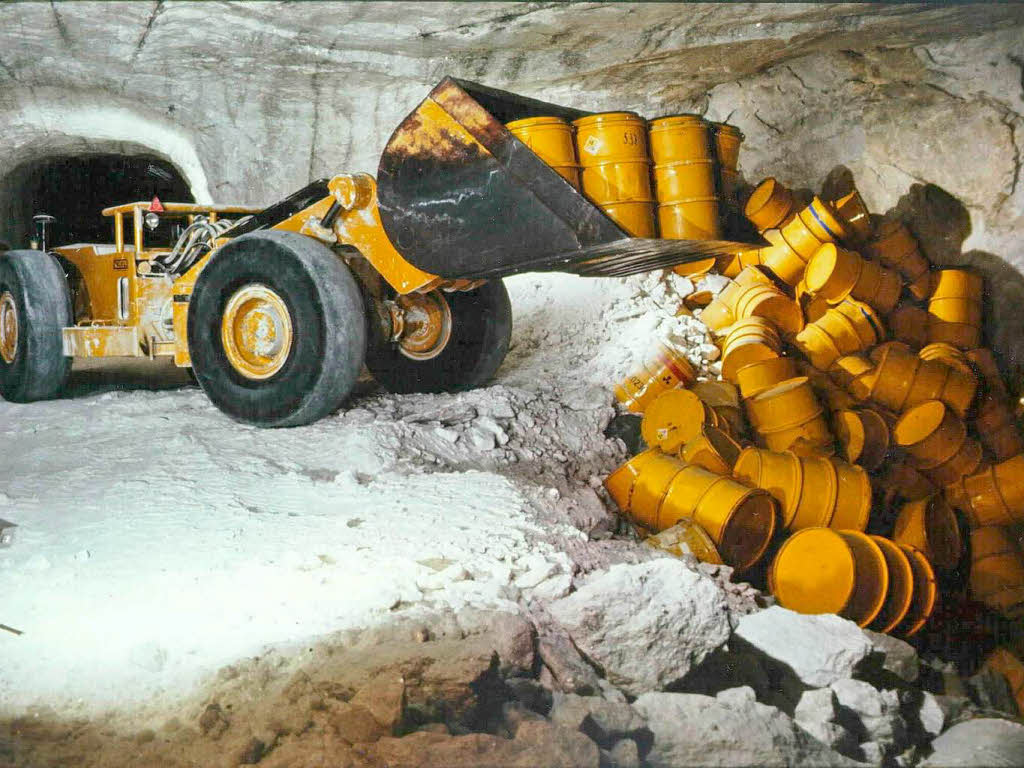
We have not a single working endlager for the waste the nuclear plants are producing. Historically, there have been several large accidents, Tschernobyl, Fukushima, Three Mile, and several more smaller ones which would almost been fatal.
I know that people on HN obviously like technology, and noticed that many people who like technology like nuclear plants. Maybe because they see them as great technology and are able to believe in that.
But given the facts, no, the german public is not wrong. They are undisputably right. The Super-GAUs prove that.
>Historically, there have been several large accidents, Tschernobyl, Fukushima, Three Mile, and several more smaller ones which would almost been fatal.
So what? Those accidents are miniscule in comparison to the everyday operation of a coal plant. The damage caused by the worst nuclear accidents in human history is still less than the every day operation of a coal plant. Hell, we've lost more people to coal mine cave ins than we have to nuclear accidents.
>But given the facts, no, the german public is not wrong. They are undisputably right.
No, they're not. You're insane. The German public thinks nuclear power is more dangerous than coal power, and they're just wrong. It's not even an argument.
Coal and nuclear power are both dangerous, just in different ways. And there are incidents that don't get much international coverage, but still have a lasting impact. For example there has been a small fire at a German nuclear plant in 1986. Officials say no radioactivity was released. But still, 20 years after the event, cases of childhood leukemia are three times more prevalent in the surrounding area than normal. How many children died because of this small accident? How many other adverse effects exist that we can't see or link to nuclear power?
http://www.oh-strahlen.org/docs/ableukkome.pdf [PDF]
1. No modern coal-plant leads to waste areas of uninhabitable land. Nuclear Plants do.
2. We do coal mines way longer. Even if the number is right, that "we've lost more people to coal mine cave ins than we have to nuclear accidents", (which is hard to agree with, cause it is statistically a hard problem to count the ones still dying from cancer years later because of Tschernobyl for example), that number would be meaningless.
3. Coal power is highly disputed in Germany. It is only accepted as a transition-help while heading to green energy. And yes, i think that's a good thing - and no, i'm not insane.
Chernobyl: a monumental cock-up by incompetent morons in charge of a badly designed and badly built scrapheap. With so much cocked up, a disaster was surely inevitable.
Fukushima: a series of cock-ups magnified by one of the world's most destructive tsunamis. This nuclear plant should never have been built where it was, and its old technology should have been decommissioned years ago. Yet the death toll due to the accident is still, what, five?
Three Mile Island: injured fewer people than a single typical high speed road accident.
Over 71 million tons of the stuff per year (According to wikipedia sources) in the US alone that has to be stored somewhere. Mostly* in landfill sites or ash ponds which renders them "waste areas of uninhabitable land", and this is part of normal operating procedures, not when something goes catastrophically wrong.
* Recycling accounts for 43% according to wikipedia sources.
About 6,000 people die from coal mining every year in China alone. By contrast, 6,000 is the median estimate of the total number of people who would die from cancer from Chernobyl. Now, Greenpeace managed to come to an estimate of almost 100,000 by making certain unusual assumptions, but if you make those same assumptions when looking at the pollution that comes out of the stacks of coal power plants you would find at least vaguely comparable numbers of deaths from coal plants every year.
While claims of up to 2 Million deaths related to Chernobyl[1] are probably not credible, the 6,000 figure is bullshit as well:
The estimates on radioation related deaths of infants is of the same order, and there are Russian claims that 90% of liquidators (at least 747,000 people according to the German Gesellschaft für Strahlenschutz) are invalid.
What do the USSR nuclear accidents say about German or US or Japanese reactors? Look at how many nuclear accidents USSR Navy ships had compared to US Navy ships.
I can see an argument to 'close the old ways, we do it better now'. But 'close all of them, because I don't know the difference between them and I'm afraid of anything with the world nuclear in it' is just fear mongering and it's a shame that Germany fell for it.
Neither the three mile plant nor Fukushima nor the accidents in german plants were located in the USSR. And Tschernobyl was in the neighbourhood (even if it weren't a technical comparable plant, it would still be an in my eyes understandable factor).
That is a disputed fact (when taking into account the radioactive waste and thinking about what "into the atmosphere" means, at least that is what I remember from the reports about the last study concerning this), on one hand, but even if it were right: It's less than the radiation generated in the event of a disaster and not bundled into a pile of radioactive waste you can't place nowhere.
"What it really means is that radiation emissions to the environment from an operating nuclear power plant actually are lower than the radioactivity emitted from a coal plant through fly ash residues. That’s because the reactor vessel, fuel rods, and any radioactive waste on site are well shielded, whereas fly ash, with small amounts of deadly radioactive substances, simply is emitted into the environment."
The author appears to be saying, well, if you ran an un-shielded nuclear reactor and threw all the pollution in the air on purpose instead of containing it, then coal ash emits less radiation into the atmosphere. Well, okay, fair enough, but in practice we don't purposely take nuclear waste and fertilize our crops with it, and I don't think anyone's arguing for that.


No, but of course solar power isn't carbon free either by the same logic. The problem is that in the short term the power that those nuclear plants were providing is being made up for by coal plants, which are much worse for the environment.