Went to Paris and dined at a number of Michelin-starred places, including Le Cinq. The food was fine, but... I didn't get it! I think there is a culinary language that I understand as little as a typical Michelin-starred chef would be able to evaluate a tightly-written C program. On the other hand I was lucky enough to dine at Poppy Seattle every year of its existence and felt their completely original approach to thalis would have absolutely merited three stars. Poppy was well known to be one of the best restaurants in town, but I still wonder how I would have reacted if I understand the language better.
To calibrate, on a scale of 1-10 I would rate Cheesecake Factory and Starbucks food at a 3, Tim Horton and McDonald's at 4, and Olive Garden at 6. I'd put LeCinq at 8 and Poppy at 10.
My wife has more sophisticated taste. She though 3 stars for LeCinq made sense. I have double-blind tested her a number of times and her taste is unerring, including one trial where she correctly guessed Osetra, Beluga, and Sevruga caviar back when they were all legal, and 4 different kinds of Wagyu beef at a steakhouse.
I've been to two Michelin-starred Sushi places in Japan. I thought they were both amazing, but I realised that my parents would not have thought so.
They grew up relatively poor, and still have the habit of eating at home from a rotating menu of relatively straightforward recipes. Stews, soups, that kind of thing. They've gone to restaurants maybe a few dozen times in their lives, if that.
I've been to so many Sushi restaurants in so many cities that I have a nice smooth gradient of ratings along which I can place them. I can recognise and appreciate the small touches like real wasabi or expensive sake. The fancy places in Japan extended that experience just past the upper end of what I've experienced before. I could place them in context.
My parents tried a Sushi train... once. A $300 sushi set would be wasted on them, because they would be just as happy with a $50 sushi set. The difference would be completely lost on them.
> The difference would be completely lost on them.
I've definitely heard the life advice to avoid trying this kind of thing in case you do like it, then everything less is permanently tainted with the knowledge that it's not as good.
However, western super-high-price dining tends to be one or both of "demoscene for food" or "NFTs for food"
- demoscene: a series of increasingly elaborate and labor-intensive techniques for showcasing skill in a constrained environment. The Heston Blumenthal/molecular gastronomy approach.
- NFTs: the process entirely about conspicuous consumption; the value of the food is determined by how many resources were expended in the process, not what it actually tastes like. Wines in particular have a value determined by rarity and the secondary market.
The best compromise is probably found around the "twice as much as a chain restaurant" price point; enough to find quality ingredients and staff who aren't too rushed off their feet, not enough that you start getting weird stunts.
> I've definitely heard the life advice to avoid trying this kind of thing in case you do like it, then everything less is permanently tainted with the knowledge that it's not as good.
Does that actually happen though? I know a thing or two about wine and sometimes buy bottles in the 50-100 euro range, which I feel are totally worth it, but I'm still happy to drink cheap plonk with friends most of the time. This works because (1) you forget about what the high end experience was like quite quickly and/or (2) you drink it in a very specific setting so you're not likely to conclude "I now always need/want this" and (3) a lot of what makes high end cuisine / wine / spirits so fun to try is not just that they're better but that they're different from what you're used to, the scale is not just worst-best but also ordinary-extraordinary, and you're not always in the mood for extraordinary.
My guess would be that the phenomenon of permanently hankering for the good stuff after having tried it once is probably more likely to happen with everyday luxuries: good bread, slightly-above-average wine, etc. And in that case, you get a little bit more enjoyment out of your food for a little bit more money, which seems like a fair deal. But even in that case, I don't know anyone who, after trying craft beer, has vowed to never drink a cheap pilsner again.
It definitely happened to me with steak. After a year where I unintentionally climbed that hedonistic ladder, I ended up in a place where steak I would have formerly been fine with is now unpleasant to eat. So I just don’t eat steak much any more. I don’t think anything was really lost there - well prepared steak still tastes amazing, but the environment and my body could benefit from me eating fewer slabs of cow anyway.
It definitely also happened to me with coffee. I used to be able to drink almost any coffee straight, but over time my taste drifted towards more expensive stuff and I started adding cream and sugar to hide the taste of cheap coffee. That’s mostly thanks to all of the trendy coffee shops in San Francisco where I did meetings. So one of my small projects during covid was actually finding the cheapest bulk coffee I could drink straight. As proof that my tastes had drifted, what I settled on turned out to be a step above the cheapest cohort, but thankfully still several times cheaper than making a daily habit of single origin coffee.
Thankfully, it never happened to me with restaurants. Despite having paid hundreds of dollars for a meal on a few occasions, I haven’t lost the ability to enjoy stuff across the whole price spectrum.
I agree with you. I find that the amount of enjoyment I get out of the thing doesn't change, I just now need more a expensive thing to get the same amount of enjoyment.
That's why I choose to listen to music on my cheap $100 speakers that can still give me goosebumps and not listen to my friend's $5000 speakers. All that would happen is that I'd lose the goosebumps because I'd notice how shitty mine are.
It happened to me with speakers/headphones. I used to listen to all kinds of music on cheapos before I found a nice pair of cans with good balance across the frequency range. After that I couldn't help noticing all the distortions from the cheapos and how they degraded the entire mood of the music. When the nice ones broke I pretty much stopped playing music. Sometimes I would get the urge and start up a playlist but it would usually feel flat. After it was over I didn't have the motivation to put on anything else and would rather just be in silence. The music was so much nicer in my head that playing it through the cheapos was just too disappointing.
I've done quite a few as part of courses, and I've also served expensive bottles to people without telling them. It's definitely a humbling experience and the most expensive wines are certainly not always the most liked, but that's why you study: to make sure that you don't just buy ostentatious expensive stuff, but that you buy expensive stuff that is actually good and noticeably different from supermarket wines.
I'm guessing your reply is motivated by the 2001 blind tasting where oenology students couldn't even differentiate between red and white wine [1], which is certainly an interesting bit of research, but not the kind of slam dunk you would think when you read third-hand reports about it in the media or rationalist circles.
> demoscene: a series of increasingly elaborate and labor-intensive techniques for showcasing skill in a constrained environment. The Heston Blumenthal/molecular gastronomy approach.
I’d add on: anything that’s difficult/time-consuming/etc. to make at home even if you could, but scale makes it a lot easier.
I know a Ukrainian guy that, without fail, orders borscht if it’s on the menu. He could make it himself, but his wife forbids him from stinking up the house with beets and cabbage for the afternoon it takes to prepare.
> I’d add on: anything that’s difficult/time-consuming/etc. to make at home even if you could, but scale makes it a lot easier.
True of restaurant food in general and even street food; what makes these things great is often lots of little bits and pieces of topping or flavoring that would be too time-consuming and wasteful to make at home.
But it's not limited to high end. "Indian" food is cheap but benefits from the scaling of cooking a lot of different spices in a large pot for a decent amount of time. Your borscht is another example.
(What the UK calls Indian food is often cooked by Bangladeshis and Pakistanis, the name is kind of a historical accident)
Hey, just thought I'd reach out to you. I'm Tom from GoPlacenta.io (YC S21). We're out to make meaningful changes in the placenta market segment. We've already built a review platform and we're teaming with 23AndMe for an integrated vertical approach...
The other odd thing about placenta: "The placenta is unique in that it is an organ which arises from the tissue of two genetically distinct organisms; part of the placenta develops from the tissue of the mother’s uterine wall, while another part develops from the fetus’ own tissue. After the blastocyst which will develop into the fetus makes contact with the uterine wall, blastocyst and maternal tissue grow together to form a single, cooperating organ that links the two together."
I don't know whether mothers think of the placenta as their own body part or part of the baby, but personally I think it is in poor poor taste to eat baby parts.
I think you're missing the point on the compromise. It's not simply about the price.
Look for ethnic restaurants whose primary clientele is their fellow countrymen. (Easy to find in a large city. Less so in the suburbs.) This is where you will find the intersection of low price and high quality product.
Mexican and Asian places abound in this category. But you can find just about anything in a large city - Middle Eastern, South American, even European (especially eastern)
haha classic line "The three diminutive crab cakes for £32 have a rigid shell the development chefs at Findus would envy and taste only lightly of crab, as if embarrassed about the star ingredient. They come with a sauce reminiscent of school-dinner salad cream circa 1975."
> Having taste makes you require more dollars to get the same level of satisfaction
I have carefully avoided trying excessively high quality things because once I've experienced something truly luxury then it becomes an ongoing expense to keep up that level of experience. The irritating part is that before I was perfectly happy in my ignorance of something better being available out there, but aftewards I feel like I'm "ruined" because I'm constantly disappointed and frustrated if I can't keep up the level of quality.
I have had headphones ruined for me because I tried the Sennheiser HD 800 once and then there was no going back to cheap plastic cans.
I've had monitors ruined for me a long time ago because I got Dell PremierColor 4K display.
Food as per my previous post. I've had such great food in so many fantastic restaurants that I'm upset with mere "pub food" that used to make me perfectly happy before. I am now incapable of eating certain fast food unless literally starving to death.
Etc...
Thankfully, I'm still okay for wine. I believe it comes in two or is it three colours? Whatever, I'm still happy with a random $10 bottle. My boss for comparison now has to buy the $250 bottles at company dinners. Ouch.
>I have had headphones ruined for me because I tried the Sennheiser HD 800 once and then there was no going back to cheap plastic cans.
It's not really the same as being unable to appreciate anything but a glass of Petrus or DRC. For a one time payment of $1k the HD800s will easily serve you for the rest of your life. If you prefer fine food and wine that $1k might not even get you a single meal.
I've had the HD 800 for about ten years, but it's starting to fall apart. To put things into perspective, I've had to replace both the cable and the padding twice, and each of those spare parts cost the same as a typical pair of "decent" headphones. Then I had to get a dedicated headphone amp PCI-e card, because it turned out that "regular" soundcards are not good enough.
I've easily spent over $2K so far. When I replace it, I'll have difficulty resisting the temptation to upgrade to the "next level". Planar magnetic or planar electrostatic headphones are the next logical step. Those start at $2K and go up from there.
I'll be lucky to escape this with less than $10K spent...
For me it was music. Till this day I cannot stand MP3 audio, and can detect when it's played on the radio, because of one bored afternoon in 2002 experimenting with MP3 and CD audio quality.
Sure, you _could_ rip an MP3 with near-undetectable quality loss for most types of music (The Wall, yes. The Downward Spiral, no). But nobody does that, as apparently it was not the default on anything back then and today Youtube and Spotify and all others still use those horrible quality settings as people have gotten used to them.
I’m curious, have you done an ABX test recently? My wife swore up and down she could hear the difference too. An ABX test with expensive headphones in a quiet room across a few different genres and bitrates showed that she couldn’t.
I tested only with the headphones that I had at the time, with the types of music that I listen to. I'd actually be interested in trying again, but with my normal headphones (typical Sony over-ear), not something expensive.
For reference, I listen to mostly Pantera, Beethoven, Pink Floyd, early Nine Inch Nails, Led Zep. It's not too diverse, but there is a short period from about 1990 to 2005 where music recorded in that period does not transfer to MP3 well. Maybe because the digital artifacts that we cannot hear in the published recordings are amplified in the compressed MP3 - but after that period producers began to optimize their recordings to account for that.
They were brand new, ripped myself and compared with the CD still in the drawer. Using different bitrates and other settings, whatever was documented for the CLI tools at the time. I was using some Red Hat variant, but this was before Fedora. In 2002 I believe.
Though I'm sure that the encoders got better, really, the quality of the common rip has not.
Yeah, the out-of-box encoders included with Linux distros in 2002 would likely not have been great. If you were lucky you might have gotten an early version of LAME. If you do the experiment again, it may be worth using either the likes of Spotify/Apple Music (okay, strictly speaking neither are mp3, but same general idea, and they'll put effort into encoding properly), or using a decent modern encoder (LAME, the Apple one, etc).
Yes, now that you mention it, it was in fact LAME. I'll try again sometime with abcde in its default settings.
By the way, I once made a GUI for abcde called abcdefg (A Better CD Encoder For Gnome) but never did anything with it - it was really just an exercise to learn the GTK libraries because Zim Wiki used them too. But I now regret not publishing it just because it had such a cool name.
Makes me glad to be a simple person with simple tastes - sometimes I taste a more expensive wine, and it's good, but then I ask myself "is this really worth paying 3x or 10x more than for a regular glass of wine?", and most of the time the answer I give myself is no...
> Having taste makes you require more dollars to get the same level of satisfaction from a meal or a drink.
I don't know. It's not really the same level of satisfaction. Eating well is very enjoyable.
I think food is one of the product categories in which spending just a bit more raise the quality drastically. Buying fresh vegetables from the market and butcher meats from time to time rather than everything from a grocery store was transformative for me and it's not actually that much more expensive. I guess I could sustain myself on canned peas and frozen chicken but it wouldn't bring me much joy.
Yes I do think upbringing does come into play, cause you subconsciously just don't care enough to distinguish the differences. Our family is decently well off but I was sort of raised like we were poor due to my parents upbringing. When I eat out I'm happier eating in hole-in-the-wall places cause I just feel better not "wasting" money on something more expensive. Sometimes I actually feel cheaper stuff really does taste better though since environment and marketing also does factor into the price tag, and cheaper places focus more on just making the damn stuff. Doesn't really help me much when I try to go on dates though Lol.
What on earth do people do besides eating at home from a rotating set of straightforward recipes? Honestly curious. I’m the main cook in my home and we do eat out every other week, but who has time for that much experimentation?
The pandemic has had us eating in for the last year. There's a variety of food blogs/sites that have easy "can't miss" type recipes that are safe enough bets that you don't have to worry about making something else if they're failures.
We try to swap in one or two new recipes a week and the rest are the standards. You get an occasional hit new recipe and then it becomes a standard.
I cook new things by googling "Simple X recipe" and removing anything that doesnt feel essential and adding random stuff I want to get rid of. Usually cant replicate it later.
For me the worst thing was when I invited my parents to more expensive restaurants (more the $50 category in a cheap country) that my father was complaining about how small and expensive is the food, and making jokes about it to the waiter. They got used to it after 10 times going to these places, but I still felt ashamed for some time.
There's a very specific meaning to price rangers of restaurants, I always use Yelp $ sign ratings as an example; they categorize every place into 4 price ranges from $ to $$$$. Generally, the breakdown is as follows:
$ - counter/fast-food/food truck/sketchy
$$ - regular
$$$ - regular, but very small servings and artfully arranged
The Japanese don't necessarily agree with the Michelin guide for rating their restaurants. Some claim that the inspectors didn't proprly understand Japanese food and culture.
I wonder if there is an analogy here to classical music. Most lay people would probably not be able to appreciate the technique, difficult, and musicality of certain pieces, but trained ears would appreciate the fine details.
As a consequence, most people prefer “easily digestible” music such as pop music rather than highly refined classical music.
Sure, but I think the analogy is more appreciating the difference between the best orchestra playing a piece and a more average one. Or why one Bach composition is "better" than another one. I like classical well enough, but I wouldn't pay hundreds of dollars for good seats to hear a specific soloist in a specific theater.
That's the documentary that inspired me to try Michelin starred Sushi restaurants in Japan. I went to Jiro's son's restaurant, which is by all accounts better, but nobody will say so because they don't want to disrespect Jiro while he's still alive. It's a Japanese culture thing.
My father asked me why I spend so much money on raw fish and rice.
I tried to explain to him that the high-end sushi restaurant experience is really a magic show that also includes food.
Have you heard of the placebo effect? Shamans "treat" their patients with practised rituals that make people feel better. Sure, nothing has ever been cured through such methods, but it sure does feel nice!
I have a personal pet theory that this is a side-effect of our evolution: little kids that sat quietly mesmerised watching the elders perform their arts and crafts would pick up the skills and eventually master them themselves. Kids that didn't sit quietly didn't get to be as skilful and would in turn fail to be good parents and hence had fewer children.
Some people call it ASMR, which is a fun term to search for on Youtube if you can't sleep at 11pm.
Watch any magician, or master craftsman at work, and you get the same tingly feeling on your scalp. You sit still, quietly mesmerised as you follow the swift and sure movement of their hands.
THAT is what good sushi is about. You sit at the table with the sushi master in front of you and observe as he slices the fish with rhythm and precision. You're entranced as he picks up the rice, moulds it, applies the wasabi, places the fish, and coats the assembly with sauce. It's like watching a magician dealing cards!
People pay hundreds of dollars for a magic show in Vegas. In Japan, you get the same experience except you also get fed in the process...
Japanese sushi is one of those foods that have almost no chance to be replicated at home.
First there is almost no way to get the rice to consistently taste anything close to how they do it in restaurants.
Second, it’s unlikely you will buy dozens of different high end top quality fish, prepare the fish, and then just make a few slices for your meal.
Finally, sushi is made to be eaten immediately. So if you want to make your own meal of 20 to 30 different types of sushi, you will have to either make and eat as you go, or make them all then eat them after they have sat for too long.
At least for many Western dishes, I can replicate maybe 80 percent of the taste. Sushi is a completely different level.
Last time I did it (my ex-wife is hafu), I didn't find the rice particularly difficult, but yeah, from a variety perspective there is no real option: you pick 2-3 types of fish and mix them up in as many different ways as you can. You are effectively forced to prepare for 5-6 people minimum. This is probably why sushi, in Japan, was traditionally considered festive food, not an everyday staple: there is no way to make it well for a single family.
I've been to a few michelin-starred shushi places in London and Europe. A regular shush place in Tokyo was much better. Even a cheap place with no waiters (conveyer belt). It was the greatest difference between food X and food X in the country of origin.
The biggest disappointment was the michelin-starred stall in Singapore. The food was just... bad.
I think there's a significant question about the linearity of the scale. Is this quadratic, linear, logarithmic, exponential?
If quadratic, then the Cheesecake Factory experience gives you 9 "utils" and Poppy gives you 100 utils. You'd rather eat at Poppy once a month than Cheesecake Factory 11 times a month, but you'd rather eat at Cheesecake factory 12 times a month than either. (If 12 times a month is too much, swap these for per-year numbers.)
If linear, then Cheesecake Factory gives you 3 utils and Poppy gives you 10. You'd rather eat at Poppy once a month than Cheesecake Factory 3 times a month, but you'd rather eat at Cheesecake Factory 4 times a month than either.
If logarithmic, it doesn't really matter what the base of the logarithm is. Suppose it's 10. Then Cheesecake Factory gives you 0.477 utils and Poppy gives you 1 util. You'd rather eat at Poppy once a month than Cheesecake Factory twice a month, but you'd rather eat at Cheesecake Factory three times a month. I think this is roughly how my restaurant scale works.
If exponential, it does matter what the base of the exponential is. Suppose it's 10. Then Cheesecake Factory gives you 1000 utils and Poppy gives you 10 billion utils. You'd rather eat at Poppy once in your life than Cheesecake Factory an unlimited number of times (once a week for 200,000 years). But if the base of the exponential is 2, then we're talking about 8 Cheesecake Factory utils versus 1024 Poppy utils. In that case you'd rather eat at Poppy once every 4 years than at Cheesecake Factory once a week, but you'd rather eat at Cheesecake Factory (or an equivalently good restaurant) once a week than at Poppy every 5 years.
So, how does that 1-10 scale map to your preferences?
Ha, yes - I always love seeing those restaurants that are "Kebab, burgers, and pizza!" because you know to stay away. I wouldn't trust Apple to build a car (cough) and I don't trust my kebab guy to make a decent pizza. There's something to be said about specialization.
Better to go to Taco Bell where everything is made from the same handful of ingredients. They can guarantee freshness by turning over everything quicker than anywhere else.
When I was over in states I went to Taco Bell 3 times, 3 different once, every single time I regretted it having to spending 'unquality' time in the toilet.
Presumably so, yes, and it wouldn't be hard to imagine cases where the numbers shift around a lot, but the post I was replying to assigned a fixed 1-10 number to each site.
You're still making some very rigid assumptions about what kinds of things a scale can mean. I'd be more likely to judge restaurant ratings in terms of how often you'd like to eat at a given restaurant, not in terms of whether 50 meals at one restaurant is better in some sense than 12 meals at another restaurant. You can only ever eat one meal at a time.
Well, it's at least reasonable to ask whether you'd be willing to give up the possibility of ever again eating at the Cheesecake Factory in exchange for eating at Poppy once, even if it's a fairly speculative question—nobody is likely to face such a choice (unless the chef at Poppy wants to kill them, in which case other considerations likely outweigh the Cheesecake Factory). Answers "yes", "no", and "maybe" are all plausible, and they provide a clearer explanation of someone's preferences than just a 1-to-10 scale. You can easily imagine two people who both rated CF 3 and P 10 one of whom says "yes" and the other "no", but who just have very different relationships to food.
As for frequency, I think that might have more to do with variety and familiarity than quality. Surely, even if you agree that Tim Horton and McDonalds have equally terrible food and you hate it, you'd be more willing to be condemned to eat, each day at your choice that day of either of the two, than to be condemned to eat every day at just one of them, chosen today for all time. But that clearly doesn't mean that the union of Tim Horton and McDonalds has food that is less terrible than either of the two, which would be contradictory.
(You could of course have a scale of restaurant variety rather than quality, and in that case surely a PizzaHutTacoBell would rate higher than either a PizzaHut or a Taco Bell. But that's surely not the kind of rating we're talking about here—is it?)
> Surely, even if you agree that Tim Horton and McDonalds have equally terrible food and you hate it, you'd be more willing to be condemned to eat, each day at your choice that day of either of the two, than to be condemned to eat every day at just one of them, chosen today for all time. But that clearly doesn't mean that the union of Tim Horton and McDonalds has food that is less terrible than either of the two, which would be contradictory.
> (You could of course have a scale of restaurant variety rather than quality, and in that case surely a PizzaHutTacoBell would rate higher than either a PizzaHut or a Taco Bell. But that's surely not the kind of rating we're talking about here—is it?)
You seem to be making a fairly strong argument and then confidently drawing a conclusion that is the opposite of the one the argument suggests. The value of food is determined at the most fundamental, objective level by what else you've eaten recently. If you are short on something, your perception of taste will change so that the nutrient you are short on tastes better. What's the argument for variety not being a part of food quality?
If we accept that, then as I suggested in https://news.ycombinator.com/item?id=28613379, the whole project of rating restaurants on any kind of scale is doomed. Do you really think there's no sense in which the entire McDonalds menu is worse than a particular main course at Le Cinq? That the whole idea of Michelin stars is entirely nonsense? That food quality reduces entirely to variety?
I was attempting to separate out the "variety" aspect, which as you say cannot be evaluated in isolation and thus makes no sense to print in a guide, by proposing long time scales. Would you really argue that nothing is left once you factor out variety?
I think your model of how restaurant ratings should work has very little to do with how people decide what or where to eat. I'd rather think about asking someone to choose between two restaurants repeatedly (over time), and see how often they say one or the other. You can give the restaurants Elo ratings if you really want to. That's still not what's happening most of the time, but it's much closer. Or, as I suggested earlier, you could try to work with a satiety model and look at how long someone goes between visits to a particular restaurant.
> [Do you really think t]hat the whole idea of Michelin stars is entirely nonsense?
I think the perspective some other comments have taken, that there's more to food quality than whether you like it, is entirely nonsense. I don't think the concept of rating is nonsense; everyone likes some things more than other things. But I think your attempt to interpret restaurant ratings doesn't look very good.
> That food quality reduces entirely to variety?
No. But I'm happy to state that the union of Tim Horton's menu with McDonalds' is superior to either alone.
I'm saying it doesn't suit your purposes either. You are assuming that all meals at a given restaurant have the same effect. This assumption is untrue, and this means that any prediction you make based on your interpretation will also probably be untrue.
They just made the same incorrect inference that you did, that's all, but they did so more politely. In my response, which I linked for you earlier in this thread, I pointed out one way my original comment took those complexities into account in what you evidently think is my Grand Unified Theory of Restaurant Hedonics.
There's nothing about a 1-10 scale that implies that every visit to the restaurant will be equally pleasurable. Novelty is a factor. I would suggest that a sublime restaurant (a 10) will both make a really great first impression and also get tiresome more slowly (because restaurants like that tend to change their menu more dramatically, use a broader variety of ingredients, etc.). My utils from going to Cheesecake Factory would quickly approach zero after a few weeks of regular visits.
That's a good point. It might also depend on what the alternative is: the Cheesecake Factory might be much more appealing as an alternative to starvation than as an alternative to a diet consisting entirely of milk and potatoes.
You might have to stretch out the time scale a bit to reach stability, as I suggested in my initial comment: would you rather eat at the Cheesecake Factory once a month than Poppy once every two years, but rather eat at Poppy once a year than at the Cheesecake Factory once a month? (I never went to Poppy; maybe you didn't either.)
Maybe there's no time scale at which those numbers stabilize for you, though, so maybe whether you'd rate Tim Horton higher or lower than the Cheesecake Factory depends on how often you've suffered through their ham and cheese croissants in the last month or year. In that case maybe we have doomed the entire project of rating restaurants on a scalar scale, even a purely ordinal scale like the Mohs scale.
Important factor is novelty, going to a new restaurant once is likely to give you more than 0.5x the utilons as going to the same place twice in most cases, though maybe that curve inverts eventually as you become a "regular".
In every domain - food, vpns, literature, etc. - I have more or less sophisticated taste (as does everyone). When I was young, I was skeptical of and even sometimes mocked the 'so-called experts' - possibly because (naturally, due to time) I'd developed sophistication in so little. I was very wise.
But over time I found that when I develop sophistication in things, the 'so-called experts' suddenly become very smart and were invaluable (at least many of them). Now when I don't understand the expert, I see it as a signal: here is an opportunity to learn a lot, to make a big leap. (Of course, I'll never have time to become sophisticated in everything.)
It's not so much taste as what you pay attention to. Hopefully no readers of this thread are using ExpressVPN, for example, but I bet many non-technical partners are, because of their very prominent marketing.
If a movie has won an oscar, I used to count that as negative. Generally avoided nobel winners' books. Interesting how things have changed in just 7-8 years (I'm 25).
I consider myself quite the foodie and have eaten at numerous Michelin star restaurants, but I don't really care for them much anymore.
However, I'll point out one exception. I ate at CORE by Clare Smyth* in London a couple years ago and it is my favorite meal I've ever had. It was too new to be in the Michelin Guide, but now has 3 stars. What made this experience different was that the food was accessible. It was impeccable, the service was amazing, but I think that anyone can go there and appreciate how good the food is.
First, the marginal returns are diminishing once you get past a certain point. I lived in SF for several years and the enjoyment I had at $50 plate restaurants was pretty equivalent to $150 places.
Second, the "top" restaurants are incredibly inaccessible. Sometimes it comes down to the ingredients being very hard to work with, and they have the talent and the time to wrangle them. If you don't know that, it's underwhelming. If you do know that and you're honest with yourself, it's still often underwhelming.
* Clare Smyth was the head chef at Restaurant Gordon Ramsay, a 3 Michelin star restaurant, from 2012-2016. Among other awards, she was Good Food Guide's 2013 National Chef of the Year, World's Best Female Chef 2018 by the World's 50 Best Restaurants, and in 2018 CORE was named Best Restaurant at the GQ Food and Drink Awards.
It's important to distinguish restaurants that are good because they provide novelty and those that are good because they make the best darn chicken parm you've ever had.
I find a lot of reviews don't do a good job making this distinction, especially for less familiar cuisines.
So I'm happy to hear your review of Core, if I am ever in the area I'll have to check it out.
I like to think I'm someone who "gets" the "culinary language" (insofar as that is meaningful; food/cooking/taste being so subjective I'm not sure how useful the comparison to a "tightly-written C program" can be). Have cooked since I was 12, payed way too much for a fancy french culinary school, worked in various styles of restaurant.
I think Michelin-star-type restaurants are repulsive, masturbatory, hubris infested dumps. Le Cinq's 140 EUR "Spaghetti Gratin" is only marginally less absurd than a "contemporary artist" selling a plain white canvas for 7+ figures. Give me a big plate of grandma's spag bol over that any day.
> The food was fine, but... I didn't get it! I think there is a culinary language that I understand as little as a typical Michelin-starred chef would be able to evaluate a tightly-written C program.
Correct. I don't know why this is a revelation that seems especially hard for HN audiences to grasp, or why it's a revelation at all.
Every single domain has its own expertise. It is absurdly arrogant and deeply condescending to think that only computer science or engineering or related fields have specialty expertise.
I think with this one it is, because everyone has tasted before, but comparatively few have coded before. So everyone can say something about their subjective taste experiences, but not so many can about some code. The actual difference might be subjective or one of practiced ability to distinguish in detail.
There is also the aspect of science and engineering leading to objective an hopefully reproducible results. There is less subjective matter to it and there are objective criteria to measure quality. It is possible to leave personal taste out of the equation. Imagine a michelin star tester eating and having to throw up, because of taste, even though the kitchen is clean and all ingredients were of superb quality and the cook is really good. Would they still approve objectively?
> I think with this one it is, because everyone has tasted before, but comparatively few have coded before.
I don't think this is an apt comparison. Tasting is consuming something, coding is creating something. An apt comparison would be tasting to using apps, or coding to cooking. And now sure, you could say that most people have cooked before, much like most people have performed rudimentary medical procedures before; but most people have not performed complex medical procedures, or successfully made complex Michelin-starred dishes, or coded high-quality apps.
That's a bit like saying that most people have used pretty horribly-designed apps, but they did what they needed to do, so the user couldn't tell that they were horrible. For example, most people could not care less that their password manager recently switched to Electron. They don't even notice the alleged resource lag that their coder friends keep banging on about. They simply neither notice nor care. Fine craftsmanship is oftentimes not appreciated or noticed by those not versed in the underlying technicalities by nonpractitioners--oftentimes by design. This is true with coding, cooking, and whatever other domain.
And conversely, poor craftsmanship is often not noticed either, if it's not something that someone is trained to spot. An example of this would be when buying a house, you hire a house inspector because you don't have the requisite training to spot all the potential faults.
So the Michelin Inspectors are discovering measureable, objectively bad things about the food/restaurant, just as you would be able to identify objectively bad things about the good-enough app? What are those things and what is the objective measurement?
Good taste is not so subjective as you think it is. Your personal preferences, yeah, I don't care about them. But every professional taster keep their personal preferences out of the game and look for more objective criterias, like complexity, balance, off-flavors, aftertaste, typicity, presentation etc. For example if I order chicken and it does not taste like chicken, it's flawed, regardless if I like it or not.
It's the same with wine and whisky. It's not about your or their individual taste, it's about quality. It's okay that you like very sour, oxidized red wine. It's just not good wine.
>objective criterias, like complexity, balance, off-flavors, aftertaste, presentation
Those... simply aren't objective criteria. One persons off-flavor is another persons desired flavor (cilantro/coriander for an obvious example). What is the quantitative measure of "complexity" or "balance" in a dish?
I don't say it's really objective, I just say it's way less subjective than one might think.
Cilantro is not an off-flavor per se, it's just a flavor you like or don't. A cork tainted wine is an off-flavor. But if you don't like cilantro, it is indeed an off-flavor for you, but that is uninteresting. If I like burned meat, is a medium rare steak flawed for you?
> What is the quantitative measure of "complexity" or "balance" in a dish?
It's not measured with technology, it's measured with the tongue (+ nose) and experience of the taster. Interestingly, if you give the same dish or wine to real experts, you will probably get identical answers. So there is something there, but you have to get the experience and vocabulary to really judge a dish (or wine, or whatever).
> Cilantro is not an off-flavor per se, it's just a flavor you like or don't. A cork tainted wine is an off-flavor.
That isn't true at all. The flavor the cork adds is another flavor you like or don't like. People choose their preparation methods for flavor impact just like they choose ingredients for flavor impact. Look at smoked meat!
Eh, no wine maker adds TCA [0] into a wine bottle to make it taste like wet dogs. If you burn your sauce, that's probably an off-flavor. Smoked meat and cilantro taste like intended, no undesired flavors there.
I brought up cilantro because I thought it was common-enough knowledge that, for some people, it does not taste like intended and is very much an off-flavor that can ruin an otherwise enjoyable dish.
> for some people, it does not taste like intended
Yes, but I still think, this corner case is much better handled at the service level than the dish level. I do know they ask for food allergies before, I do not know if they ask for your cilantro preferences.
You can't say (as a critic) "this dish was flawed, because it had cilantro in it", but you can say "I didn't enjoyed it, because it had cilantro in it".
Disagree. Clear-cut off-flavors are just those people tend to be in alignment about being undesired. (e.g. burnt). The flavor of cilantro can be intentionally present, but it's still an off-flavor for the minority of people who perceive it differently.
I would say it is an undesired flavor for these people not an off-flavor. And in the same vein I want a restaurant critic to tell me about off-flavors, but don't care if they personally like cilantro or not.
Curiously, what is your opinion of UX/UI researchers? Or of design in general? Is the pretense of 'objectivity' something which denotes more value to you, generally?
You're the one that compared Michelin food inspectors to developers finding demonstrable deficiencies in a good-enough app; I'm asking if you can actually back that up or it was just a bad analogy.
If you don't actually think a food inspector can find objective flaws in good-tasting food, you probably shouldn't have made the analogy, nor depended on objective, not-obvious-to-users flaws as part of your argument.
In any case, don't criticize me for agreeing with your premise!
Over the years I've learned simply doing something is not a great way to get good at it, and neither is taking lessons from someone else that is good at it.
Now I'm a snowboard instructor I can teach someone in a week what took me months and months to learn on my own, and I can teach them the right way from the beginning.
Same story for mountain biking, lifting at the gym and even writing books. Of course the story is the same for programming, technical writing and everything else.
If you want to get good at something, take courses from a professional instructor of that thing (NOT just someone who is good at it!)
To go from nothing to something, a specialized instructor is the best. To go from something to the top tier, only then does following the best / doing something surpass that.
What I mean is if you want to get better (and actually professionally good at something) you need to get training (lessons, classes, courses, whatever you want to call it) from a professional teacher in that field - you won't get to pro level of good simply by doing, and you won't get to pro level taking lessons from someone else who is just good at it. They need to be a professional teacher in that field.
No one thinks that. It's just market confusion regarding what type of critic is Michelin. There are good critics that don't rate restaurants by their appeal to food nerds/wonks.
You’re not alone. Dining out at fancy restaurants is one of my few indulgences. I’ve been really fortunate to eat quite a few of the highest rated ones and I’ve come the the conclusion there’s a few different categories:
- inventiveness & craft: these are chefs that are pushing the boundaries in terms of techniques, finding new ingredients, or trying to find new ways to turn a dish into essentially an art form. Noma, El Bulli, etc. would belong here. There’s every chance you will actually get a dish or two here that you don’t like. But that’s kinda ok, it’s about pushing boundaries and perspectives. Often the kind of places you’d be happy to only go to once.
- all about the flavour & execution: the kind of restaurant where everything is perfect and everything is delicious. Where you finish your meal, are stuffed, but would come back and order the exact same things again tomorrow if you had the chance because it was that good. Petrus in London was one of my all time faves in this category.
- about the experience: it’s not all about the food, this is more like a form of entertainment. You’ll also need to embrace one of the previous two categories to be successful though. The Fat Duck in the UK and Lazy Bear in SF fit this for me. Entertaining enough to do more than once, unlikely to ever become a regular haunt though.
- the rest: I’ve never understood. Expensive for the sake of being expensive. Popular because they’re popular. Probably latching on to some current food trend. The food is always quite good at these places. It’s just never obvious why it’s the best.
Spend enough time in any city and you can usually find amazing restaurants in each of these categories that aren’t anywhere near popular enough to make a Michelin list. I’ve also found if I’m asking a local for a recommendation that framing the question into one of the first 3 categories helps, e.g., “if you had to eat at only 1 restaurant in this city every week for the rest of the year, which restaurant would you want it to be?”
> I think there is a culinary language that I understand as little as a typical Michelin-starred chef would be able to evaluate a tightly-written C program.
"For Soltys, a third star is the ultimate accolade in an accidental profession. Trained as a computer scientist, he originally became interested in cooking as a way to recycle the heat produced by his compute servers’ CPUs."
Yes, it stretches credulity rather thin as it goes on:
> “Within 3 years,” predicts Soltys, “everyone will use Blockchain.” Referring to the graphical processing units used to run Blockchain technology, he added, “You will not be able to make a sauce bordelaise or pate a choux without a GPU,” he asserts, “And what a wonderful world it will be! So many culinary disasters could have been averted. We never would have had cronuts or rumaki or pizza with shrimp on it!”
It's certainly subjective and there's not really a published criteria. To a civilian, it's kinda like a dog show. To you or me, all the dogs look like perfect dogs, but a judge looks for specific things, things most people wouldn't care about (or even consider "good"). There's room for some subjectivity there, but the difference is, the judging criteria for dogs is public.
What does a Michelin star really mean? Is there a secret criteria (beyond "use local ingredients")? The guy in the article contradicts himself!
For one star, definitely should use local products, care, good depth of flavour in the sauces, careful presentation and service that matches.
Of course, over the years Michelin has spoken more and more about the fact that the stars are a reflection of the cuisine, not the service, it’s all about what is on the plate.
Even "use local ingredients" doesn't really fit. Some places have that as a focus, sure, but others will fly in specialty seafood from the other side of the globe.
I've only ever eaten at one restaurant with one star (Hisop in Barcelona) and it was wonderful, but I don't think there's any reason to think the Michelin ratings are a perfect system.
Having lived in Italy and experienced real Italian food, I'd move the Olive Garden lower than McDonalds. McDonalds is not trying to pretend it's something else. It is what it is, and everyone knows what it is.
As a non-American, I found The Cheesecake Factory baffling. Far more baffling than any other restaurant I've been to in the USA.
The restaurants appear to be trying to look fancy, with their extravagant yet tastelessly cheesy interior design. I wasn't sure if it was some kind of ironic inside joke that everyone from the USA is in on?
Despite the OTT design, the food was unremarkable. Not too surprising given that the menu has so many items, and it comes in such giant portions - but hard to reconcile with the decor and reputation.
And indeed, despite the name, the cheesecakes were easily the worst part of the meal.
Oh it is bizarre, I just thought it was funny he singled it out to put below mcdonalds with a place that barely has food, and so far below Olive Garden which is roughly the same tier for most people.
Yeah I totally get that I’m in the minority. But with the exception of one or two dishes I don’t feel they’re particularly good, and I always hate the cheesecake. I can make much better cheesecake with just a few ingredients at home.
I'm not much of a foodie, but I do like eating stuff.
I've found that most starred restaurants I've been to are more like participating in some performance art rather than an effort just to not be hungry. Three stars is a blockbuster movie. One star is a good short story or a clever photograph.
It's like sitting down and asking Thomas Keller or April Bloomfield to tell you what's up using just their vision and talent and the contents of their pantry.
I also really appreciate nerds. People who just go all out on something and dive deep or wide or both. Out of curiosity or passion or just good old plain obsession.
You know, it's reassuring to hear that others' palates aren't a visage of sophistication, as opposed to just pretending to understand all of the nuance in every dish. The alternative feels disingenuous, much like certain bits of the wine culture.
It's amazing that some people do and many of the better chefs out there probably are among these people, but it's also perfectly fine not to be that way. Some people (myself included) are just satisfied by simpler food!
I guess your analogy of well written C code is also very apt, since some people would optimize their programs for every bit of performance and efficient memory utilization that they can, but other times people just want something good enough and thus would use Java/.NET to get 80% of the way there.
I think your rating system is too focused on food. The service, environment and food sourcing also play a large part in the rating. I bet you would see a difference if you try sparking a conversation with the staff from LeCinq.
I don't know, McDonalds over Starbucks on food? (Or any metric!) At least the latter has sandwiches. But I don't think I really understand any scale that has either of them as well as actual restaurants?
It's ages since I've been and I rarely ate then; I agree it's not great, but I personally I never expected anything more than decent supermarket sandwich level, except I suppose that they can toast it. Overpriced/more expensive for sure - but what're you going to do, bring cheaper food in to eat? They somehow prey on that being poor etiquette, even if you've bought coffee etc., I suppose.
Err, no? We may have an unexpected (to me) dialect barrier. To the best of my knowledge, McDonalds serves primarily burgers (is a burger what you're calling a sandwich?), Starbucks serves (coffee aside) mostly sandwiches, and also salads and stuff.
(It is about ten and three years since I've been to one, respectively, but I doubt that much has changed!)
Apparently there's significant dialectal variation on whether the "hamburger" is a sandwich, including the bread, or just the meat often used to form the filling of a sandwich: https://en.wikipedia.org/wiki/Hamburger
In my usage, you can eat just a hamburger, but McDonalds won't sell you one; they'll insist on putting it between slices of bread, thus making a hamburger sandwich of it. If you want to eat just the hamburger, you'll have to peel off the bread and throw it away. They also sell fried-fish sandwiches and, in an absurd attempt to seem "healthy", chicken sandwiches.
Around here Starbucks serves mostly desserts, but that might be a regional thing.
Ok, definitely a dialect thing. A burger (~ patty if you insist) in a bun is just a burger, I don't think anybody here (UK) would call that a sandwich.
You can definitely convince McDonald's to sell you a hamburger on a plate without bread. A hamburger isn't a sandwich, but it is commonly served on a bun in sandwich form. Like how spaghetti is common served with sauce, and if you see that dish you just call it spaghetti, but if you see a plate of just the pasta it's still spaghetti.
According to this graphic, all 9 groups would consider a McDonalds cheeseburger to be a sandwich, even the "hardline traditionalists": "A sandwich must have a classic sandwich shape: two pieces of bread/baked product, with toppings in between; must have classic sandwich toppings: meat, cheese, lettuce, condiments, etc."
Clearly there's an entire missing dimension to the graphic, because it totally denies the existence of the Hamburger Irredentist Youth League to which OJFord belongs!
I don't think I'm saying anything contrary or unusual for UK. The top left three (structure and ingredients pure/neutral, but not both neutral /hotdog) as pictured I would consider sandwiches.
But I think temperature is a better indicator than ingredients: 'a sandwich' is not cooked (it's ingredients might be, like meat obviously, but then cooled) or hot.
Of course you can have a 'toasted sandwich', but the qualifier's important, it's basically a different thing that happens to share a word - if you ordered a 'cheese sandwich' and it came out toasted you'd be surprised.
Which makes a hotdog trivially not a sandwich, but you could slice up some sausages the next day and have them between slices of buttered bread for a 'sausage sandwich' (which likewise is not a term anyone would use for a hotdog!)
In the US, toasted and hot "sandwiches" are commonplace. At Subway (the fast-food franchise with the largest number of franchises) the process for making many of their "sandwiches" routinely involves toasting them during the preparation process, notably the sweet onion chicken teriyaki. Similarly, a "club sandwich" has obligatorily toasted bread, although it also includes cold ingredients, and a Philly cheesesteak sandwich is always hot, as is a French dip, any other kind of roast beef sandwich, or a grilled cheese sandwich.
I'm curious if these "foods" exist in the UK, and if so, what they're called!
Not to split hairs, but I believe there is a distinct difference between a burger and sandwich -- and it's not a dialectal one. A burger always has a patty (which isn't just meat, but a piece of flattened ground up meat) whereas a sandwich does not. The burger patty is what makes a burger a burger and not a sandwich.
That's why you'll hear the term chicken sandwiches (because they don't contain patties), but you'll never hear burgers ever being called "beef" sandwiches. (Beef sandwiches exist -- like roast beef sandwiches, beef-on-weck, Italian beef, pastrami sandwiches, etc. -- these contain forms of beef that are not burger patties). Beef burgers and beef sandwiches are different things.
Similarly, chicken sandwiches ≠ chicken burgers. They're different things. The latter always has a (chicken) patty. The former almost always doesn't.
McDonald's and most other fast-food places are actually pretty consistent with their burger vs sandwich terminology and don't really mix them up.
It sounds like your concept of "sandwich" is ontologically incoherent. What kinds of generalizations apply to all or most sandwiches but not to a patty between slices of bread? We have "sandwiches don't contain patties", of course; but is there anything else? It sounds sort of like defining "Indian" to mean anyone from India who isn't from Goa, "British" to mean anyone from Great Britain who isn't from Cornwall, or "murder" to mean any event of one person killing another except when the first person is named Derek.
Such ontologically incoherent definitions are obstacles to clear reasoning (though less seriously than eargrayish definitions like defining "murder" to mean either one person killing another or stepping on the shadow of the King). Is there a reason your proposed definition of "sandwich" is not among them?
Since you mention India, would you consider curry to be a kind of soup? I believe the relationship is similar to that of burgers and sandwiches.
A curry is "just" a soup with spices. But if you walked into a restaurant and ordered "soup of the day" and got a vindaloo, you might feel deceived. If the waiter assured you that a vindaloo is ontologically a soup, I doubt that would be much consolation.
Sometimes in language, if you use a general term (A), when a more specific term exists (B subset A), then using that general term A carries the meaning A\B, because if you had meant B you would have said B instead.
It's an interesting question! I normally think of a curry as being a sauce placed on some solid food, while a soup is a liquid food with perhaps some solid chunks floating in it; but that's really just a difference in how it's plated and how much sauce you use; it doesn't make much difference to the flavor.
> In the past all observed emeralds have been green. Do those observations provide any more support for the generalization that all emeralds are green than they do for the generalization that all emeralds are grue (green if observed before now; blue if observed later); or do they provide any more support for the prediction that the next emerald observed will be green than for the prediction that the next emerald observed will be grue (i.e., blue)? Almost everyone agrees that it would be irrational to have prior probabilities that were indifferent between green and grue, and thus made predictions of greenness no more probable than predictions of grueness. But there is no generally agreed upon explanation of this constraint.
(This is somewhat mineralogically naive, because emeralds are just green beryls; a beryl that was blue would be called an "aquamarine" or "maxixe," not an "emerald," because greenness is part of the mineralogical definition of "emerald." But it's straightforward to change the riddle to refer to, for example, grass. The grass has always been grue; should we expect it to still be grue tomorrow?)
Fortunately, as Wikipedia explains, most people do not share the illogical convention you are advocating, though presumably most of the people you know do.
(...please God don't let him ask me about hotdogs...)
I'm pretty sure that they don't here, (though as I said it's been quite a while since I've been to one) since nobody in the UK would call a burger a sandwich.
Yeah, ambience and service are a huge part of top end restaurants. You're not gonna get your linen napkin folded for you each time you come back from the washroom at olive garden.
We talked with them at length. I always do no matter what the establishment. But that has nothing to do with my reaction to the food, which to me is the reason to go. Good point though.
For me, it's not even about talking to them, it's often about watching. I often go to a nice place when I visit NYC and I explain to friends that it's similar to why someone would go see a Broadway musical, but with food. The coordination, the way everything comes out in a choreographed way, the little rituals of how they pour wine or deliver new utensils, all of it is a practiced show.
Or sometimes it's not, and that can be interesting too. I went to Schwa in Chicago once and the service was good, but very barebones. They didn't have a liquor license, so it was all bring your own drinks unless you wanted water. I didn't have anything I'd brought, so the waiter kept bringing out cans of beer people had brought and left behind that he thought would pair with my next course and just cracking open a can and leaving it on the table for me. Completely wild dinner experience that I think back on to this day.
Interesting. I see the 'I didn't get it' - the same kind of thing can happen with wine as well, but you start to differentiate / appreciate by eating/drinking it more often. You're essentially training your palate, if you're interested in it obviously .
I give McDonald's and Starbucks a 1 - it doesn't qualify as a meal with any sense of taste whatsoever in my book (I assume restaurant food is edible,and doesn't taste bad, so 1 means 'very bland and uninteresting' ).
Wow, lots of people are absolutely shitting on McDonald’s in this thread so let me just say I rank McDonald’s a 10 and every one of these overpriced michelin star places a 1.
There, that balances things out a bit.
(I’m only mildly joking… I absolutely love McDonald’s, I can — and have — eaten there every day for months. But I rank convenience, speediness, and a hassle-free experience above almost anything else at a restaurant, including food quality.)
I once had a multi-course lunch at a two-star restaurant in Munich (lucky me, I didn't have to pay). Food was good, for sure, that being said if you know where to eat in countries like Italy and France food is getting close, if not on par, in terms of taste and quality for a fraction of the price. Presentation so is different, I personally considered the two-star one over the top so.
You obviously haven't eaten at a Tim Hortons (in Canada at least) in a few years, their food is atrocious. And it keeps getting worse as they flail about trying to catch market-share.
Lionhead, a particularly authentic Sichuan Chinese restaurant surprisingly founded by the same gentleman (Asian family; this is one thing I know well). Or Pomegranate in Redmond. They are both top-notch but I have eaten at hundreds of restaurants and nothing has been remotely as original yet tasty as Poppy. You have any faves there?
I enjoyed Herb Farm (tho pricy). But I quite liked Archipelago which had a very intimate setting with only like 8-12 seats facing the kitchen. And they do a neat job telling about Filipino history between dishes. I haven’t tried many other fancy places there.
Edit: oh a bit more casual but Kamonegi is a great Japanese/soba place.
Spinasse in Capitol Hill is incredible. We took everyone who visited us there and it was always a hit. Get the tajarin and cipollini onions with sausage.
They're aiming for different things. Fine dining is intended to be an experience, while fast-food is an anti-experience where the point is to get fed as quickly and easily as possible.
I'm not sure I agree with this as the customer. Sure, the fast food businesses just want to get as many people in as possible. But, as a customer of McDonalds[0], there is a time and a place where it's a treat and I enjoy the experience!
Haute western food is all about gimmicky ingredients, presentation and “letting the food speak for itself”. I think this is nonsensical considering the tremendous range of flavor and delicious cuisine that Asia and the Mediterranean regions offer with the correct application of spices and flavor compliments. Food really is all about taste.
As a Belgian consultant I've spent a lot of time on business lunches and dinners, all over Europe.
Big orgs always invited me in Michelin star restaurants. Smaller orgs usually invited me to emerging restaurants or well known local places.
If you mostly care about discovering the second kind, I would strongly suggest you to ignore the stars and take a look at Michelin's "bib gourmand rating" [0]: these are restaurants where you don't have as much protocol, food is reasonably priced, and typically places I would go to when I could choose myself...
I think the bib gourmand is the hidden star of the Michelin guide. It is just good food at a good price and it is much less known so you don't have to deal with the throngs that stars attract. It is more extensive too so there are always options.
+1 to this, if youre visiting paris just follow bib gourmand places and avoid the reservation anxiety. I had the best duck udon Ive ever tasted at Kisin
First, you really need to enjoy that type of experience.
A 3-star restaurant is going to have attentive, almost (but not quite) intrusive service. The servers come across more as dining consultants or even storytellers. One lunch at The French Laundry, our server spent quite a few minutes explaining the history of the butter served with the 'hot buttered rolls' course. The cow that provided the milk had been given to Thomas Keller as a gift, and now lived in upstate New York, eating plenty of clover (I don't recall the bovine's name). The butter was churned there, and then flown refrigerated to the restaurant in Yountville. Then, I commented about the case of aged whiskeys in the case behind our table, and in particular, a 1942 Scotch. A taste could be had for $1,200 per shot.
The courses are small servings, but seem to keep coming. There were almost as many dessert courses as main meal courses, and to be honest, when we were done, I was quite uncomfortable from the amount of food I ate.
The presentation is art, the flavors typically subtle and complex, and the quality of ingredients is clearly the best to be found. I ate dishes I'd never had before, not always sure what was in them, but could get the full back story by asking.
The servers come across more as dining consultants or even storytellers.
I have a feeling this may be a feature of American fine dining. In Michelin-starred restaurants in the UK and France, I've found the service to be very discreet but immediately present when you need it. Certainly no introducing of names, or unrequested stories.
An amusing example was a lunch at Apicius in Paris, where we were offered an aperitif on the terrace. Having enjoyed our tipple, we then waited for someone to come and seat us. An hour later, a curious staff member stuck their head outside and asked whether we are ready to dine. I don't think it occurred to them to usher us around and we were free to time everything to our leisure. Moreover, on our next visit the same maitre d' remembered our preferred drinks and suggested talking to the chef to reconfigure the tasting menu with dishes we didn't have previously -- with two years between the visits.
> A 3-star restaurant is going to have attentive, almost (but not quite) intrusive service. The servers come across more as dining consultants or even storytellers.
I had that experience in a 0-star chain steakhouse. It was the Football World Championship in Germany, and Germany was playing. I don’t care for that at all (nor did any of the people working that day), they were one of the few restaurants without a TV. I had to keep my eyes lowered as I was the only guest and whenever anyone had the impression there was a chance I was looking at them, someone would come over and ask if I needed anything ;)
I've had this experience in Germany and it turned out that the waitress gets a cut of the turnover, at least for drinks. So they have an incentive to keep the glasses full. I'm not sure if this is common in Germany.
The worst part about some of these 3 star restaurants, is that staff are often unpaid. It's basically what Americans call an internship, i.e. the only "salary" is that you can add working in a 3 star restaurant to your CV.
I once visited a 3 star restaurant in Spain (Arzak), where this was the case. If you look at the cost of eating there, and consider that most of the staff is unpaid, it really leaves a bad taste in your mouth. The business model is similar to cruise ships. You buy something very expensive produced by slave labor, that makes a few people obscenely rich, while all others suffer.
> [...] that makes a few people obscenely rich [...]
No contest that relying on unpaid labour is awful. But "obscenely rich"? My overwhelming impression is that despite all this, no one really gets rich on running restaurants. Certainly not when you factor them going out of business all the time (or even falling out of fashion, that's basically death for a Michelin starred eatery).
> My overwhelming impression is that despite all this, no one really gets rich on running restaurants.
Simple napkin-math from when I was at the restaurant. I.e. multiplying the amount of people at restaurant by the number of days in a year they were open, multiplied by how much one of those "tasting menus + wine pairing" cost (which almost everyone buys); would suggest that their revenue would be somewhere in the range of 20-30 million dollars in revenue a year. That restaurant is always full, I think we booked our table 6 months in advance.
Clearly they serve you expensive wine, and a lot of expensive produce goes into their food making. But I would guess that the main cost of running that place would be the cost of paying the employees; which they don't. That 3-star restaurant (and many others), are making their owners extremely rich.
The restaurant business is extremely competitive, and most businesses struggle, but some are making good money. I live in a small town in Norway (200.000 inhabitants), and even here there is a guy who runs a bunch of restaurants, with profits in excess of 3 million dollars annually.
Yeah, most restaurant owners, regardless of the number of Michelin stars to their name, aren't rich at all. Nor are their top class chefs. You'd make more money working in IT and your hours are far less stressful.
If you want to make it big you need to treat it like a business, like Gordon Ramsay does. He owns 23 restaurants (maybe more) all over the world, his name is known by many, and the income from tv-shows would pay the bills by themselves; they also serve as advertisement for establishments with his name attached.
The few restaurant owners I know who make a good income here in Amsterdam tend to own more than 5 restaurants. Some have their own branding going on, some just take care of the business side of things. And even then I think it's a whole lot of work and stress for relatively little pay.
Considering the owners of Arzak are not in jail and that not paying your workers would be a serious violation of Spain labor laws, I am going to go on a limp and posit that what you say is probably not entirely true.
I lived in Spain for a couple of years and I was of the understanding that many bars, cafes and restaurants existed on this basis.
A waiter in a restaurant I frequented regularly explained this to me as to how, despite working there for 3 years, he couldn't just go and work in the UK for a few months and come back because he could so easily be replaced.
I witnessed myself, on many occasions, groups of kids coming in, filling in forms and being interviewed for these non-paid intern positions.
If I am wrong about these people not being paid it is because I was specifically told this, it isn't something I just assumed.
> groups of kids coming in, filling in forms and being interviewed for these non-paid intern positions.
Kids applying to be interns in not the same thing than staff being unpaid and slave labor. That put clear limits on the duration of they work and that means they have no qualification. It's just a normal internship.
Three stars restaurant tend to have many interns because they have a lot of basic prep work to do and it's a good formative experience. That's fine. That's what internships are for. Usually interns are still paid a modest sum but the hospitality industry tends to operate on thin margins so they might be uncompensated. Where I kind of agree with you is that there is a general issue with abuse of staff in the industry so they are likely not treated as well as they should. Still I would not call that slave labor.
> A waiter in a restaurant I frequented regularly explained this to me as to how, despite working there for 3 years, he couldn't just go and work in the UK for a few months and come back because he could so easily be replaced.
Being replacable is not the same as being unpaid. Spain is part of the EU so the labor law of Spain has to adhere to the EU directives on labor. That means every employee is paid at least at the national minimum salary.
Do you mean as in being paid a fixed sum for a given period, as opposed to by hours worked or something? No, that’s a worldwide thing, and a very old concept.
Yes, that's what I mean. Not quite sure how worldwide it is, but as far as I'm aware, my country doesn't have it - either that or it's limited to a very special caste of workers, maybe CEOs or board members or something, but definitely not "normal people" with regular employment contracts as per our labor law.
Around here, the major distinction is not between salary and wage, but rather between "mzda" (private sector remuneration) and "plat" (public sector remuneration). "Mzda" as far as I'm aware is strictly hourly. Perhaps the closest thing that comes to a salary in the private sector is a certain kind of arrangement called roughly "accounted working time" that ensures that even if your actual working hours fall below a minimum of something like 80% of your notional working hours, your pay will be capped from below at this rate relative to your long term average income. Or something like that. The whole regulation is quite complicated for a layman, me included. As far as "plat" is concerned, well, Wikipedia directs me to "salary" from the Czech page for "plat", whereas it directs me to "wage" from the Czech page for "mzda", so perhaps public sector remuneration might qualify as salary, with a number of qualifications (such as that the remuneration is never negotiated but dictated by government tables, that overtime pay is still a thing, etc.) The base component of "plat" is monthly, so perhaps similar to salary, except it's being adjusted in ways that make it difficult for me to tell whether the whole result is salary or not (think overtime adjustments, night work adjustments, personal performance adjustments, etc., most of which require working hour logging anyway).
Very interesting, thanks. I have personal experience in Sweden and the UK, where salaries are the norm for white collar work. My understanding from speaking to people from other parts of Northern and Western Europe, Southern Africa, and South and East Asia is that it’s common there as well. It’s definitely not a US only phenomenon.
Wait, why is this like cruise ships? I thought people on cruise ships were paid alright (considering also the tips they can make) compared to the alternatives they have at home (my understanding is that the vast majority of workers are non-American/W. EU)
No, but I assumed there was some sort of tip sharing deal between them; isn't this common in restaurants too (e.g. I tip the server because that's who I'm interacting with and it'd be weird if I walked through the kitchen giving individual small tips to the line cooks, busboys, etc.)
One thing I learnt from a Gordon Ramsey TV programme is that the chef traditionally doesn't get any of the tips, because they are expected to be paid properly anyway.
Not sure what people on cruise ships get paid, but my old room mate from college got his Master's degree in nautical/maritime engineering, and went to work on huge cargo ship (the course of becoming a captain). Apparently the pay was almost unlivable, for the first 2-3 of years - under minimum wage, by western standards. And 90% of the crew were from Philippines etc. Should be mentioned that my friend was not a deckhand, but worked with the officers on the bridge.
Where I'm from (Norway), and probably most seafaring nations in the west, this has been an issue for years - social dumping by using Asian labor.
I don't know for the staff in the restaurant and entertainment position, but usually, the sailors are recruited from very poor country and paid very low wages. Only the captain and some officer are paid a decent salary.
To me unpaid and low paid are dramatically different. When you talk slave labor as OP did I think of people being exploited or coerced into jobs and not ever being paid, not that people from low income countries do a job that is low paid but probably better than what they get at home.
Dunno, I've known lots of rich kids who flew private to work these kinds of unpaid internships. They seem to think that the experience was more than worth it, at the very least it's something to brag about in any food related conversation.
Michelin Star restaurants, in my 6 or 7 different experiences, are as much about the title as the food. Indeed the service is more formal, to the point of being a bit ridiculous in some cases. But the food itself was not so much more special than a really good unknown restaurant.
It's really a bit silly, a status symbol that allows pomp and circumstance to satisfy people who need something "special" to talk about.
I have had food from street vendors and family restaurants that blew my mind - unique flavors and textures that I had never experienced before, and which were so magnificently balanced that they surpassed any expensive meal I ever had. And I've had expensive meals which were truly excellent. But my few MS experiences were not markedly better than my best other experiences.
It reminds me of the studies of wines and wine tasting. People just like to believe they're getting something special. And if you give it a special award, charge more, and have 4 servers per table, the guests love it.
> But my few MS experiences were not markedly better than my best other experiences.
This is just as you would expect, given sufficient samples, from any classification process that really doesn't want false positives but isn't too concerned about false negatives.
I feel the question that might have missed in this interview is what kind of coverage do they manage yearly. And by region. I expect France should comme much closer to 100% than say, any south Asian country.
I think their evaluation method and need for repeat visits means they can't have very good coverage anywhere (there are what, 20-30k in NYC alone?). I doubt any region/city has more than a handful of reviewers.
If they were uniformly sampling this would be a disaster, but presumably they have a (probably opaque) system for funnelling down to a manageable number.
I've had great meals at places that weren't in the Guide. But I've never had a bad meal at a restaurant that was in the Guide. Given that there are far more restaurants in the world than one person could visit in a lifetime, that makes the Guide pretty useful.
I'm trying desperately to remember specifics. I love to travel, and food is my #1 or #2 focus when I travel. So I try a lot :).
Places and be hit or miss, or at least vary in experience over time or depending upon various factors. But here are some of the ones I can think of, in no particular order.
Lots of street vendors in Chiang Mai. Try a bit of everything, as it's very cheap and often very nice.
Elevation Pizza in Fraser, CO, US - www.elevationpizzaco.com
It doesn't matter that I list places though. If you read reviews or talk to locals, and you try a lot of places, you will find so many good restaurants... usually... unless you're in Netherlands where most people don't care about food, in which case you have to work harder to find the good ones ;)
Not the previous poster, but probably the best meal I ever had was in Ísafjörður, a small fishing village in the north of Iceland. A wife-and-husband team does the cooking, their son is the server. It serves traditional Icelandic fish dishes in an unassuming old wooden hut (previously used to store manure, or so they told me) on long tables/benches. Everything about it looks about as unpretentious and plain as you can imagine, but it's amazing if you enjoy fish.
Scotland does have excellent meat and produce - the Aberdeen Angus and Scottish Salmon for example.
The standard of food in the lowlands is generally poor - especially outside of Edinburgh. But there is a lot of absolutely cracking Scottish/British food in the Highlands.
Of course, it's not as good for a foodie as somewhere like London, NYC or Tokyo. But it's a lot better than the kebabs, pizza crunches and munchie boxes that people associate with Scotland.
> But it's a lot better than the kebabs, pizza crunches and munchie boxes that people associate with Scotland.
If it's any consolation, the only food I associate with Scotland is haggis, and I don't expect that people there are actually eating it. I have no opinion whatever on what people in Scotland eat. (Except, of course, that it probably isn't haggis.)
> If it's any consolation, the only food I associate with Scotland is haggis, and I don't expect that people there are actually eating it. I have no opinion whatever on what people in Scotland eat. (Except, of course, that it probably isn't haggis.)
I mean, not everyone eats it, and those that do certainly don't eat it all the time, but it's pretty common. The haggis supper is a chip-shop staple. A full Scottish fried breakfast may well include a slice of haggis. There's a good chance that a cafe or van selling bacon rolls will also sell haggis rolls. And so on.
It's about as common as black pudding, and fills a similar culinary niche.
"I don't expect that people there are actually eating it"
Well, I'm a Scot living in Scotland and I eat it fairly frequently - its a fairly standard food, though not as popular as things like curry, obviously.
NB I probably count as "posh" as I eat it with neeps and tatties, not deep fried with chips.
Edit: Scotland has some great food and also some dreadful food - fortunately its not too difficult to spot the difference.
The pizza was an artisanal one with sour-dough base and freshly made before it was deep fried. Also he had the good Irn Bru with the sugar still in it.
One thing that definitely resonates with me is his mention of sauces when he explains the differences between star ratings.
Quite often when I visit a great restaurant I find its a sauce that lifts a dish from the good to memorable. I always thought that was
because of the stock made from scratch. This is quite hard to replicate at home- store bought stock cubes add very little depth of flavour to a dish and making stock from scratch, well, unless you have a lot of time on your hands its not going to happen.
Buying a rotisserie chicken and throwing it in an instant pot with some carrots, onions, celery, and enough water to cover it (and some thyme, rosemary, and bay leaves) for an hour or so has surprisingly good results, and is fairly easy to do. Pour the liquid through a strainer. I pour it into ice cube trays and freeze it, so I can just grab a couple of cubes when I'm making a pan sauce or soup.
It's easy enough to start with an uncooked chicken, or better yet, wings for the high collagen content. When you start with a rotisserie chicken, you've a lost a lot of the chicken's flavor to the roaster's drip pan.
I prefer the flavor from the already-roasted chicken in my stock, but yeah a raw chicken works just as well. Just needs more cooking time in the pressure cooker. My main point was that making stock at home is a lot faster if you have a pressure cooker.
>Quite often when I visit a great restaurant I find its a sauce that lifts a dish from the good to memorable. I always thought that was because of the stock made from scratch.
Or from knowing exactly what materials or procedures to add to the "school cafeteria" sauce your food service supplier delivers to make it work great with your dish.
When I last used the Michelin guide, about ten years ago, it was a little bizarre: IIRC descriptions would give 2-3 sentences about the decor or service, a short phrase about the food, the rating, and that was it. My choice was to blindly trust the rating or to look elsewhere. I took the rating into account, but I need much more information. Is it still that way? Did I misunderstand something?
This is me with movies and video games too. Like, sure the Metacritic ratings count for something, but ultimately it's far more significant to me to find a handful of reviewers whose taste I trust who can describe in longer form what it was that worked for them and didn't, and in particular when there are one or more X-factors that make something significantly more than the sum of its parts.
Contrary to what the article suggests, the star system is not really a rating but more of an award. For most people a one star should already the most fantastic restaurant they've had.
Even the restaurant that don't receive a star and figure in the guide should be amongst the best in a region.
So simply figuring in the guide should already be a strong signal that you will get a minimum quality meal.
I mean there are some less subjective parts like service and cooking properly. Going to random places and getting food poisoning, or finding plastic from the wrapper in your food I expect would never happen at a michelin star restaurant. Whereas, random hole in the wall places I've eaten at have multiple times given me these experiences. Undercooked meat is a simple one too. A lot of higher rated/fancier places I've found consistently deliver better food. That's not personal preference, it's absence of basic cooking mistakes.
There is a huge misconception that professional tasters are rating by their personal preferences. I can't really talk about restaurants, but about wine and spirits.
As a taster, you don't look for things you personally enjoy. You look for "quality". That is, balance, complexity, off-flavors, typicity etc. Just because I like my wine oxidized and my meat burned, I can't say the meal was terrible. (But maybe the service, if you have asked for your steak burned, but got it medium rare.)
But quality is still a subjective measure to a large extent.
Sure, if something is so salty it's not palatable or your cheesecake is lumpy, one can have a more objective assessment.
But even if "professional tasters" agree on what balance means, that's still a subjective measure agreed upon by a select group.
As someone who has eaten at Michelin star restaurant and had a mediocre experience, I'm of the mind if I like it then it's an enjoyable experience. It's pretty irrelevant what professional tasters think.
First, it's okay if you enjoy some things and others don't. No critic says you have to enjoy what a "select group" (aka experts) thinks is good quality.
Studying food is not different from studying music. Everyone can hear the music and everyone tastes food (daily), but that does not make you an expert in both.
> I'm of the mind if I like it then it's an enjoyable experience
For you as a normal person that is totally okay, but it is not the standard a good critic should follow.
Again, if you judge a wine, spirits and probably a dish you aren't looking for what you like, but for more objective criteria. Those criteria aren't measured with technology, but the tongue, nose and experience of the taster.
I never said it is totally objective (it can't be, because it involves humans), but it is way less subjective than one might think.
Those criteria are e.g. complexity, typicity, balance, off-flavors etc and are widely understood. In every wine tasting I participated we had a tasting sheet where we scored a numerical value. There was never a discussion if we "agree on what balance means".
In the last tasting (some time ago) we examined a type of wine a co-taster didn't liked at all, but still scored pretty high. Because personal preference != quality of the product.
The real problem is that quality doesn't directly translate to enjoyment. I guess most people look for enjoyable wines, not "good" ones. But enjoyment is personal, I don't know which wines you enjoy. But if you ask me blind, I can recommend you some which are at least worth trying. We can fight on quality, but not on enjoyment.
And for me, this is the value I get out of professional recommendations: Which things are worth trying, in wine, food or music.
Foot note: If you don't trust me (why should you), go and ask a Master of Wine how they judge wine. I'm not a MW, but had the honor and luck to work with some really knowledgable people.
Actually, it's really not that much... Think about this: you can surely taste the difference between a MacDo burger and a homemade burger, can't you? For the second, you will use some proper meat, cooked properly, maybe with a custom sauce. And it will be objectively "better"... even if you like the taste less
You are spot on. It is not a bad thing, I believe.
It is a brand (Michelin) with their taste. If you agree with their taste it can open similar recommendations. Like music recommendations from Pitchfork or NME. It can also work as a reverse-recommendation: avoiding movies that won an Oscar, or from a certain Director, or that your cousin loves ;).
If somebody likes the imperfections of vinyl, or of traditional firm photography, good for them. It does not need to be a hipster thing.
I was raised in a family that didn't really go to fancy restaurants, my father would scoff at waisting money on fancy meals when you could go to a cheaper restaurants multiple times for the cost of one meal at a fancy place.
Then, I grew up, eventually traveled around, tried a lot more restaurants and grew a passion for dining out. I can say that my taste changed, when I try things that I have nostalgia for but haven't eaten in years, I'm often disappointed. The tastes I liked from my childhood and early 20s are now things I often consider mediocre, too sweet, not enough complexity, boring.
I think a palate like anything is something that can be trained, so far I derive a lot of enjoyment from eating out so the trade off is worth it but there's a trade off for sure. If I suddenly no longer had the money to afford those restaurants, I'd have cravings for expensive food that I wouldn't otherwise have.
Side note, while Michelin Guide is a useful resource, I frequently disagree with them. I think they tend to place too much emphasis on service and atmosphere and give stars to restaurants that are all flash but no substance. I tend to prefer the Gault et Millau (at least in France), they have more focus on food and will give good ratings to restaurants with great food but bad service. As someone who goes to restaurants to enjoy the food, the freshness and quality of the ingredients and the cooking skills but who doesn't care about atmosphere at all this fits me better. You'd find small tiny mum and pop eateries in Gault et Millau but they wouldn't be in the Michelin Guide or if they are, they'd only get a bib gourmet.
Having worked in Michelin starred restaurants, we almost always know when an alleged inspector is coming..(there is usually a chart with photos and nicknames in the locker room). the exhilaration and high after the results are out is real. Also..chefs talk. We know. But at that level, it doesn’t matter. Every plate that goes out has to be perfect..has to be impeccable.
Sometimes I wonder if the Michelin inspector in two of the restaurants I know here who do not deserve a star were served other dishes. It's either that or the inspector rated the interior design and service.
In Europe, I haven't had an objectively bad experience with michelin starred restaurants. A few of them were not to my taste in terms of seasoning but I could appreciate the execution and quality of ingredients.
In HK, I know two restaurants that are objectively not up to par in that the ingredients do not taste fresh, some of the dishes are served overcooked and in the worst case, one of the dish was served both burnt and cold. To be fair, I've tried a lot more michelin restaurants in Asia than in Europe so the sample size is a lot bigger.
To name and shame, the two restaurants I'm talking about are Man Wah and Summer Palace. I did have a not so great (but nowhere near as bad as the first two) experience at Run but the second visit was michelin star worthy so at least at that place, it's understandable that they'd get a michelin star (although it does point to the fact that the inspectors might not be visiting during busy weekday lunches)
Man Wah has been around for years and didn’t get a star until recently. For the longest time they didn’t even change the usual suspects on the menu. Until there was a chef change recently. They are closed for renovations..probably taking advantage of the pandemic. Interior was very dated. When did you go? I am sure the inspectors were tickled by the trad shark fin soup served alongside French Bresse poultry and game with heads on. Their one star is very very new. Summer Palace lost a star, iirc. I just checked and it’s one now. Used to be two stars.
For Man Wah, me and my wife went there just before the renovation (interior was dated but a bit classy and very Hong Kong) and about 2 months ago (so after the renovation, it's more modern but kind of loses its charm). We went there for yam cha and ordered some of the typical staples that are good to compare Cantonese restaurants as well as their lunch set menu:
- The char siu was the worst we've had in a long time (it came both cold, dry from being overcooked and overly sweet),
- The har gao's folding technique and skin was good but shrimps were not fresh (incidentally Summer Palace had the same problem, but it's not an issue I've ever had with other fine dining Cantonese restaurants). There wasn't any of the slightly sweet taste that you expect of fresh shrimps in good har gaos
- The abalone puff was okay but not great, the abalone was a bit too soft and a bit too saucy
- The pork ribs on rice roll had an off taste and the rice roll themselves were too rubbery
- The single outstanding dish served as a cold appetizer that we really liked which was a morel mushroom and fish maw jelly. That was masterfully done and is what we'd expect of a michelin starred restaurant.
- The puerh served was low quality and had a strong moldy smell. The waiter also didn't properly rinse the tea which you would expect them to know how to do. (not all Cantonese restaurants serve great puerh due to how expensive it's become but this was really unacceptable)
- The Tie Guan Yin was also low quality and barely acceptable (usually Tie Guan Yin is a safe choice since it hasn't been affected by speculations and sky high prices like puerh teas and so it's much easier to source good quality tea by Cantonese fine dining restaurants).
We tend to first try a restaurant for lunch before eventually trying some of the more expensive dishes for dinner and in the case of the shark fin soup, we have decided not to ever eat shark fin soup due to the environmental impact.
For Summer Palace, we only ordered dim sums and all dim sums came out a bit cold like they had been sitting there for a while. The shrimps themselves also didn't taste fresh.
As point of comparison, we go for yam cha every week and we quite agree with Michelin's assessment of Yan Toh Heen (their loss of one michelin star coincided with the drop in quality we had noticed), Forum (well worth the 3 stars), Sun Tung Lok, Yat Tung Heen, Tin Lung Heen, Spring Moon and Tang Court. For Lung King Heen, they have great dim sum, but we've always been disappointed whenever we've ordered a dish outside of their dim sum menu.
Sorry if that sounds pretentious. We deeply love Cantonese food and so we have sampled a lot of restaurants around (both rated and non rated) and Man Wah was probably the most disappointing experience we've had in a long time (especially since it's more expensive than all the other restaurants mentioned). After the renovation when we heard that there was a new menu we decided to give it a second chance but that didn't work out :)
I've been to multiple Michelin Star restaurants and a few other at that caliber. Perhaps it's me, but I didn't find most of them stunning. The one place that did live up to my expectations was L'Astrance in Paris. Beautiful dishes that had such elegant but strong flavors. The wine pairings were also inspired.
I'd love to go to a Michelin level Chinese restaurant. I love Chinese food and would love to see a restaurant pair it with seasonality and quality sourcing
If you ever come to Hong Kong, I'd recommend Forum or Ying Jee Club, both are highly rated in the Michelin guide and deserve it. If you don't care for Dim Sum but want great cantonese dishes then Tang Court is another option (their tasting menu is exceptional but their dim sum are a bit overly seasoned and not great).
Singaporean here. I don't know how Michelin shortlisted the eateries here when the guide first launched here in Singapore, but the selection was oddly similar to TripAdvisor's top food places — and missed out quite a few gems.
Not that I blame them — I wouldn't want some of my favourite street food haunts to be overwhelmed by long tourist queues.
I'd be curious to know more about how they assure the same evaluation quality in different continents. I've been to several starred restaurants in Europe and US, but I had VERY different experiences: the quality of food and service were on two completely different levels (yes, I read that's more about the food, but I'd still expect a certain quality when it comes to service as well).
I wanna say people just have different tastes. I think it was an episode of NOVA that pointed the range in tastebud density is 3x meaning people with the highest density of tastebuds have 3x those of people with the lowest density. I don't know if there is any research on this but a guess would be that people with high density tastebuds prefer subtler tastes and people with low density tastebuds prefer stronger tastes.
If true (or even if for other reasons), one person might find dish A to be exquisite while another finds it repulsive.
Add to that genetics like the fact that to 15% of the population brussel sprouts taste like dish soap. Similarly, cilantro. I'm fortunate I don't have those genes so I love both.
The point is you can get huge disagreements on what's "good", possibly because of these differences in perception on top of just personal preference. One person likes strong flavored ramen (pork bone for example) and another like subtle flavored ramen (soy sauce or salt based). Note that you can't make strong soy/salt based ramen or subtle pork bone ramen but in general it's common to assume the split.
Further, there's regional and family differences. If I grew up with a dish tasting one way then I'll probably feel if it's made differently it's not "authentic" even though I really have no proof that the way I tasted it first is "correct". Example: Not a fan of NYC pizza. A huge fan of well done neapolitan style (more than 80 certified neapolitan style pizza places in Tokyo, only 3 in NYC, and Japan won the pizza competition in Naples 5 times)
I enjoy a good meal and don't mind paying but I've had lots of disappointments. Narisawa, $450 a person in Tokyo, considered one of the top 50 restaurants in the world, was not bad but was no better than another place I went a month later for $70. Some $150 a person Yakiniku place in Tokyo was also a pretty big disappointment. There was one piece of meat that was amazing but the other 80% of the meal was subpar compared to the $30 a person chain Yakiniku place my friends and I would often go to. 3 molecular gastronomy restaurants I went to (2 in SF, one in NYC) were interesting but not actually tasty. I'd never go back to any of them. Also went to the highest rated restaurant in Bangkok and its tastes also seemed off. The experience of being a nice restaurant was ok but the food was too salty. All of us, not just me, were disappointed after the hype.
One place that stuck out as worth the price for the experience was Gastrologik in Stockholm. A 3hr 17 course meal.
I think it often comes down to personal preference from a consumers view.
The second best food experience i have had was a Hilton evening buffet, the best was a Marriot a la carte dinner, by far.
The Michelin rated restaurants I felt don't come close.
But I am not a big foodie or expert, but all i know a lot of this is pretentious marketing, who's is to guarantee that the meals will be the same when the inspectors are not there?
And there are many food places who never "enroll" into such programs.
There was once a degustation event for wines where all the so-called experts went to try wines with closed eyes and they could tell apart the cheapest off the supermarket shelf bottles from the "best".
Eat what you like, not what someone else tells you is good.
> "Including my restaurant Eo in the corrupt book is a defamation against members of Eo and the fans. Like a ghost, they did not have a contact number and I was only able to get in touch through email. Although I clearly refused listing of my restaurant, they included it at their will this year as well."
> "There are thousands of restaurants in Seoul that are on the same level or better and more honest than those listed on the Michelin guide. It is a sad joke that a mere 170 of them are representing Seoul."
Well, "half a bottle" was then considered just "normal" (one for lunch, one for dinner), like if you drank a soda. After all, it was "just wine" and everybody was supposed to still be "sober" and able to drive...
Troubles started after a bottle of wine ;-)
never ate in Michelin star restaurants, but judging by my experiences with more expensive restaurants I can genuinely say the tastiest best food I have in my life was from street stands in Penang (Georgetown), nothing from more expensive restaurants came ever even close
I guess I am not sophisticated enough to appreciate wasted money


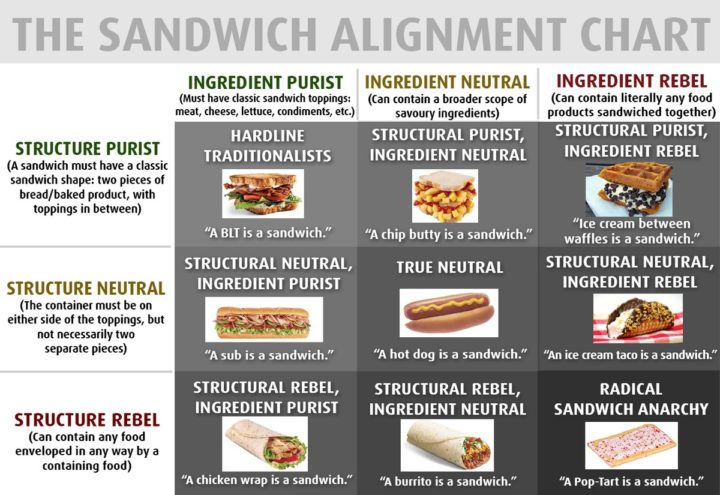
To calibrate, on a scale of 1-10 I would rate Cheesecake Factory and Starbucks food at a 3, Tim Horton and McDonald's at 4, and Olive Garden at 6. I'd put LeCinq at 8 and Poppy at 10.
My wife has more sophisticated taste. She though 3 stars for LeCinq made sense. I have double-blind tested her a number of times and her taste is unerring, including one trial where she correctly guessed Osetra, Beluga, and Sevruga caviar back when they were all legal, and 4 different kinds of Wagyu beef at a steakhouse.